The Pattern of Generations in Scripture – Last Generation Part 3
By Andre Eksteen
If you have stayed with this series through Parts 1 and 2, you already know what we are doing and why we are doing it slowly. We are not trying to prove something quickly. We are not constructing a system in a few easy steps and handing you a date to mark on your calendar. We are laying a foundation — the kind that does not crack later when someone pushes on it. And that means we must deal carefully with something that most treatments of Matthew 24 skip entirely: what Scripture itself actually shows us about the nature and meaning of a generation.
Not what tradition says. Not what the popular end-times books assume. What the Word itself demonstrates, repeatedly, across both Testaments, in patterns consistent enough that once you see them you cannot unsee them. Because if you misunderstand this — if you carry the wrong definition of “generation” all the way into Matthew 24 — then everything you build from that verse will lean in the wrong direction from the start, and no amount of careful work on top of it will fix the tilt at the base.
So let us go back. Not just to the Gospels. Back to the beginning. Because if you want to understand how God uses a word, the most reliable place to start is where it first appears and how it is used across the full sweep of Scripture before you ever arrive at the contested passage.
Generations From the Beginning
Open Genesis and you find the word almost immediately. “These are the generations of the heavens and of the earth when they were created” — Genesis 2:4. “This is the book of the generations of Adam” — Genesis 5:1. “These are the generations of Noah” — Genesis 6:9. From the very opening chapters of Scripture, generations are not primarily about measuring time. They are about recording people. Lineage. Continuity. Something being carried forward from one group to the next.
Now that is already significant. Because the moment you see generations as lines of people rather than blocks of time, the whole framework shifts. A generation in Genesis is not “the forty years between event A and event B.” It is the people who carry the story forward — the ones who receive what came before them, who live through their own moment, and who hand something on to those who come after. Time is involved, obviously. People live and die within time. But time is the container, not the content. The content is people, and what those people do with what they have been given.
Look at Genesis 6 specifically, because it is one of the clearest examples of how Scripture uses “generation” to describe condition rather than duration. By the time you reach Noah, the text does not tell you how many years have elapsed since Adam. It tells you what the world has become. “And God saw that the wickedness of man was great in the earth, and that every imagination of the thoughts of his heart was only evil continually” — Genesis 6:5. That is a generation defined by its moral condition. It is described by what it is, not by when it exists. And standing in contrast to that generation is one man — “Noah was a just man and perfect in his generations, and Noah walked with God” — Genesis 6:9. The generation is described by its character, and Noah’s character is explicitly contrasted with the character of everyone around him.
This is foundational. Before you ever get to the New Testament, Scripture has already established that a generation can be, and often is, defined by what it is — by the condition of the people who compose it, by their orientation toward God, by their response to what they have been given — rather than by a fixed number of years. This is not a minor nuance. It is a primary pattern that runs through the entire book.
The Pattern Through Israel’s History
Move forward through Scripture and you see the same pattern repeated consistently throughout Israel’s history. The book of Judges is almost a textbook illustration of it. Generation after generation, the cycle turns: Israel does evil in the sight of the Lord, God delivers them into the hands of their enemies, they cry out, God raises a deliverer, they are rescued, the land has rest, the generation that knew the deliverer dies, and the next generation does not know the Lord and begins the cycle again — “And also all that generation were gathered unto their fathers: and there arose another generation after them, which knew not the LORD, nor yet the works which he had done for Israel” — Judges 2:10.
That verse is worth sitting with. The new generation is not new because a certain number of years passed. It is new because it has a different relationship to what came before. It does not know the Lord. It does not remember what He did. That ignorance — that severed connection — is what makes it a different generation. The defining feature is not chronological. It is relational and spiritual.
Psalm 78 elaborates on exactly this pattern. It is a long, historical psalm that rehearses God’s dealings with Israel from Egypt onward, and its opening verses explain why: “That the generation to come might know them, even the children which should be born; who should arise and declare them to their children: That they might set their hope in God, and not forget the works of God, but keep his commandments: And might not be as their fathers, a stubborn and rebellious generation; a generation that set not their heart aright, and whose spirit was not stedfast with God” — Psalm 78:6-8. Again, the contrast between generations is not measured in years. It is measured in faithfulness. A stubborn and rebellious generation. A generation whose heart was not right. These are moral descriptions. Descriptions of condition.
Psalm 112:2 speaks of “the generation of the upright” — a category defined by righteousness. Proverbs 30:11-14 lists four types of people each labelled as a “generation” — and each one is defined by a particular moral failing: one curses its father, one is pure in its own eyes, one is proud, one devours the poor. These are not time periods. They are character portraits. Scripture uses “generation” as a way of naming what a group of people fundamentally are.
This matters enormously for how you read Matthew 24, because Jesus was not operating outside this tradition. He was inside it. He was a Jewish teacher speaking to Jewish disciples, using Hebrew categories of thought even when He was speaking Greek. When He said “generation,” His audience heard it the way the Old Testament used it — as a description of a people, defined by their character and their witness, not primarily as a unit of time measurement.
How Jesus Used the Word in Matthew
We touched on this in Part 2, but it is worth going deeper here because the evidence within Matthew’s Gospel itself is more extensive than most people realise.
Matthew 11:16 — “But whereunto shall I liken this generation? It is like unto children sitting in the markets, and calling unto their fellows.” Jesus is describing the people around Him who have heard both John’s preaching and His own, and who have responded to neither. He calls them a generation and then gives them a character description — people who play games, who find fault with everything, who refuse to be satisfied regardless of what they are offered. This generation is defined by a particular spiritual stubbornness and inconsistency. There is no time measurement in view.
Matthew 12:39 — “An evil and adulterous generation seeketh after a sign.” Evil. Adulterous. Sign-seeking. These are character labels. Jesus is not saying that the people standing in front of Him represent a forty-year time block. He is saying they represent a type — people who demand confirmation before they will believe, people whose spiritual unfaithfulness makes them unable to receive what is right in front of them.
Matthew 12:41-42 — “The men of Nineveh shall rise in judgment with this generation, and shall condemn it: because they repented at the preaching of Jonas; and, behold, a greater than Jonas is here. The queen of the south shall rise up in the judgment with this generation, and shall condemn it.” Here Jesus places people from very different historical periods in relation to “this generation.” The Ninevites and the Queen of the South lived centuries before the people Jesus was addressing. What links them all is not a time period but a response to revelation. The Ninevites and the Queen of the South responded rightly to what they were given. The generation Jesus is addressing has been given something even greater — the presence of the Son of God Himself — and has rejected it. That is the defining feature. That is what makes this a generation.
Matthew 17:17 — “O faithless and perverse generation, how long shall I be with you? how long shall I suffer you?” Again, the description is moral and spiritual — faithless, perverse. Jesus is describing the character of the people He is dealing with.
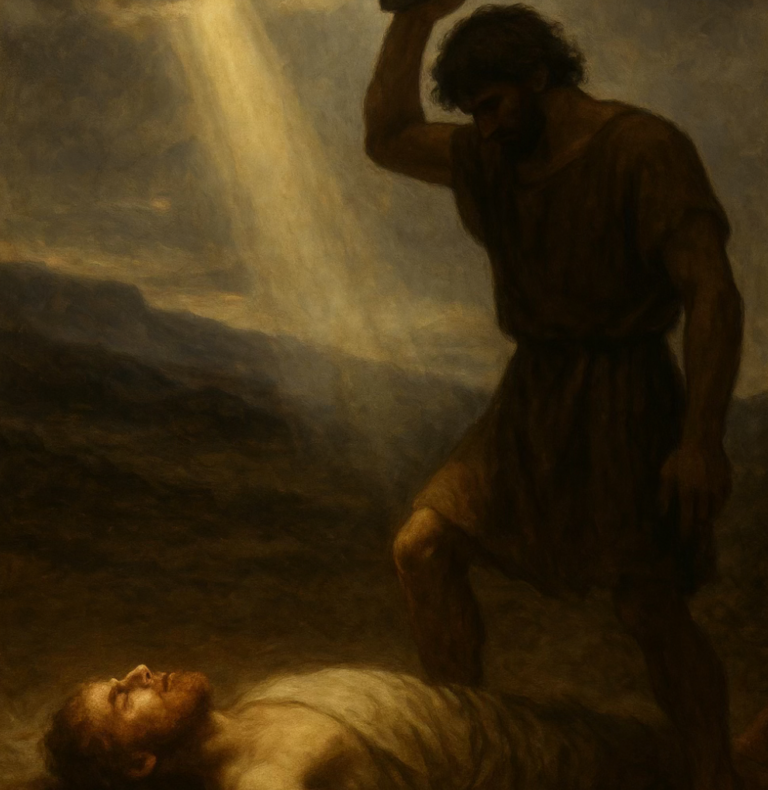
Matthew 23:33-36 — “Ye serpents, ye generation of vipers, how can ye escape the damnation of hell? Wherefore, behold, I send unto you prophets, and wise men, and scribes: and some of them ye shall kill and crucify; and some of them shall ye scourge in your synagogues, and persecute them from city to city: That upon you may come all the righteous blood shed upon the earth, from the blood of righteous Abel unto the blood of Zacharias son of Barachias, whom ye slew between the temple and the altar. Verily I say unto you, All these things shall come upon this generation.” This passage is directly adjacent to Matthew 24, which begins with the disciples leaving the temple immediately after this exchange. The generation Jesus pronounces judgement upon here is the generation that has rejected the climax of God’s revelation — the generation that has the Son of God among them and chooses to kill the prophets He sends. Their guilt encompasses the accumulated rejection of all previous generations because they stand at the culmination. They are the generation that was given the most and responded with the most deliberate rejection.
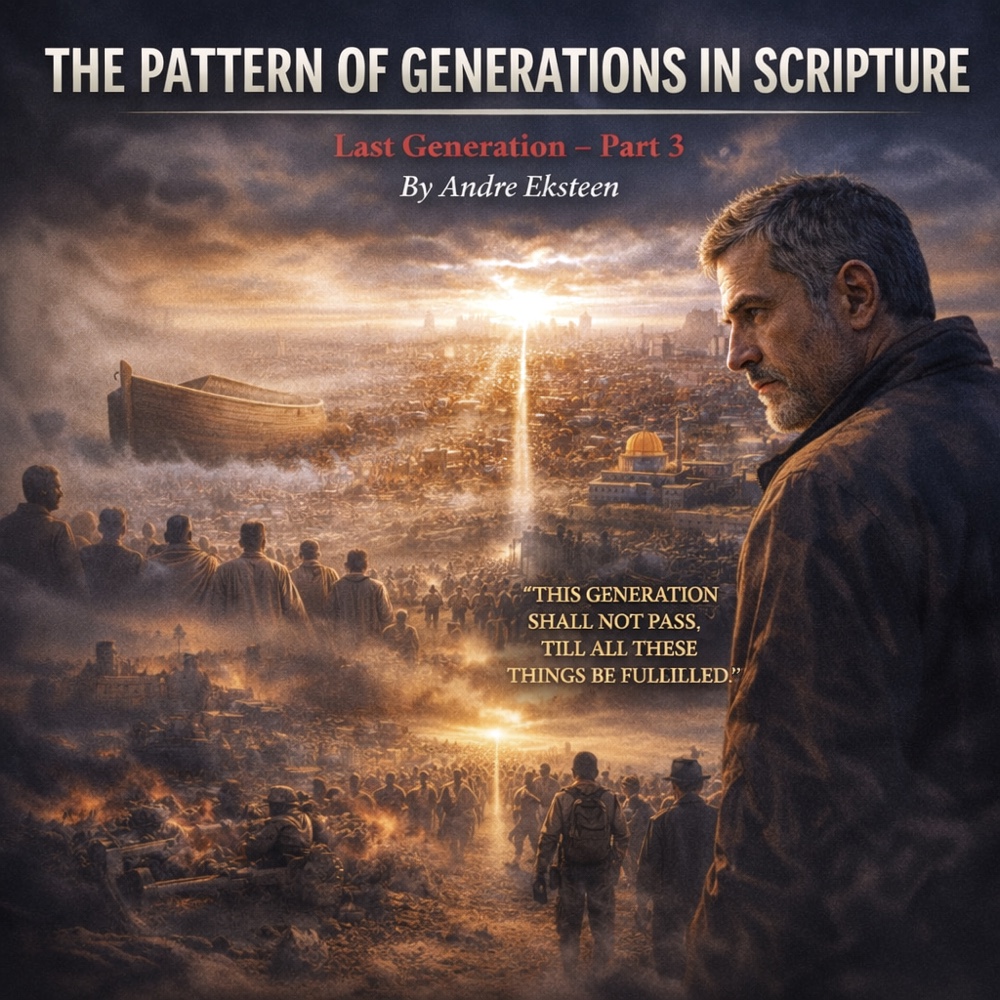
Now when you read Matthew 24 in the light of all of this — when you understand that Jesus has been using “generation” throughout this Gospel to describe groups defined by their character, their witness, and their response to revelation — the verse at the end of the discourse sits differently. “This generation shall not pass, till all these things be fulfilled.” It is not a calculation trigger. It is a description of a people defined by what they will see and what they will face. The same pattern. The same logic. Consistent with everything that came before it.
Every Generation Is Tested
There is something else running through the biblical pattern of generations that needs to be named directly, because it has direct implications for how you understand Matthew 24. Every significant generation in Scripture is tested. Not gently. Not casually. Directly, and with high stakes.
Noah’s generation was tested by the decision to build an ark on the word of God when there was no visible reason to do so. The generation that came out of Egypt was tested in the wilderness — tested with manna, with water from the rock, with the cloud and the pillar of fire — and most of them failed. The generation that entered Canaan under Joshua was tested by the command to drive out the inhabitants and remain separate, and they compromised. The generation of Elijah was tested by the confrontation on Carmel — would they choose Baal or the Lord? The generation of Daniel was tested by the pressure to conform to Babylon’s demands. The generation of the disciples was tested by the death and resurrection of Jesus.
In each case, the test is proportional to the revelation. The more that has been given, the more that is required. Jesus Himself stated this principle plainly in Luke 12:48 — “For unto whomsoever much is given, of him shall be much required.” And what is true of individuals is true of generations. A generation that has been given more — that has seen more, that has been shown more clearly, that has had the truth placed more unavoidably in front of it — carries a heavier weight of responsibility than a generation that received less.
Now apply that to the generation Jesus describes in Matthew 24. This is not a generation that sees one sign or hears one warning. This is a generation that sees everything — the full sequence from the beginning of sorrows all the way through to the return of Christ in visible, unmistakable glory. That is more revelation than any previous generation has received. And that means its accountability is proportional. The generation that sees all these things and still rejects, still sleeps, still misreads what is happening in front of it — that generation stands in a position of maximum accountability.
That is part of what Jesus is saying. Not just “this group will survive long enough to see it all.” He is saying that this group, which will see all of it, will not escape before every last element of what He has described is complete. There is a weight to it. A finality. The generation that witnesses the full sequence is the generation that stands at the consummation of history. It is not a privilege without cost. It is a position of maximum exposure — to both grace and judgement.
Presence Does Not Equal Awareness
There is one more element of the biblical pattern of generations that needs to be addressed, because it directly challenges the way most people think about the last generation. The common assumption is that the last generation is simply whoever is alive when the end comes. If you are alive, you are in it. Being present equals being part of it.
But that is not how Scripture treats generations. Go back to Noah. Everyone alive in that generation was alive. They were all present. But only eight of them got on the ark. The rest were in the same generation chronologically, but they were not participating in the same way. They did not see what Noah saw. They did not respond to what Noah responded to. They were alive, but they were not watching.
Go back to Elijah. Everyone in Israel was alive during the confrontation on Carmel. They were all present. But how many of them had their eyes open to what was really happening? The seven thousand who had not bowed to Baal were scattered and hidden. The majority had conformed to the pressure of their time without understanding the weight of what they were choosing.
Go back to Jesus’ own generation. He was in the world. He was teaching in their synagogues, healing their sick, raising their dead. The revelation was maximum. And most people missed it entirely. They were present. They were alive in that generation. But they did not see what was right in front of them. The disciples who followed Jesus did not have better eyesight. They had a different posture. They were watching. They were willing to follow. And even they repeatedly failed to understand fully until after the resurrection.
Now bring all of that forward to Matthew 24. Jesus is not saying that everyone alive when these events unfold will automatically understand what they are seeing. He is describing a generation that sees all these things — and the implication is that seeing them properly requires the same posture that seeing has always required in Scripture. Not just physical presence. Spiritual alertness. The willingness to recognise what God is doing even when it is uncomfortable, even when it disrupts your existing framework, even when the people around you are dismissing it.
This is why Jesus pairs the discourse with the command to watch. Matthew 24:42 — “Watch therefore: for ye know not what hour your Lord doth come.” Matthew 25:13 — “Watch therefore, for ye know neither the day nor the hour wherein the Son of man cometh.” The watching is not passive. It is not sitting with a newspaper in one hand and a Bible concordance in the other, matching headlines to prophecies. It is a posture of active spiritual readiness — the kind that comes from living close to God, from knowing His Word deeply, from being the kind of person who recognises His voice when He speaks, even when that voice comes through events that are disruptive and terrifying.
The last generation will not be identified by a calendar. It will be identified by what it sees and by whether it recognises what it is seeing. The people who are alive at that time but are spiritually asleep will be in the same position as the people of Noah’s day who thought life was proceeding normally right up until the flood. Present. But not watching. Alive in the generation. But not defined by the generation’s witness.
Why This Gets Overlooked
It is worth asking why this pattern — one that is so consistent and so clear once you see it — gets overlooked so consistently in popular end-times teaching. Part of the answer is cultural. Western thinking is deeply chronological. We organise everything by date, by timeline, by measurable sequence. That is not inherently wrong, but it becomes a problem when you read an ancient Hebrew text through a framework the text itself does not share. The biblical writers thought in patterns and people and covenant relationships, not primarily in chronological units. When they spoke about generations, they were reaching for a word that described human groups and their relationship to God — not a unit on a timeline.
Popular end-times teaching, particularly in the tradition that emerged in the twentieth century, is deeply shaped by Western chronological thinking. It produces charts. It produces timelines. It produces date calculations. And those things feel authoritative because they look precise. But precision is not the same as accuracy. You can be very precise about the wrong thing. Calculating to the year from a starting date that was never specified in the text is an example of exactly that — high precision, wrong target.
The other part of the answer is that chronological thinking creates a product. It creates books with specific titles — “88 Reasons Why the Rapture Will Be in 1988,” and the endless stream of successors that followed when that date came and went. It creates conferences where someone stands up and tells you that based on their calculation, the end must come within the next decade. It creates an audience that keeps coming back for the next update when the previous calculation fails. The system is self-sustaining because the urgency it generates does not depend on accuracy. It depends on the next calculation being close enough to the previous one that people remain engaged.
None of that is what Matthew 24 is doing. Jesus was not giving His disciples a calculation tool. He was giving them a description — a picture of a sequence so complete and so unmistakable that the generation living through it would recognise it for what it was, if they were watching. The fig tree does not require calculation. When you see the leaves, you know. That is the model. Recognition, not arithmetic.
The Pattern, Stated Plainly
Let me bring all of this together into a straightforward summary, because it is worth stating plainly before we move on.
Across the full sweep of Scripture — from Genesis to the Psalms to the Prophets to the Gospels — “generation” is used most significantly not as a measurement of time but as a description of a people. A generation is defined by what it is given, by what it sees, by its character, by its response to revelation, and by what it does with the moment it has been placed in. Time is the context. People are the content. Faithfulness or faithlessness, watching or sleeping, recognition or blindness — these are the things that define a generation in the biblical sense.
The pattern is consistent. Every significant generation is tested. Every significant generation is held accountable for what it was given. And the generation given the most bears the greatest weight. The generation Jesus describes in Matthew 24 is the one that will see the full sequence He described — the most complete revelation of both judgement and grace that the world will ever witness. That is what makes it the last generation. Not a calculation from a date. The fullness of what it witnesses.
Now the question that has been building through three parts of this series can finally be stated with precision: what exactly is the full sequence that defines this generation? We have been calling it “all these things” since Part 1. We have established that it is the anchor of the entire statement in Matthew 24:34. But we have not yet worked through it in detail — element by element, in order, asking what each one means and whether it has been, is being, or is yet to be fulfilled.
That is what Part 4 is for. Because until you know the sequence precisely, you cannot recognise the generation even if you are living in it. And if Jesus is right that the generation which sees all of these things will not pass before everything is completed, then knowing the sequence is not an academic exercise. It is the most practically important thing a person in these times could possibly understand.