Inside Heaven’s Government – Part 7
The Story of the Heavenly Host from Creation to the Coming Kingdom
Written by Andre Eksteen
By this point in our journey, the picture God has been painting for us should already be far bigger than the one most of us grew up with sitting in a pew. We have seen that the heavens were created before mankind ever appeared on the scene. We have seen that the heavenly host already existed when the foundations of the earth were first laid down. We have looked inside God’s heavenly government and discovered that heaven is not some empty spiritual realm where beings simply drift around singing praises forever with nothing else to occupy them. It is a kingdom. It is ordered. It is governed. It is alive with purpose from one end to the other.
In the last article we cleared away one of the biggest misconceptions surrounding that kingdom. We discovered that the word angel is not the name of a species at all. It describes an assignment. A messenger. Someone sent out carrying the authority of another. That single truth immediately swung the door open onto a much bigger question. If not every heavenly being is an angel, then who exactly makes up the heavenly host? That is exactly where we begin today.
One of the mistakes we often fall into when reading Scripture is assuming that heaven must somehow be simpler than earth. We picture the physical world displaying endless variety while imagining the heavenly world consisting of one identical group of beings, all doing roughly the same thing, day after day. The Bible points us in exactly the opposite direction the moment we actually look.
Look around you for a moment, at anything God has made. He did not create one single kind of tree. He filled the earth with forests containing thousands of different kinds. He did not create one species of bird. He filled the skies with an astonishing diversity of them. The oceans are no different underneath the surface. Neither are the animals walking the earth around us right now. Everywhere we look, creation reflects variety held together within order, never one without the other.
Paul draws our attention to exactly this principle while writing to the Corinthians. “All flesh is not the same flesh: but there is one kind of flesh of men, another flesh of beasts, another of fishes, and another of birds.” Then he continues a moment later, “There are also celestial bodies, and bodies terrestrial.” 1 Corinthians 15:39 to 40. Paul is building toward a much bigger point about the resurrection in that passage, but notice the principle sitting underneath what he says along the way. God delights in diversity. He creates different kinds according to His own wisdom and purpose, never settling for one design when several will display His glory better. Nothing anywhere in creation suggests that God enjoys stamping out endless identical copies of exactly the same thing.
Why, then, would His heavenly kingdom be any different from everything else He has made? It would be entirely out of character with the rest of His handiwork if it were. In fact, once we set aside the lazy assumption that every heavenly being is simply an angel, the Bible suddenly reveals an astonishing variety that was sitting there in plain sight the whole time. Cherubim. Seraphim. Living creatures. Morning stars. Sons of God. Watchers. Holy ones. Archangels. Principalities. Powers. Dominions. Thrones. Each one of them appears in Scripture under its own proper name. Each one carries out responsibilities that fit that particular order specifically. Each one contributes to God’s government in ways that are sometimes similar to the others around it, but never identical to them.
The Bible never once apologises for these distinctions, the way you might apologise for an overly complicated diagram. It simply expects us to notice them as we read. Unfortunately, centuries of tradition have had exactly the opposite effect on most of us. We have taken all those carefully preserved distinctions and quietly folded every single one of them into one convenient catch-all category called angels. In doing that, without really meaning to, we have flattened one of the richest, most detailed parts of God’s whole revelation down into something far smaller than it ever was.
Imagine visiting a great kingdom for the first time and describing absolutely everyone you meet there simply as servants. Technically, you might not be entirely wrong to say that. The commander of the army does serve the king. The chief judge does serve the king. The royal adviser does serve the king. The steward of the treasury does serve the king. The king’s own herald does serve the king. The toilet cleaner serve the king. But have you actually described that kingdom to anyone listening? Not even close. You have erased the very distinctions that allow that kingdom to function properly in the first place. That is exactly what has happened with the heavenly host over the centuries. We have grown so accustomed to calling every heavenly being an angel that we eventually stopped asking who these beings actually are, or why God bothered giving them different names to begin with.
Scripture never wastes a single name on anyone. Whenever God draws a distinction between one group and another, there is always a reason behind it, and that reason usually tells us something important about purpose. Consider the priesthood of Israel for a moment as an earthly example of the same principle. There were ordinary priests. There were Levites. There was the high priest standing above them all. Every one of them belonged to the same nation and served the very same God, yet they did not all carry out the same responsibilities day to day. The distinction between them mattered, because God’s order mattered to Him. The same principle keeps appearing throughout the rest of creation as well. Within Israel there were judges, prophets and kings, each with their own calling. Within the tabernacle there were gatekeepers, musicians and priests, each assigned their own duties. Within the Church today there are different gifts, different ministries and different administrations, yet one Lord standing over every single one of them. Why, then, should heaven, the perfect pattern from which all of that earthly order originally flows, be somehow less organised than the things that merely reflect it down here? The answer is obvious once you put it that way. It is not less organised. If anything, the heavenly kingdom displays order in its purest, most undiluted form. Everything there occupies its appointed place. Everything fulfils its appointed purpose. Everything operates beneath the authority of the throne, without exception.
That brings us to another observation that becomes impossible to ignore once you start reading Scripture carefully on this point. God almost always introduces heavenly beings by what makes them distinct from one another, rather than by whatever they happen to have in common. When Isaiah looks into heaven, he does not simply write that he saw some heavenly beings standing around. He tells us specifically that he saw seraphim. When Ezekiel describes the throne, he introduces us to cherubim by name. When Daniel records his visions, he speaks of princes holding actual jurisdiction. When John stands before the throne in Revelation, he describes living creatures, elders, and countless members of the heavenly host, each one occupying their own particular place within the heavenly kingdom rather than being lumped together as one indistinguishable crowd.
God is teaching us something through that careful precision in how He names things. He wants us to recognise real distinction without ever imagining division or rivalry between these orders. The heavenly host are not competing factions jostling for position. They are not independent kingdoms operating side by side. They are not separate governments each running their own affairs. They are different orders, every one of them serving within one single kingdom, under one single King. That is a principle we should already recognise without too much trouble, because we see the very same pattern reflected throughout the whole of God’s earthly creation as well. One body, many members. One kingdom, many offices. One King, many servants, each doing his own part.
As we move forward from this point in the series, we are going to spend considerable time examining these different orders individually, one at a time, rather than rushing past them. We will discover where Scripture places each one, what responsibilities they actually carry, how they relate to one another within the structure, and what they reveal to us about the character of the God they serve so faithfully. Before we can do that properly, though, we first need to step back and take in the heavenly host as a whole. Only once we have that overview firmly in place can we begin to appreciate the remarkable structure God established within His heavenly government, long before mankind ever appeared on the earth to take any part in it.
There is another reason this overview matters so much before we start studying each order individually. Without it sitting in place first, we run a real risk of reading later passages through entirely the wrong lens, the way you might misread a letter if you skipped the introduction explaining who it was written to. Take the word cherub as a simple example of this danger. Most Christians already carry a fixed image in their minds the very moment they hear that word spoken out loud. Usually it is some small chubby child with little wings, borrowed wholesale from Renaissance paintings rather than from the Bible itself. Scripture gives us nothing remotely resembling that picture anywhere in its pages. The exact same problem happens with seraphim. The exact same problem happens with archangels. The exact same problem happens with almost every single member of the heavenly host you could name. We arrive at the text already carrying assumptions that never actually came from the text in the first place, and then we wonder why certain passages feel confusing.
Our task throughout the rest of this series is to set those borrowed assumptions firmly aside and allow Scripture itself to introduce each order entirely on its own terms, without our help. That is exactly what God has already done in His Word, if we are willing to follow His lead rather than our own habits. He never introduces cherubim by first explaining seraphim to us as a point of comparison. He never explains the sons of God by holding them up next to the living creatures. He presents each order exactly as it appears within His government, allowing us to build the full picture piece by piece, until the whole administration gradually comes into clear view. That is exactly how we are going to approach the rest of this study together.
One of the questions I get asked more often than almost any other on this subject is, how many different orders of heavenly beings are there in total? The honest answer is that Scripture never once hands us a neat, numbered list to work from. God never says anywhere in His Word, these are the nine orders of heaven, or, these are the twelve classes I personally created. Instead, He introduces each one of them as they become relevant to whatever He is revealing to us at that particular moment in the text. That means we have to build the full picture the same way a good detective pieces together a case from scattered evidence. Not by imagination running wild. Not by leaning on inherited tradition without checking it. By carefully gathering every relevant passage, comparing Scripture against Scripture point by point, and letting the evidence speak for itself rather than forcing it to fit a chart we already had in mind.
That kind of careful approach has produced a number of different classifications over the centuries, worth mentioning briefly here. Jewish writers in the ancient world grouped certain heavenly beings together according to their shared responsibilities. Early Christian scholars later arranged them rather differently again, eventually producing what came to be known as the nine orders of angels in church tradition. Those classifications can certainly serve as useful study tools along the way, provided we keep one very important principle firmly in mind the whole time. They are not Scripture. They are simply human attempts to organise what Scripture itself already reveals to us. There is a world of difference between those two things, and we cannot afford to confuse them.
Throughout this series our authority remains exactly where it has stood from the very first article. The Word of God comes first, every single time, with no exceptions made for convenience. Whenever Scripture speaks clearly on a matter, the discussion ends right there. Where the ancient writings genuinely help us understand the biblical world more fully, we will use them gladly. Where historical classifications help organise the material in a sensible, workable way, we will acknowledge that usefulness openly. But none of those secondary sources will ever be allowed to stand above the testimony of God’s own Word, not even for a moment.
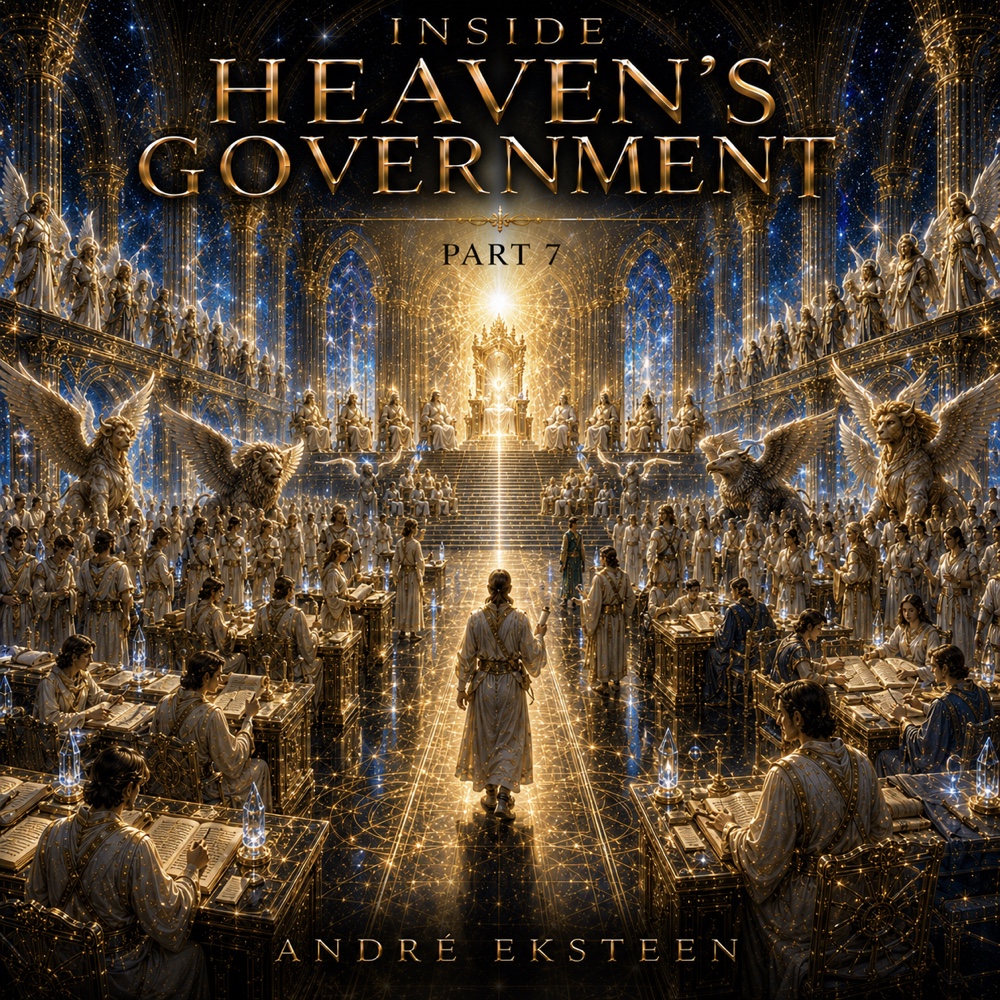
That is actually one of the reasons I have deliberately chosen the title Inside Heaven’s Government for this series, rather than something like The Nine Orders of Angels. The Bible never presents God’s kingdom to us as a tidy chart with neatly labelled boxes stacked one on top of another. It presents us with living scenes instead. Visions. Encounters. Court sessions. Worship unfolding in real time. Judgement being carried out. Messages being delivered. War being waged in places we cannot see. Service being rendered faithfully, day after day. From those living scenes scattered across Scripture, we gradually discover the different orders actually serving within the kingdom. One passage introduces us to cherubim. Another reveals seraphim standing in their place. Another introduces the sons of God presenting themselves. Another shows us watchers carrying out their assignments. Another reveals princes holding authority over nations. Another speaks of thrones, dominions, principalities and powers, named like ranks in an army. By the time we have gathered all of those passages together side by side, a remarkable structure begins to emerge on its own, not because someone sat down and invented it for us, but because it was already there in the text the whole time, waiting to be noticed properly.
One particular observation keeps forcing itself to the surface the more we study this. The closer a heavenly being appears to stand to God’s throne, the more directly its ministry seems tied to His holiness and His immediate presence. The further the activity moves outward toward creation itself, away from the throne, the more varied the responsibilities seem to become from one being to the next. Some proclaim God’s holiness continually, without rest. Some guard what is holy from anything that would defile it. Some administer authority on God’s behalf. Some oversee responsibilities tied directly to creation itself. Some carry messages between heaven and earth. Some execute judgement when the time for it finally arrives. Some appear connected specifically to particular nations and kingdoms throughout history. Others are sent out to individual men and women to accomplish one specific assignment and then move on. Everything here points toward organisation. Everything points toward real purpose behind it. Nothing about it suggests randomness or improvisation of any kind.
That should not surprise us by this point in the series. We have already firmly established that God is a God of order in everything He touches. His government reflects His own character through and through. It would honestly be strange, almost contradictory, if the very King whose physical creation displays such breathtaking organisation everywhere we look had somehow established a heavenly kingdom with none of that organisation present at all. The opposite turns out to be true instead. The deeper we look into this subject, the more remarkable that underlying order becomes, not less.
This also helps explain why Scripture never once encourages us to become personally fascinated with heavenly beings for their own sake. Notice how little attention they actually draw toward themselves throughout the whole of Scripture. Whenever faithful members of the heavenly host appear in the text, they consistently redirect attention straight back toward God rather than lingering on themselves. They carry His message faithfully. They execute His will without complaint. They refuse worship whenever it is mistakenly offered to them. They point firmly toward the throne rather than toward themselves standing in front of it. That single quality alone is exactly what distinguishes God’s faithful servants from the rebellious powers we are going to encounter later in this series. The faithful host never once seek glory for themselves. They exist entirely to glorify the One who created them in the first place, and nothing else besides that.
That is an important lesson worth carrying with us as we keep studying this subject further. The whole purpose of studying the heavenly host is never to become fascinated with angels for their own sake, the way some corners of modern spirituality have turned it into. It is to gain a deeper, clearer understanding of the God they serve so faithfully. The more clearly we understand His government, the more clearly we end up understanding His character underneath it. The more clearly we understand His order, the better we will eventually understand why rebellion against that order carries such devastating, lasting consequences when it finally happens.
Those consequences are still waiting further ahead of us in this series, and we will get there properly in time. Before we reach them, though, we first need to become genuinely familiar with the actual members of God’s heavenly government themselves. Only once we have done that will we be able to appreciate exactly what was placed at risk the moment rebellion first entered that perfect kingdom.
By now, one thing should already be unmistakably clear in your mind. The heavenly host is not some vast crowd of identical beings standing around God’s throne, simply waiting for something interesting to happen to break the monotony. It is a kingdom filled with real life, real responsibility, real authority and real purpose running through every level of it. Every single member has been created intentionally, with a specific role in mind. Every office exists precisely because God Himself established it that way. Every assignment contributes its own part to the perfect operation of His government as a whole.
That should also change the way we instinctively think about heaven itself. Far too often we picture heaven as nothing more than the destination waiting quietly for believers after death, a kind of holding place. Scripture certainly does promise that those who belong to Christ will one day be with Him there, that much is settled and sure. But heaven was never created simply to become our future home one day, as though that were its entire purpose. Long before mankind ever existed, it was already the active centre of God’s kingdom. It was already alive with worship, administration, justice and faithful service, running smoothly without us. The heavenly host were already carrying out the responsibilities entrusted to them by their Creator, long before Adam ever opened his eyes for the first time.
Mankind entered into a kingdom that already existed in full. That simple fact, once you let it sink in properly, explains a great deal of what follows throughout the rest of Scripture. When Adam was created, God was not starting from nothing, building from scratch the way a man might build a house on an empty plot of land. He was extending His government into a brand new realm that had not existed before. The earth was placed under the stewardship of mankind specifically, while heaven continued right on under the administration God had already established long before. Those two realms were never intended to compete against one another for authority. They were designed from the very start to function together, in harmony, under one single King ruling over both of them.
Later in this series we will discover exactly what happened when rebellion eventually disrupted that order, both in heaven and afterward on earth as well. We will see how those two separate stories became deeply intertwined with one another, and why the struggle over dominion runs all the way from Genesis through to the very last pages of Revelation without ever really letting up. For now, though, we are still standing firmly before any of that rebellion ever took place, looking carefully at God’s government exactly as it was originally established in perfect order from the very beginning.
The more carefully we examine that original order before corruption entered it, another truth begins to surface clearly. Not every member of the heavenly host stands in the exact same place within that order. Some serve nearest to the throne itself, never straying far from it. Some carry responsibilities that never appear to extend beyond the immediate presence of God at all. Others move freely between heaven and creation, carrying out assignments on His behalf wherever they are sent. Others still appear connected specifically to nations, kingdoms and the broader administration of God’s purposes unfolding throughout human history. None of those differences imply greater worth on one side or lesser importance on the other. They simply reflect different callings within the very same kingdom, the same way every part of the human body has its own particular function without one part being worth more than another. Every order within the heavenly host serves according to the specific purpose for which God originally created it, nothing more and nothing less.
As we move forward from here, we are going to examine each of those orders one at a time, carefully and without rushing. We will not lean on paintings, folklore or inherited religious tradition to fill in the gaps for us. We will allow Scripture itself to introduce each order in its own way, adding genuine insight from the ancient writings only where they help illuminate the biblical text without ever being allowed to replace it. Some of what we discover along the way will simply confirm what many believers already sense to be true. Some of it will challenge ideas that have been repeated for generations without anyone ever actually testing them properly against Scripture. Both outcomes are perfectly acceptable to me as we go. Our responsibility throughout this series has never been to defend tradition for its own sake. Our responsibility is to follow the evidence wherever God’s own Word actually leads us, even when that means setting something familiar aside.
There is only one sensible place to begin this part of our study. If we are going to examine God’s heavenly government working outward from the throne itself, we should logically start with those who serve closest to that throne of all. Isaiah saw them with his own eyes. He heard their voices shake the very foundations of the temple around him. He watched them proclaim the holiness of God without ever ceasing, not for a single moment. They are introduced to us in only a small handful of verses, yet those few verses reveal one of the most extraordinary orders within the entire heavenly host.
Before we can properly understand the administration of God’s kingdom as a whole, we first need to understand those who minister continually in His immediate presence, closer to Him than any other order we will study. That is exactly where we turn next, as we begin our study of the seraphim, the burning ones who stand before the throne of the King of kings.