Inside Heaven’s Government -Part 6
The Story of the Heavenly Host from Creation to the Coming Kingdom
Written by Andre Eksteen
By now the picture we have been building since the very beginning of this series should already be taking real shape in your mind. We have established that God alone is eternal. We have watched Him create the heavens and the earth. We have discovered that the heavenly host existed before mankind ever appeared on the scene. We have looked inside that heavenly kingdom and found, not chaos, but perfect order from top to bottom. We have seen that the word angel describes an assignment rather than identifying an entire species of heavenly being.
That naturally leaves us standing in front of another question. How does God’s heavenly government actually function in practice? We know there is a King. We know there is a kingdom. We know there are different orders existing within the heavenly host. We know there are responsibilities, assignments and delegated authority running through all of it. But where exactly is that authority administered? Where are those assignments handed out? Where do members of the heavenly host present themselves? Where does judgement actually proceed from?
The answer is found in something most Christians have only ever heard mentioned in passing, if they have heard of it at all. The Divine Council.
The moment those two words get mentioned out loud, plenty of people grow uncomfortable. Others immediately associate the phrase with mythology or pagan religion and switch off before going any further. Some dismiss the entire subject before they have even opened a single passage of Scripture to check it for themselves. That reaction is unfortunate, because this idea does not originate with scholars, commentators or modern writers chasing something novel. It comes directly out of the Bible itself.
Before we go any further, though, we need to clear away another misunderstanding sitting right at the front of this subject. The Divine Council is not some committee where God goes around asking created beings for advice because He does not personally know what to do next. Nothing could be further from the truth than that. God is omniscient. He has never once needed information from anyone. He has never been surprised by anything that has ever happened. He has never learned something He did not already know from before the foundation of the world. He has never depended on another being to help Him reach a correct decision.
The council exists for an entirely different reason than that. It exists because God governs His kingdom through order. Throughout Scripture we keep seeing Him entrusting responsibilities to those He appoints, not because He lacks the power to handle it Himself, but because that is simply how His kingdom is built to function. We have already seen this exact pattern earlier in this series. The heavenly host receive assignments. Messengers get sent out. Responsibilities get delegated downward. Authority gets exercised under God’s authority rather than independently from it. The Divine Council is simply another expression of that same heavenly government we have already been studying.
Think of an earthly king for a moment. A wise king never isolates himself from every servant in his kingdom, refusing to delegate anything. He appoints governors. He appoints military commanders. He appoints judges. He appoints ambassadors to represent him abroad. Each one of them remains accountable to the throne the whole time. Each one carries responsibilities entrusted directly to him by the king. None of them diminish the king’s own authority simply by serving faithfully beneath him. Quite the opposite, actually. Their faithful service is what demonstrates the strength and order of his kingdom to everyone watching.
Scripture presents God’s government in exactly that same way. Again and again throughout the Bible we are handed brief glimpses behind the curtain, not enough to satisfy every last bit of our curiosity, but certainly enough to establish the pattern clearly for anyone willing to look.
The first clear glimpse appears right there in the opening chapters of Job. Most readers get so fixed on Satan in that account that they quietly walk straight past the setting the whole scene unfolds inside of. Job writes it plainly. “Now there was a day when the sons of God came to present themselves before the LORD, and Satan came also among them.” Slow right down and read that carefully. The sons of God came to present themselves. Those words should immediately remind us of something we touched on earlier in this series. Presentation implies accountability built into the structure. These heavenly beings are not simply wandering through creation on their own, answering to nobody. They appear before the Lord, not because He needs some kind of report to find out what has been happening out there, but because they remain accountable to the authority sitting on His throne, the same as every other servant in His kingdom.
Even Satan only appears in that scene because he has been summoned into God’s court for the occasion. He does not burst into heaven uninvited, forcing his way in. He does not challenge God as though the two of them were somehow equals standing across from one another. He answers God’s questions when asked. He remains under God’s authority the entire time, despite everything he has already done in rebellion against it. That scene alone tells us an enormous amount about the structure running through God’s government. There is order. There is accountability. There is authority. There is judgement waiting in the wings. There is no confusion anywhere in the room.
The truly remarkable thing is that Job records this whole scene as though it were entirely ordinary, nothing worth stopping to explain. He offers no lengthy introduction. He gives no background explanation for the reader’s benefit. He simply assumes his readers already understand that there are appointed times when the sons of God present themselves before the Lord, the same way you might assume your reader already understands how a court session works without needing it spelled out first. That should make us stop and ask ourselves why that is. Perhaps the answer is simpler than we have ever imagined. Perhaps the earliest believers understood God’s heavenly government a great deal better than most of us do today. Over the centuries that followed, much of that understanding gradually faded away beneath layer after layer of tradition, speculation and decorative artwork, until heaven shrank down into little more than a distant destination rather than the living, breathing kingdom Scripture consistently describes for us. Job quietly reminds us otherwise. The heavenly kingdom is active. Its members serve. Its government functions. Its King reigns over every bit of it.
The ancient writings surrounding Scripture preserve this same understanding rather than contradicting it. The Book of Enoch repeatedly describes holy assemblies gathered before the Most High. Named heavenly beings stand before God awaiting His commands. Assignments get issued. Judgements get declared. Accountability stays central to the whole picture from start to finish. Jubilees likewise portrays the heavenly host serving before God strictly according to their appointed responsibilities rather than acting on their own initiative. Even among the Dead Sea Scrolls we repeatedly run into descriptions of heavenly assemblies gathered before the throne in ordered worship and faithful service. These writings do not establish the doctrine themselves, Scripture has already done that job thoroughly enough on its own. What they demonstrate instead is that ancient believers, living a great deal closer to the world of the Bible than we do, consistently understood heaven as a functioning government rather than some vague spiritual realm populated by idle beings drifting through eternity with nothing to do. The more we compare these sources against Scripture itself, the clearer this whole pattern becomes. God’s throne is not merely the centre of worship in heaven. It is the centre of His actual government. The heavenly host do not merely sing before it for the sake of singing. They serve directly from it. They receive their assignments from it. They remain accountable to it every single day.
That brings us to another remarkable passage that opens the curtain even wider than before. This particular glimpse comes through one of God’s prophets, a man most Christians today rarely hear preached on at all, yet what he saw is one of the clearest windows into God’s heavenly government found anywhere in the whole of Scripture.
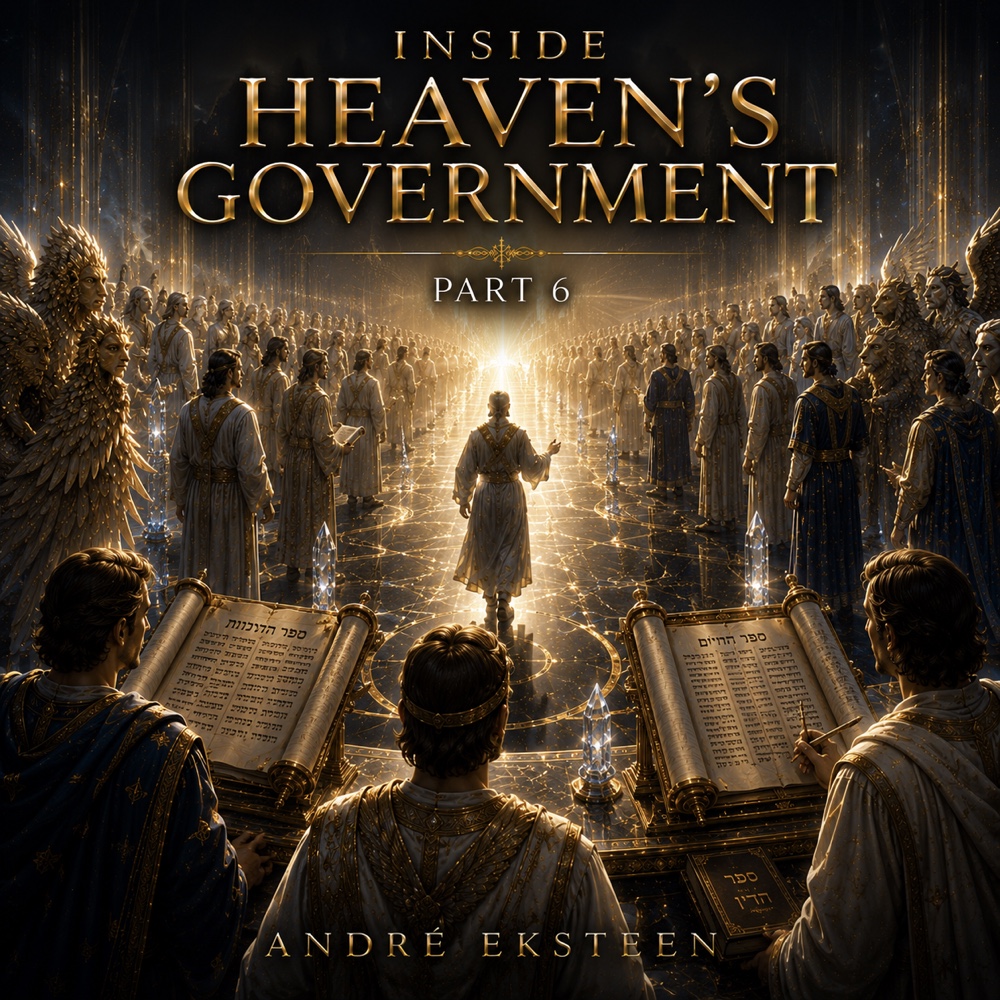
King Ahab had already made up his mind that he was going to war. Four hundred prophets stood in front of him speaking with one voice, confidently assuring him that victory was already guaranteed before the battle even started. Only one single prophet disagreed with all of them. His name was Micaiah. Before he gave his answer to the king, Micaiah described something he had personally been allowed to witness. “I saw the LORD sitting on his throne, and all the host of heaven standing by him on his right hand and on his left.” 1 Kings 22:19. Notice how naturally this fits everything we have been building across this whole series. The Lord is seated upon His throne. The heavenly host stand assembled before Him. Order is plainly evident. Authority is plainly evident. Government is plainly evident, right there in the text.
Then something remarkable happens next. The Lord asks the assembled court, “Who shall persuade Ahab, that he may go up and fall at Ramoth-gilead?” Immediately a discussion breaks out among those present. “One said on this manner, and another said on that manner.” Some readers grow uncomfortable at exactly this point, because they picture God genuinely asking for advice, as though He were somehow uncertain what to do next. That is not what the passage is actually telling us. God already knows precisely what is going to happen before anyone in that room ever opens their mouth. The discussion taking place is not there to inform God of anything He does not already know. It is there to administer His government openly, the way a king might ask one of his commanders to carry out a task he could easily perform himself, simply because that is how he has chosen to run his kingdom. God chooses, in exactly the same way, to involve members of His heavenly government in carrying out His righteous judgements rather than simply executing every detail Himself behind closed doors.
Eventually one spirit steps forward and offers, “I will persuade him.” The Lord asks him directly, “Wherewith?” Again, not because God lacks the knowledge of how it will be done, but because the administration of His kingdom is taking place openly, in full view of everyone serving within it that day. The spirit answers, “I will go forth, and I will be a lying spirit in the mouth of all his prophets.” The Lord replies, “Thou shalt persuade him, and prevail also: go forth, and do so.” Plenty of people struggle with this passage, because it challenges the comfortable, tidy picture of heaven they have carried around for years without ever examining it closely. Yet it fits perfectly with everything we have already uncovered together in this series. Responsibilities. Assignments. Delegated authority. Accountability. A functioning government doing exactly what a functioning government does. This is not chaos breaking out in heaven. This is administration working precisely as intended.
Notice something else here that often slips past unnoticed on a casual read. Every single member of the heavenly host in that scene remains under God’s authority throughout. No one volunteers independently, acting on their own private initiative. No one acts outside the King’s command. No one is off pursuing his own agenda on the side. Even when judgement finally falls on Ahab as a result, it proceeds directly from God’s throne, not from some independent decision made apart from Him. The heavenly host execute His will faithfully. They never replace it with their own.
Once you properly understand this single scene, a number of other passages across Scripture suddenly start making far more sense than before. Daniel’s visions. Job’s assemblies. Revelation’s throne room scenes. They all describe different moments unfolding within the very same heavenly government, not a string of separate, unrelated systems competing with each other for our attention. They are different glimpses of one single kingdom, viewed from different angles at different points in history. This also explains why the Bible keeps speaking, again and again, of books being opened in heaven. Records matter because functioning governments keep records of what has happened. Judgement requires accountability behind it. Authority requires order underneath it. The heavenly kingdom operates strictly according to principles the King Himself established from the very beginning, not according to whatever any individual member happens to feel like doing on a given day.
That brings us now to perhaps the single most debated passage connected to this whole subject. Psalm 82. Few chapters anywhere in Scripture have generated more argument and discomfort than these eight short verses. Part of the reason is that many readers approach the passage with their assumptions already locked firmly into place before they even start reading. Others simply avoid the passage altogether, because it raises questions nobody ever taught them how to answer from the pulpit.
The psalm opens with words that catch people off guard every time. “God standeth in the congregation of the mighty; he judgeth among the gods.” The underlying Hebrew text reads more precisely, “Elohim standeth in the congregation of El; he judgeth among the elohim.” Immediately a lot of people grow nervous reading that. Why does it unsettle them so quickly? Because they read the English word gods sitting on the page and immediately assume Scripture must be teaching some form of polytheism here. Nothing could be further from the truth than that assumption. The Hebrew word elohim does not automatically refer to the Most High God every single time it appears in the text. Like a number of Hebrew words, its precise meaning depends entirely on the context surrounding it. Sometimes it refers directly to the LORD Himself. Sometimes it refers to the false gods worshipped by the surrounding nations. Sometimes it refers to inhabitants of the unseen realm who are neither God nor false idols. The context is always what determines the meaning, every single time.
Psalm 82 leaves very little room for genuine confusion once you read it on its own terms. The first Elohim mentioned is clearly the Most High God Himself. He is the one standing in judgement over the scene. The remaining elohim mentioned in the passage are themselves the ones actually being judged. They are not equal to God in any sense. They are accountable to Him, the way every subject is accountable to their king. The entire scene is judicial from start to finish. Once again, we find ourselves standing inside God’s heavenly court, watching the very same kind of proceeding we have already encountered more than once in this series.
Notice carefully what God actually says to them in this scene. “How long will ye judge unjustly, and accept the persons of the wicked?” Those words tell us a great deal about the responsibilities that had been entrusted to these particular beings. They had been given real authority. They had genuinely exercised judgement using that authority. They had failed badly in carrying out that responsibility faithfully. Now they stand before the King to answer for exactly that failure. That pattern should sound thoroughly familiar by this point in the series. We have already encountered it repeatedly. Delegated authority. Accountability. Judgement when it is deserved. The government of heaven functions exactly the way any righteous kingdom should function when one of its appointed officials fails to do his job properly.
God then declares over them, “I have said, Ye are gods; and all of you are children of the most High.” The expression children of the most High belongs to the very same family of language we already encountered earlier in this series when we studied the sons of God. Created beings. Members of the heavenly host. Serving under God’s authority the whole time. Yet despite their exalted position and their high standing within His government, they remain creatures through and through. They remain accountable to Him. They remain subject to His judgement whenever it falls due, no matter how high their original rank had been. God concludes the scene with these sobering words, “But ye shall die like men, and fall like one of the princes.” Whatever else those particular words may involve, and there is plenty still to unpack there later in this series, one truth stands above every bit of the debate surrounding this psalm. No member of the heavenly host stands beyond God’s authority, ever. No office grants true independence from the throne. No rank places anyone above the King Himself. That single principle governs the entire heavenly kingdom from beginning to end. It governed before rebellion ever entered the picture. It governed after rebellion entered the picture. It governs today, right now, as you read this. It will govern forever, without exception.
Psalm 82 is therefore not some isolated theological puzzle floating off on its own, disconnected from everything else we have studied. It is another courtroom scene. Another glimpse into the actual administration of God’s heavenly government. Another confirmation, on top of everything else we have already gathered, that Scripture consistently presents heaven as an ordered kingdom under one sovereign King, rather than some loose collection of unrelated spiritual beings doing whatever they each happen to feel like.
By this point the evidence has become genuinely difficult to ignore, no matter how you try to explain it away. Job. Micaiah. Daniel. The Psalms. Revelation. Each one of them opens the curtain for just a moment. Each one reveals the very same throne. The same King. The same government. The same heavenly host serving according to the exact responsibilities entrusted to each of them. These are not separate, unrelated stories scattered randomly through Scripture. They are different witnesses, writing centuries apart, each describing the very same kingdom from a different vantage point in history.
Yet there remains one final question hanging over everything we have covered so far in this article. Who exactly are these members of the Divine Council? Are they all equal in rank and standing? Do they all occupy the same position within God’s government, doing the same kind of work? Or has God, right from the very beginning, established genuinely different orders within His heavenly government, each one serving according to its own unique purpose and assignment? That is the question we are going to have to answer properly before we can fully understand the breathtaking order God established within His heavenly kingdom from the start.
Before we leave this particular subject behind, though, there is one final misconception worth addressing directly, because it quietly sits underneath almost every conversation people have about the Divine Council without them even realising it is there. The moment people hear the words heavenly council, they often picture God ruling alongside a group of equals, almost as though heaven operates something like a parliament, where everyone present gets one vote and the majority decides what happens next. Nothing anywhere in Scripture supports that picture, not even slightly.
The Divine Council is not a council of equals sitting around a table. It is the King’s court, and the distinction matters enormously. Every single glimpse Scripture gives us points toward exactly the same conclusion, without exception. God sits upon the throne. The heavenly host stand before Him in their assigned places. Assignments are issued directly by Him. Judgement proceeds directly from Him. Authority belongs to Him alone. No member of that council possesses any authority independently of the throne he stands before. That is precisely why every single one of these scenes begins with God already seated, already in His place before anything else happens. His position is never in question anywhere in the text. His authority is never genuinely challenged by anyone present. His sovereignty is never actually up for debate, no matter how the conversation in the room unfolds afterward.
The council exists, not because God needs any assistance governing His own kingdom, but because He has deliberately chosen to govern through an ordered administration rather than through unilateral decree alone. That principle runs straight through the whole of Scripture, not just through these heavenly scenes. When God established Israel as a nation, He appointed leaders to serve under Him. When He established the priesthood, He appointed priests to carry out that service. When He established the monarchy, He appointed kings to rule under His ultimate authority. When Christ established His Church, He appointed apostles, elders and shepherds to carry that work forward. Delegated responsibility is woven into the very fabric of God’s way of governing everything He has ever made. It did not begin down here on earth among men. Earth simply reflects a pattern that already existed in heaven long before mankind was ever formed to take part in it.
That also helps us understand why the Bible repeatedly records heavenly beings appearing before God specifically to receive assignments handed to them. They are not arriving in His presence to increase His knowledge of anything. They are receiving instructions directly from the One who already knows the end from the beginning, before either of them ever began. Isaiah records the Lord asking exactly this question into the room, “Whom shall I send, and who will go for us?” Isaiah himself answers, “Here am I; send me.” That familiar passage reveals the very same principle we have been tracing throughout this entire article. God sends. Others go out on His behalf. Authority flows downward from the throne. Service flows outward toward the rest of creation. The kingdom functions exactly the way it was designed to function from the very start.
There is one more important lesson hiding inside all of this that we should not pass over too quickly. Responsibility always brings accountability along with it, without exception. The greater the authority entrusted to any given servant, the greater the accountability that servant carries before the King who entrusted it to him. That principle applies right throughout Scripture, consistently, from beginning to end. It applied to the nation of Israel as a whole. It applied to her kings. It applied to her prophets. It applied to the apostles after Christ’s ascension. And it applies equally, without exception, within the heavenly kingdom itself. That is exactly why the scenes we have walked through in Job and in Psalm 82 carry the weight they do. They remind us, in no uncertain terms, that no created being, regardless of rank or responsibility, stands beyond God’s judgement at any point. The throne remains above every single one of them, always.
This truth becomes especially important as we continue moving through the rest of this series. We have already established that the heavenly host existed before mankind ever did. We have established that God’s government was fully functioning long before Adam ever took his first breath. We have established that different responsibilities already existed within that government from the start. Now we have discovered, on top of all of that, that those responsibilities were exercised within an ordered administration standing before the throne itself, not scattered about however each being happened to please. The picture keeps becoming clearer with every article we work through together. The heavenly host are not some unorganised multitude drifting about with no real structure. They are not independent powers scattered loosely throughout the heavens, answering to nobody in particular. They form part of God’s heavenly government, every last one of them, serving under His authority according to the specific purpose for which each was originally created.
Yet one important question still remains genuinely unanswered as we close this article. Who exactly are these members of the heavenly host? Are they truly all of equal rank, doing identical work? Do they all serve in exactly the same way, regardless of where they stand? Or did God create distinct orders within His heavenly kingdom from the very beginning, each one entrusted with different responsibilities and serving in different spheres of His government? We have already mentioned cherubim along the way. We have mentioned seraphim. We have mentioned the sons of God, the living creatures, principalities, powers and archangels, in passing, without slowing down to look closely at any one of them. It is now finally time to stop simply mentioning them in passing and begin identifying each of them properly, one at a time. Only then will we begin to appreciate the breathtaking scope, wisdom and beauty woven into God’s heavenly government.
That is exactly where our journey now turns. Before we examine each individual order in close detail, we first need to step back and look at the heavenly host as a complete whole, seeing clearly how God organised His kingdom from the very beginning and how each order fits properly within the administration of the King of kings. Only once that full overview is firmly in place will we be ready to study each order on its own and understand the specific purpose for which God originally created it.