From Genesis to Revelation: The One Story – The Golden Thread that Explains Everything – Part 2
By Andre Eksteen
Then God spoke. “Let there be light.” With that single command, the silence was torn open, and light broke through the darkness that hung over the deep. Not sunlight — His presence itself. The first day begins with restoration: light against darkness, order against chaos. And God says it is good.
On the second day He separates the waters. An expanse appears, and He calls it heaven. The separation brings structure where there had only been flow — the first boundaries between the world of matter and the realm of spirit.
On the third day He brings forth dry land, and life springs up. Plants and seed appear, each according to its kind. Life returns to the earth, not by chance, but by purpose.
On the fourth day He places lights in the heavens: the sun, moon, and stars. Not as sources of light, but as markers of order and time — seasons, days, and years. What had once been torn apart regains rhythm.
Then He fills the waters with fish and the heavens with birds. This is the fifth day. Creation begins to breathe; the world moves again, full of sound and life.
Then He speaks for the last time that week, and the earth brings forth animals — each according to its kind. This is the sixth day, the completion of restoration. The world now stands full of life, perfectly prepared for the final act.
And then it becomes quiet again. Everything waits. The earth holds its breath. For the next words God is about to speak will change everything.
“Let Us make man in Our image, after Our likeness…”
When God said this, the heavens fell silent. Every being of light felt the weight of those words. For this was not just another creation — it was a revelation. God would reflect Himself in something that had never existed before. Not in angels of fire, not in thrones or seraphim, but in a being of dust.
Lucifer watched — the one who once carried the radiance of God’s presence. He who had said in his heart, “I will ascend into heaven, I will exalt my throne above the stars of God,” now watches as the Creator places His own image into a creature made lower than the angels. What Lucifer wanted to take for himself, God now gives out of love. And not to him — but to man.
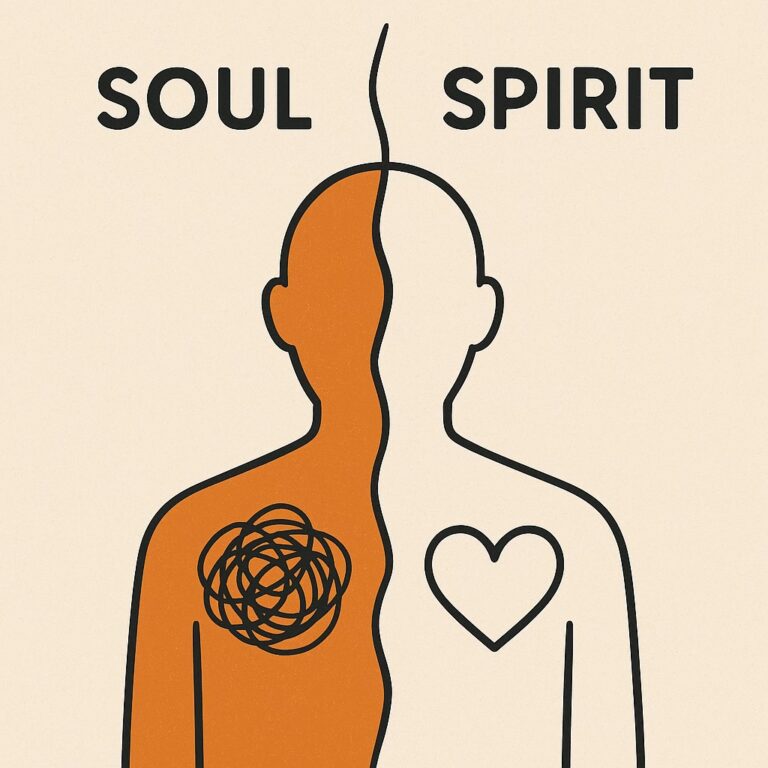
When God breathed His breath into the dust, heaven trembled. That breath — the Spirit of life — gave man something no angel had ever received: God’s image, God’s character, God’s capacity to love, to choose, to create.
For when God said, “Let them have dominion over the earth,” something tore inside him. The world that had once been under his authority, the creation over which he believed he ruled, would now belong to this new creature — this being of soil and breath. The psalmist later describes it: “Thou hast made him a little lower than the angels, and hast crowned him with glory and honour. Thou madest him to have dominion over the works of thy hands” (Psalm 8:5–6).
For Lucifer it was not merely humiliation — it was betrayal in his own eyes. For God did what he never could: He shared His glory without surrendering His throne. What Lucifer tried to steal through rebellion, God gave through love.
And there, in that moment, his decision was forged: if he could not have the throne, he would destroy the image of the throne. If he could not be like God, he would corrupt those who were made in God’s image, just as he had already done with a third of the heavenly beings.
In the cool of the evening, God walked with man in the garden. His voice carried through the trees, and everything was at peace. Man spoke with his Creator — not in prayer, but in conversation. There was no fear, no shame. This is how it was meant to be.
But just beyond the circle of that light, something waited. Lucifer — once the bearer of light, now the father of lies. He watched man with a hatred long since sown. He knew: he could not overcome God, but he could try to break the image of God.
He does not come with violence, but with words. Not with fear, but with velvet. “Did God really say…?” — the first seed of doubt. And when he saw she was listening, he delivered his deadly strike: “God knows that when you eat, you will be like Him.” The oldest lie in history — the same pride that caused his own fall.
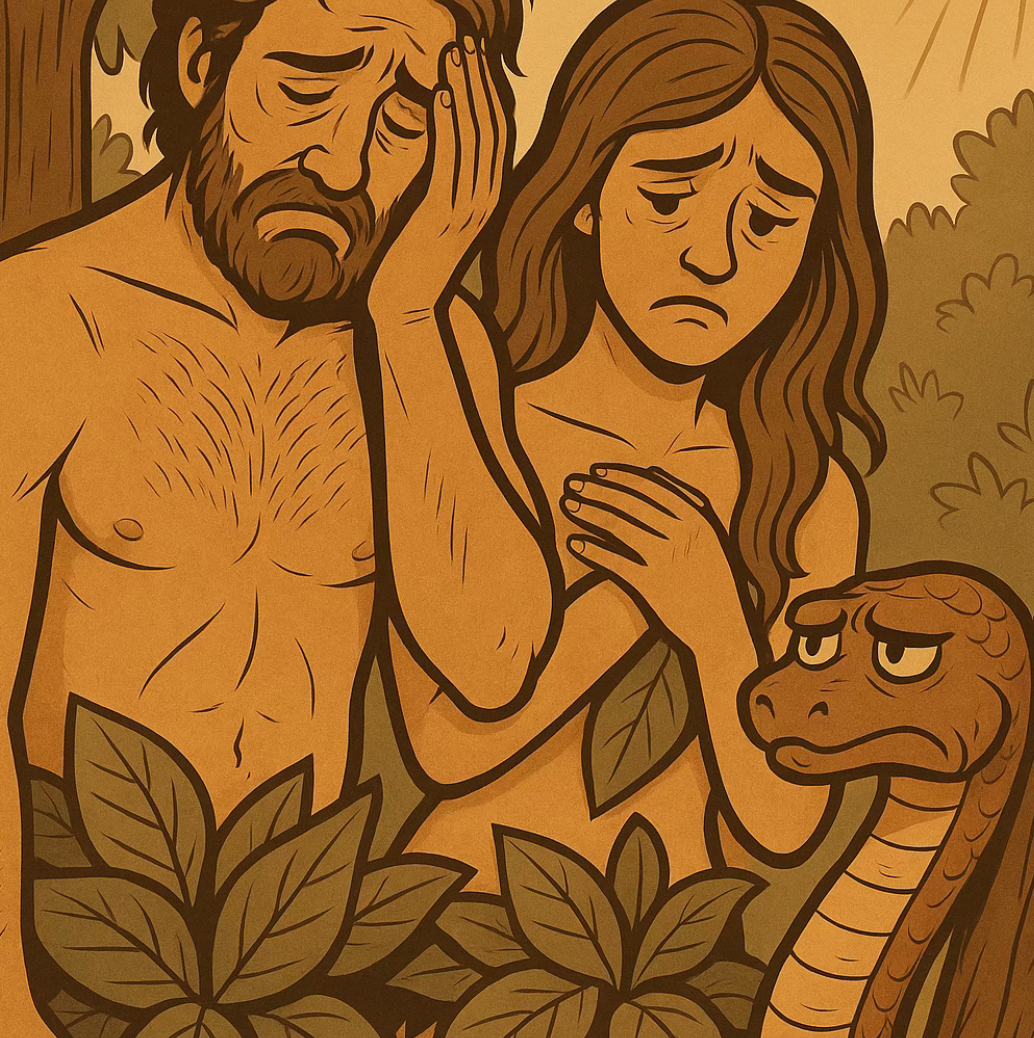
Eve looked, and that is where it began. She saw, she wondered, and then she believed. She was deceived. She thought it was something good, something better, something more. And she ate. Then she gave to Adam, and he knew. He saw what had happened. He was not deceived — he chose between good and evil, and he consciously chose evil. He knew what God had said, yet he ate with her. That is why the Bible does not say sin came through Eve, but through Adam.
In that moment the light in their eyes grew dim — the glow of their faces faded. That heavenly radiance that covered them departed, just as we would later see again with Moses when he came down from the mountain and the people could not look at him because his face shone with the presence of God. Man did not lose clothing — he lost glory.
What had once been full of light gave way to shame. The image of God was not erased, but damaged. Lucifer had his revenge — the crown of God’s creation had opened the door itself.
When God walked through the garden again, His voice cut through the silence. Adam and Eve hid themselves, and the serpent knew his hour had come. God did not ask questions because He lacked knowledge — He did so so that they could hear their own guilt. For nothing remains hidden before His presence.
“Adam, where are you?”
Not because God could not find him, but because Adam needed to hear how far he had moved away from His presence.
“Who told you that you were naked?”
The question that would echo through the ages — which voice did you choose to believe?
And when He asked Eve, “What is this that you have done?” her answer revealed the truth humanity still tries to deny today: “The serpent deceived me.”
Then God turned to the serpent — and heaven fell silent. For what He was about to say would change the course of history.
What follows in that moment is not merely judgement — it is the birth of a promise, the beginning of a war, and the first thread of the Golden Line that runs through the entire Word.
In Part 3 we will look at those words — the sentence that looked like punishment, but was in fact the first prophecy of salvation. The moment when God Himself declared war.