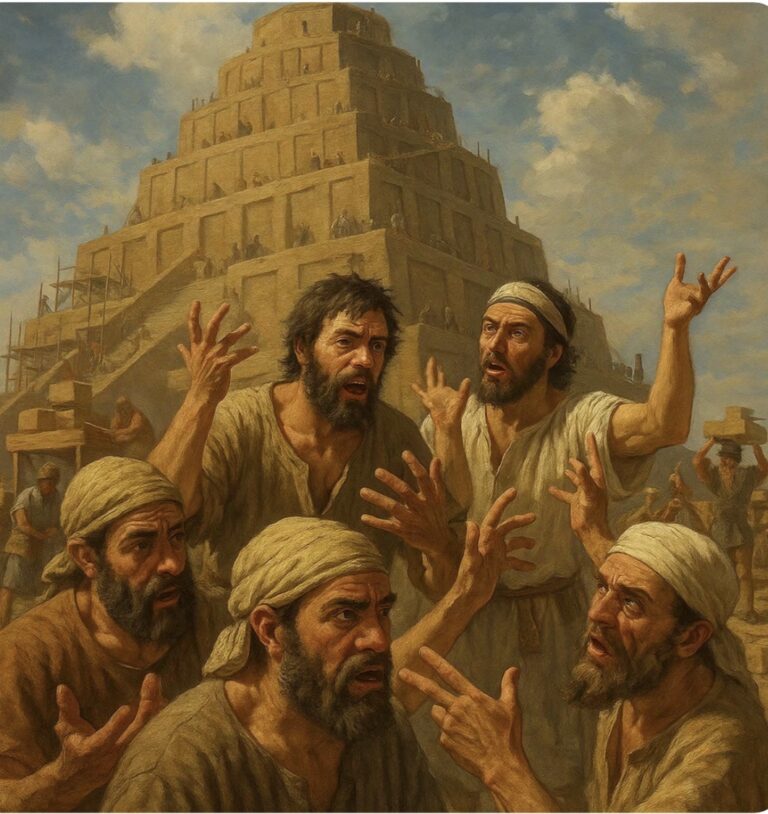
Understanding the Gravity of Vows
By Andre Eksteen
Today’s discussion deals with a subject that many people would rather avoid, yet one that carries enormous spiritual weight: vows made before God. This applies not only to personal vows, but also to ancestral vows that bind families, communities, and even nations. Scripture is clear that God takes vows seriously, whether we do or not.
This is a subject that is often underestimated or brushed aside. Marriage vows are a simple and painful example. Modern society treats them as optional promises, easy to break and easy to replace. Yet many who walk away from those vows, even if they never admit it out loud, struggle for the rest of their lives to find deep, lasting fulfilment in relationships. Something breaks when a vow before God is treated as disposable. That principle does not stop at marriage. It applies to every vow made in God’s name.
Our focus here is the Blood River Vow, not because it is the only vow that matters, but because of its relevance to us now, and because it involved an entire people calling on God in a moment of absolute desperation. What was done that day was not symbolic, political, or cultural. It was spiritual. And spiritual things have consequences.
The Afrikaners vowed before God that 16 December would be kept as a Sabbath day of thanksgiving if He delivered them from destruction. That vow was made clearly, publicly, and knowingly. Over time it was broken. And when vows are broken, consequences follow, whether people believe it or not.
This warning may unsettle you. It may make you uncomfortable, especially if you are an Afrikaner who would rather see this day as a public holiday, a braai, a long weekend, or just another workday. If anger rises up, that reaction itself should tell you something. Scripture says, “The heart is deceitful above all things, and desperately wicked: who can know it?” (Jeremiah 17:9, KJV). Discomfort should lead to honest reflection, not defence. If you are not ready for that, it is easier to turn away and distract yourself with lighter topics.
But if you continue reading, the question must be asked plainly: are you, as an Afrikaner, honouring the vow your forefathers made to God? If not, then you need to be honest about what you are claiming when you claim that identity. You cannot inherit the pride, history, and benefits of that identity while rejecting its spiritual responsibility. Scripture is clear that God does not separate privilege from obedience.
The Bible repeatedly shows that vows are often made in times of crisis. Jacob did this when he fled from Esau. “And Jacob vowed a vow, saying, If God will be with me, and will keep me in this way that I go… then shall the LORD be my God” (Genesis 28:20–21, KJV). Israel did this again and again when faced with destruction. The pattern is always the same: desperation leads to a vow, God delivers, and over time gratitude fades.
The Blood River Vow fits this pattern exactly. In 1838, the Voortrekkers stood facing certain death. They were outnumbered, surrounded, and humanly speaking, finished. They called on God, not with casual words, but with a solemn vow. They promised to keep the day of deliverance as a Sabbath-like day of thanksgiving, to honour God and teach their children what He had done.
God answered. The victory was overwhelming and unmistakable. Like many moments in Scripture, it bore the fingerprints of divine intervention. It echoes events such as 2 Kings 6, where Elisha’s servant suddenly sees the unseen army of God surrounding them. “And Elisha prayed, and said, LORD, I pray thee, open his eyes, that he may see. And the LORD opened the eyes of the young man; and he saw: and, behold, the mountain was full of horses and chariots of fire round about Elisha” (2 Kings 6:17, KJV). God delivers, but His deliverance does not cancel human responsibility.
For a time, the vow was honoured. Churches were full on 16 December. Work stopped. Families gathered in reverence. The day was not about victory over enemies, but about thanksgiving to God. But slowly, almost imperceptibly, priorities shifted. Material prosperity grew. Political power expanded. The need for God felt less urgent. The vow became tradition, then history, then inconvenience.
By the late twentieth century, many Afrikaners treated the day as just another public holiday. Work resumed. Sport took centre stage. Entertainment replaced remembrance. What was once a Sabbath-like day before God became a cultural relic. Scripture warns against this exact behaviour. “When thou shalt vow a vow unto the LORD thy God, thou shalt not slack to pay it: for the LORD thy God will surely require it of thee; and it would be sin in thee” (Deuteronomy 23:21, KJV).
This is not poetic language. It is a warning.
Ecclesiastes is even more direct: “When thou vowest a vow unto God, defer not to pay it… Better is it that thou shouldest not vow, than that thou shouldest vow and not pay” (Ecclesiastes 5:4–5, KJV). God does not forget vows just because generations pass. He is not bound by calendars, governments, or public opinion.
Ancient writings outside the canon echo this same principle. The Book of Jasher repeatedly records how vows and covenants brought either blessing or judgement upon families and nations depending on whether they were kept. Jubilees stresses that oaths made before God are recorded and remembered, even when people move on. These ancient texts reflect the same worldview as Scripture: God is a witness to vows, and He holds people accountable.
The consequences of breaking vows are not always immediate, but they are real. The shift from spiritual dependence to material confidence always carries a price. By 1994, the Afrikaner people lost political control of the land they had governed for generations. What followed was not merely political change, but a profound cultural and social collapse. Today, Afrikaners exist as a marginalised group, often treated as second-rate citizens, sometimes even as unwelcome strangers in the land of their birth. This reality has become so visible internationally that even the United States has taken notice, with President Donald Trump publicly acknowledging the persecution of Afrikaners and stating that the option of refugee status should be considered for those so oppressed that they are left with no choice but to flee the country of their birth.
This is not about race politics. It is about spiritual cause and effect. Scripture shows again and again that when God removes His protection, enemies do not need to be strong. All that is needed is His absence. “Except the LORD keep the city, the watchman waketh but in vain” (Psalm 127:1, KJV).
Jesus Himself spoke about vows, not to weaken them, but to expose how lightly people treat truth. “Let your communication be, Yea, yea; Nay, nay: for whatsoever is more than these cometh of evil” (Matthew 5:37, KJV). He was not saying vows no longer matter. He was saying that integrity should be so deep that vows are not needed to force honesty. But when vows are made, especially to God, they carry weight.
The neglect of the Blood River Vow mirrors the broader decline of spiritual seriousness. It serves as a warning, not just to Afrikaners, but to anyone who believes they can call on God in crisis and then return Him to the shelf once life improves. God is not a rescue tool. He is Lord.
Before making vows, we are commanded to think carefully. After making them, we are commanded to honour them. This is not legalism. It is relationship. Trust is built on faithfulness. A life that honours God only in hardship, but forgets Him in prosperity, is not a life of faith.
As tomorrow approaches, the question becomes very practical. How will you treat the day? As a Sabbath-like day of thanksgiving, or as just another opportunity for work, sport, or leisure? Your answer reveals more than your opinion. It reveals your posture toward God.
In closing, we must recover a deep respect for vows. Words spoken before God are not harmless. They shape families, nations, and futures. Our heritage is not only cultural or historical; it is spiritual. To honour that heritage is to honour God Himself.
May we live with integrity, not only in what we say, but in what we keep. May our lives reflect reverence for God in times of blessing as much as in times of fear. And may the Holy Spirit guide us into truth, sincerity, and faithfulness, so that our faith is not hollow, our heritage not empty, and our relationship with God grounded in obedience rather than memory.