
Live the Golden Line: Strangers in a World They Do Not Know – Part 27
By Andre Eksteen
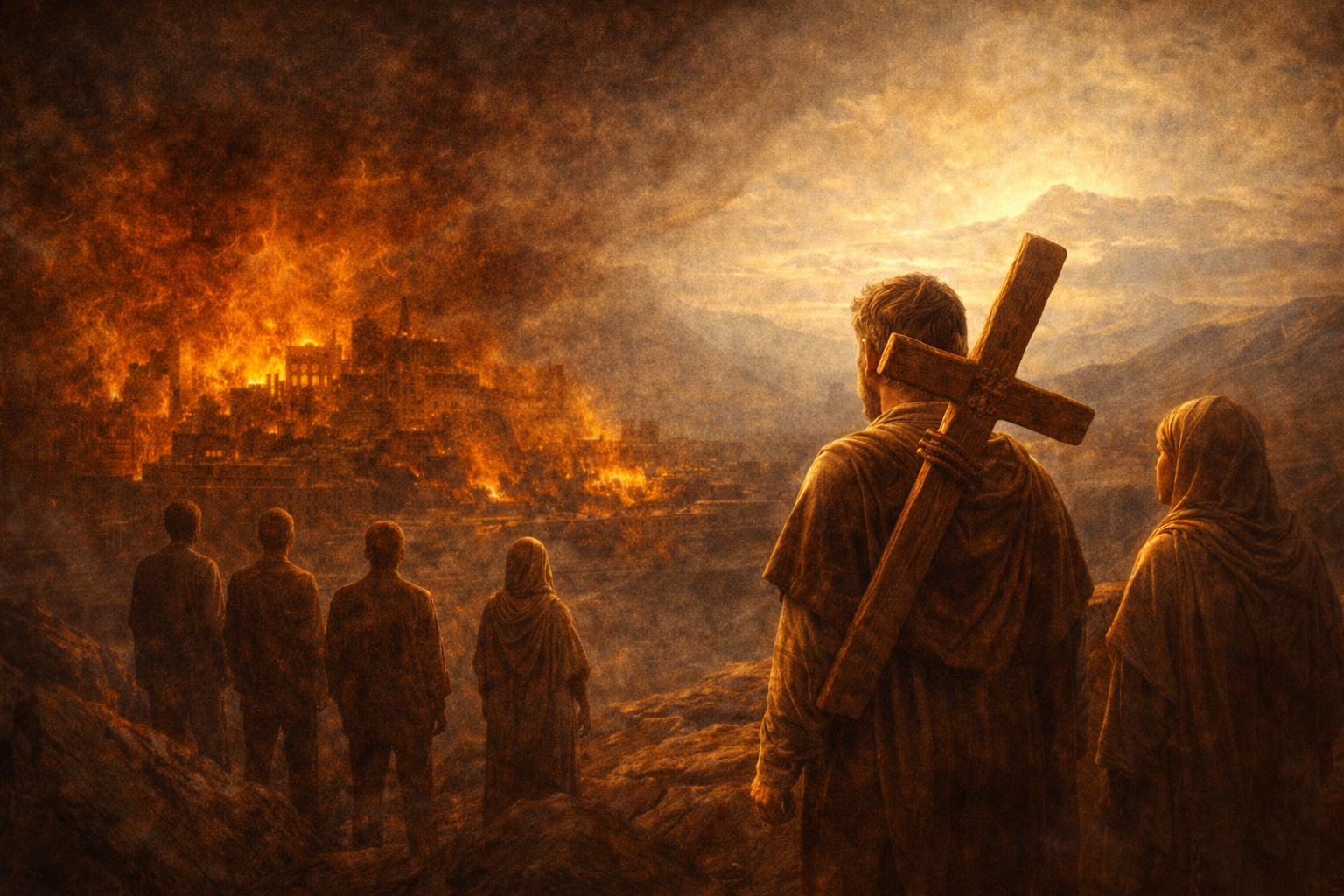
In Part 26 we saw how God works through generations, how His order begins in the home and His truth flows from father to child. But even where the home is in order, the world outside remains confused. That is because this world was never meant to be our home. The history of God’s people is not the story of people who fitted in — it is the story of people who stood apart.
From the very beginning, the children of God were always different. Abraham left his land, his family, and his home to go to a place he did not know. Joseph was sold by his brothers because his dreams were too big for their unbelief. Moses gave up his royal title for a people who would later curse him. David was hunted for years by the king he honoured. Daniel was taken from his land and had to live out his faith in a foreign palace. And even Jesus — the Son of God — had nowhere to lay His head.
The message is simple: if you feel at home in this world, you are probably not living according to the Kingdom.
The Bible says, “They confessed that they were strangers and pilgrims on the earth.” (Hebrews 11:13) This describes the heroes of faith, the men and women who chose to hold on to truth even when the world did not understand them. They saw heaven as their country, not Canaan, Egypt, or Rome. They knew this: we are not made to be comfortable in a world that has forgotten God.
Yet today the church is trying to do exactly that — to be comfortable. To be acceptable. To fit in. And with every adjustment, it becomes a little less holy, a little more worldly, until no difference remains. The Golden Line disappears into a sea of grey.
God’s people have always been strangers. They have always had to look different, think different, speak different. Not because they are better, but because they belong to Someone else. The world sees it as oddness; God sees it as faithfulness.
Abraham lived in tents while the nations around him built palaces. He walked by faith while they fortified cities. His inheritance was not land — it was obedience.
Joseph sat in prison while his brothers celebrated. Yet God used his captivity to save a nation.
Moses left the splendour of Egypt for the dust of the wilderness — because he knew the path to promise always runs through isolation.
Daniel refused to eat from the king’s table, even though it was rich and abundant — because he knew that if you eat from Babylon, you become part of Babylon.
It has always been this way. The world invites you every day to eat from its table — the table of comfort, status, acceptance, self-indulgence. But God says, “Come out from among them and be separate.” (2 Corinthians 6:17)
Being a stranger is not a flaw; it is a sign.
A sign that you have not been sold.
A sign that you are still free.
A sign that you can still hear what the world has long stopped hearing — the voice of your King.
But it is not easy. Because strangeness brings loneliness. You will feel out of step with what has become “normal”. You will hear people speak about things that hurt you, and they will laugh. You will stand for things they mock. You will refuse to bow where others kneel, and they will call you an outsider. But that is exactly where you must be — outside. Because God does not build His Kingdom inside Babylon.
The Shepherd of Hermas says, “The world is an inn for strangers, and the Lord’s children must only use it, not dwell in it.” (Hermas, Parable 9:1)
We are here on a journey — not to settle, but to testify.
Yet many Christians try to change the world by becoming like the world. They say, “If we are just more relevant, they will listen.” But that is a lie. The world is not saved through agreement — it is saved through contrast. Your light means nothing if it is no different from the darkness.
Look at Noah. He built an ark when there was not yet a drop of rain. People mocked him, laughed, called him mad. But when the flood came, it was his strangeness that saved him. It has always been this way — those who look different are always mocked first and admired later.
Jesus Himself said, “If you were of the world, the world would love its own; but because you are not of the world, the world hates you.” (John 15:19)
He did not say this as a warning, but as encouragement. He wanted us to know that the world’s hatred is not a sign of failure; it is proof of identity.
I see it daily — believers wondering why they feel like strangers in their own country. They say, “I no longer understand the world. Everything has changed.” No — it is not the world that has become strange; it is you who have woken up. When the Spirit lives in you, sin suddenly looks strange. You begin to see how deep the corruption runs, how empty the shine is. And you can no longer laugh along, because you know this world is digging its own grave.
The Book of Enoch says, “In the days of the end, the righteous will appear as strangers, and the sinner will mock them, but their light will prevail.” (Enoch 99:3)
This describes exactly what is happening today. Faith is seen as extremism, purity as oppression, truth as hate speech. And yet the line remains clear: those who remain obedient will overcome.
Being a stranger is a calling. God uses your difference to awaken others. Your silence in the midst of noise, your purity in the midst of filth, your peace in the midst of panic — this is your testimony. You do not always need to preach; your very existence is already an indictment of a world without direction.
But this is where many stumble. Because no one enjoys being alone. The urge to fit in is strong — especially when you see the world moving together. It is easier to blend in than to stand firm. Easier to remain silent than to speak out. But the Golden Line does not run through comfort; it runs through obedience.
Look at Lot. He began with Abraham — a man of faith — but when he settled near Sodom, he slowly changed. His eyes grew accustomed to the city lights. His ears to the voices of compromise. When the angels warned him, he hesitated. His wife looked back — she could not let go. That is the danger of adaptation: you start with intention, but end in loss.
The world wants you to believe that you lose something by being a stranger. But the truth is this: you lose yourself when you try to fit in. Your identity, your peace, your calling — all disappear when you adjust your faith to the world’s measure.
The Testament of Levi says, “Do not love the world, for what you love will become your master.” (Levi 4:8)
That is exactly what happens — people become addicted to acceptance. They seek applause more than truth. They prefer the sound of approval to the quiet of obedience.
We live in a time when honesty makes you enemies. When you are punished for saying that truth is absolute. When you are mocked for believing that Jesus is the only way. And yet this is nothing new. The first Christians experienced the same. They were not crucified because they lacked faith — they were crucified because they held to the truth that there is only one Lord. It is the same war, only with different weapons.
The world has changed its laws, but not its heart. Where Rome tried to silence you with a sword, the modern world does it with shame and ridicule. They call it “tolerance”, but what they really mean is: “We will accept you as long as you do not speak truth.” And many Christians bite at that bait, because it feels safer to be silent than to be rejected.
But you were not made for safety; you were made for truth.
Heaven will not be full of comfortable people — it will be full of faithful people.
The Book of Jubilees says, “The people who fear the Lord will appear as strangers, but the world will be remembered through them.” (Jubilees 23:12)
This is the legacy of the saints — they never belonged, but they left marks that still speak centuries later.
Abraham’s tent disappeared, but his descendants changed the world.
Daniel’s palace was destroyed, but his prayers still stand in heaven.
Paul’s prison cells are long empty, but his words shaped nations.
The world forgets its kings, but it remembers its prophets.
That is why I say: do not fear your strangeness. This is your mark of calling. You feel different because you belong to another Kingdom. Your passport says earth, but your citizenship says heaven. Your accent is faith, your culture is grace, and your law is obedience.
When the world asks you, “Why are you so different?” — smile. Because that question is your testimony. It means they see something they cannot explain. And it is precisely that light that the Spirit uses to break hearts.
Jesus said, “Let your light so shine before men, that they may see your good works and glorify your Father in heaven.” (Matthew 5:16)
Notice: He does not say let your voice be loud, but let your light shine. Light makes no noise — it simply reveals.
And light does not apologise for shining.
If you feel like a stranger, remember: you are in good company. The prophets, the apostles, even the Son of God Himself — all were strangers. They were misunderstood, rejected, persecuted. But they knew this world was only a stop, not a destination.
The Odes of Solomon say, “I wept because they did not understand me, but my tears became the path for those who came after me.” (Ode 27:3)
Every tear you shed because you feel different becomes a path of light for someone else.
So keep standing. Keep believing. Keep being different.
Do not be ashamed of your holiness.
Do not be ashamed of your silence.
Do not be ashamed that you no longer feel part of the world’s system — that is the point. You were not made to fit in here; you were made to stand out.
The world says you are strange; heaven says you are anointed.
The world says you are out of touch; God says you are chosen.
The world says you do not belong; God says you are exactly where you should be.
And when you stand before Him one day, you will hear the words every stranger lives for:
“Welcome home.”
For this is the paradox of faith — you feel strange here, and that very feeling proves that you are on your way home.
The world may mock you, but it cannot change you.
They may see your isolation, but to God it is devotion.
They may ridicule your silence, but in that silence you hear His voice.
So remain faithful, stranger of God.
Remain pure in a dirty time.
Remain honest in a lying age.
Remain gentle in a harsh world.
And when the time comes, you will see — you were never alone. Heaven was always with you.
The Golden Line runs through history, through every generation of outcasts who refused to bow. It is not the path of popularity; it is the path of truth. And it is better to be a stranger in a world without God than to feel at home in one without hope.
Deep calls to deep. Answer Him.




Thank you, Andre. That is exactly how I feel — a stranger. I don’t fit in.
I look around me and say, no thank you, I don’t want to be part of this.
Yes — isn’t it wonderful to feel like that?
I don’t state it explicitly in the article, but that is exactly what happens when you step outside and look in. A peace settles in. You no longer share in the fear, the tension, and the inner chaos of those who are still living “inside”. You are no longer swept along by emotions, the crowds, or the agendas.
It really does start to feel almost like watching a film — you see everything happening, but it no longer has control over your inner world. That is the moment you realise: I don’t belong here. I’m just passing through.
Scripture calls this being a stranger and a sojourner. And honestly, it is one of the clearest signs of spiritual maturity. When you no longer want to fit in, no longer want to belong, but can quietly say, “No, thank you — I choose something else.”
That peace is not indifference. It is God-given freedom.