From Genesis to Revelation: The One Story – The Golden Thread that Explains Everything – Part 9
By Andre Eksteen
“Let Us go down, and there confound their language, that they may not understand one another’s speech.”
— Genesis 11:7
With that single sentence, God brought to a halt the greatest attempt since the Flood to realise Satan’s dream — to elevate man, and himself, to equality with God. Not with fire. Not with water. With words.
The world has always believed that Babel was merely a story about pride — people who wanted to build a tower to “be like God.” That is what the church likes to preach, because it is safe and simple. But the Bible says something far deeper. Babel was not an architectural project — it was a spiritual experiment.
Before I continue, let me make something clear. I use the word DNA not to sound modern, but because it accurately describes what the Bible means with the Hebrew word zera‛ (seed, offspring, life-germ). It is the code of life, the pattern that determines how every kind reproduces according to its own nature. The Bible said this long before science did. The discovery of DNA in 1953 merely confirmed how precise Genesis already was: “each according to its kind.”
If Adam was created in the image of God, then his zera‛ — his life code — had to differ from any being not created in God’s image. That is why I use this term: it helps us understand that the conflict between God’s seed and Satan’s seed is not symbolic, but literal. It is about blood, lineage, nature. It is the difference between the breath of God and the spirit of rebellion.
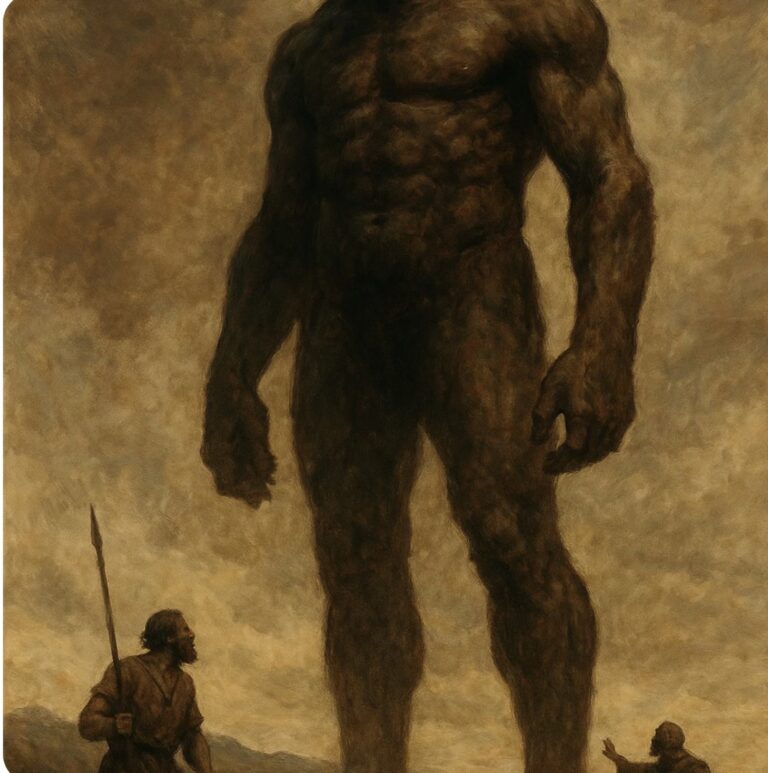
As we saw in the previous part, Satan’s seed carries a different nature from the Adamic line. They do not merely carry a different spirit — their DNA gives them the ability to perceive the boundaries between realms, those thin places where heaven and earth touch.
The fallen angels used this knowledge first when they descended on Mount Hermon — the place where they swore to mingle with mankind (Enoch 6). They knew where the gates lay. And Nimrod inherited that knowledge.
Babel was therefore not built in that place by chance. The plain of Shinar was not just any piece of land — it was a gate-place, a spiritual crossing point. The Book of Jasher says Nimrod chose the location “according to the stars,” because the stars have always been the language of the heavenly beings. He knew where heaven lay close enough to be touched.
Even modern science now acknowledges that there are places on earth where the space between dimensions feels thin — where magnetic and gravitational fields behave strangely. These so-called anomaly zones — Mount Hermon, the Bermuda Triangle, Skinwalker Ranch, and certain ancient temple sites — show that there are geographic locations where the boundaries between realms are literally weakened. Nimrod knew this. Babel was built there for that very reason.
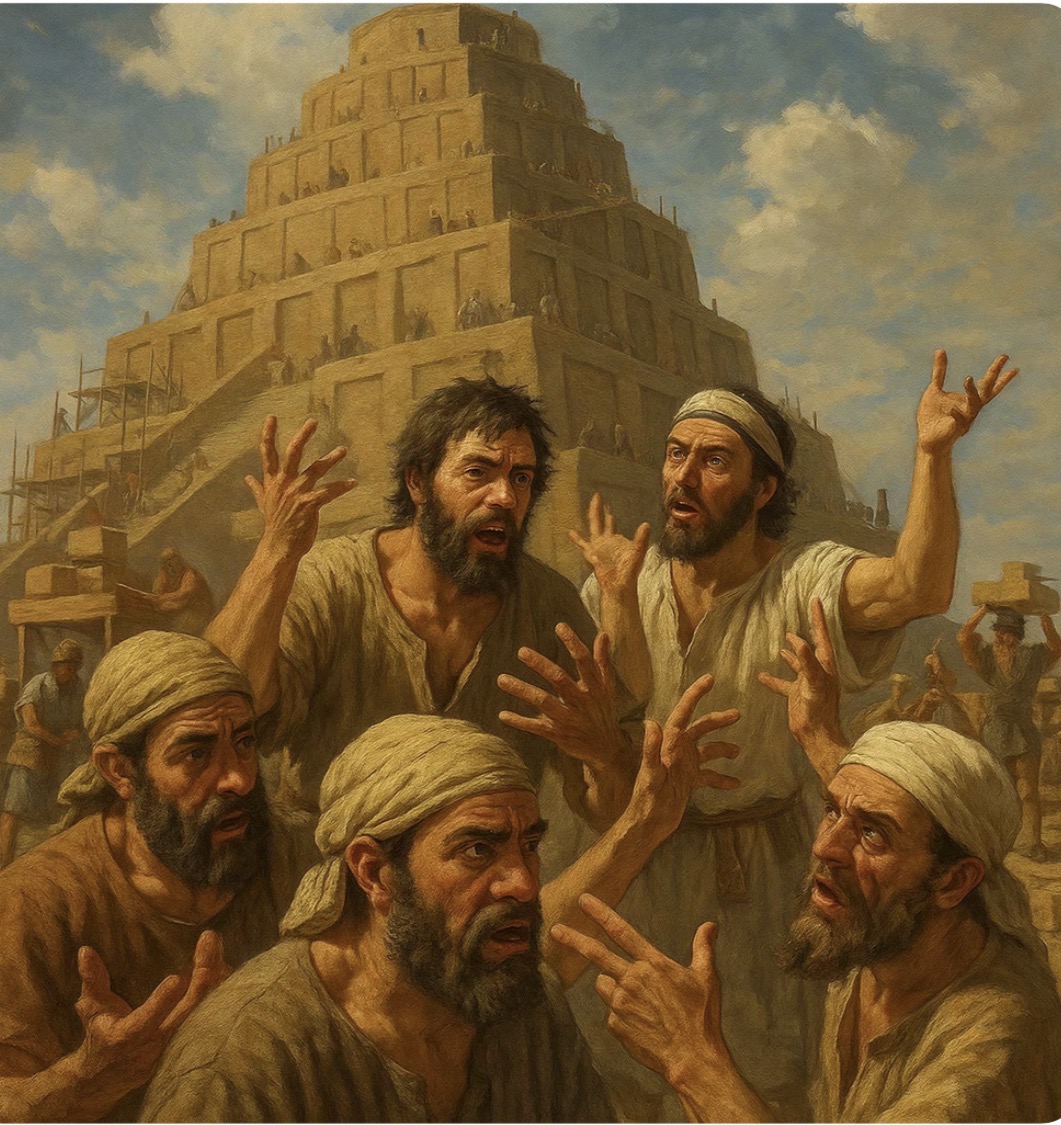
There they erected the ziggurat — a stepped altar, not for worship, but for communication. Ancient Babylonian texts such as the Enuma Elish describe it as “a house where the gods descend.” That is where the name Babel comes from — Bab-El, “the gate of God.” They did not want to ascend to God; they wanted the fallen beings to descend again.
The top of the tower was covered with blue-glazed bricks — an artificial heaven, an imitation system meant to mirror the real heaven. That is why God says in Genesis 11:6:
“Behold, the people is one, and they have all one language; and this they begin to do: and now nothing will be restrained from them, which they have imagined to do.”
Why would God say this if they could achieve nothing? Because He saw they were building something that actually worked. The Hebrew word for “reach” (naga’) means to touch. They did not merely want to be like God — they wanted to touch heaven itself, to erase the separation between flesh and spirit.
Archaeology confirms this. The remains of the Etemenanki in Babylon show that each level was aligned precisely with the cardinal directions, calculated according to the stars. It was not a building; it was a heavenly code — designed to channel vibrations and frequencies.
That is why God says: “Now nothing will be restrained from them.” They were once again walking the path of the Watchers.
If they had completed it, they would have reopened the doorway between realms. That is why God Himself says:
“Let Us go down.”
Not “I will,” but “Let Us.” Not because God needed help, but because He announced His decision in the presence of His heavenly council — the bene elohim, the angels of His order. The original Hebrew confirms this: the word nerdah (“let Us go down”) is plural — royal language, not uncertainty — the Father, the Son, and the Spirit in perfect unity, with the heavenly host as witnesses.
The project at Babel was dangerous enough that all of heaven moved. It was the closest mankind had come since Hermon to drawing the fallen powers back into the earth.
God had to break the system. He did not destroy the people — He destroyed their unity. Because the power of Babel was not in bricks, but in thought. One language. One voice. One spirit. And the wrong spirit stood behind it.
Then it happened suddenly. A word — and everything shattered. Their voices changed, their sounds distorted, their understanding broke. Where there had been one language, there were now hundreds. Where there had been one people, boundaries formed. Babel fell silent. The builders looked at one another, but no two could understand each other anymore. What had once been a song of unity became a babble of chaos.
God did not stop their hands — He stopped their language. He cut the soul of the rebellion: communication. Because without a common voice, no rebellion can survive.
“So the LORD scattered them abroad from thence upon the face of all the earth: and they left off to build the city.”
(Genesis 11:8)
And so mankind was scattered across the earth — not only according to language, but according to spirit. Each group gathered with those they could understand, and over time nations, languages, and cultures formed.
But here lies the deeper truth:
When God divided mankind, He also divided heaven.
“When the Most High gave the nations their inheritance, when he separated the sons of Adam, he set the bounds of the people according to the number of the sons of God.”
(Deuteronomy 32:8)
Look carefully. Some modern translations say “sons of Israel,” but Israel did not yet exist. The original Hebrew says bene ha’elohim — “the sons of God.” That is also how it appears in the Dead Sea Scrolls and the Greek Septuagint.
In other words: God divided the earth according to the number of heavenly beings.
Each nation received a sar — a heavenly prince or watcher — as spiritual authority. This is not my theory; it is what Scripture itself says.
Look at Daniel 10:13 and 20:
“The prince of the kingdom of Persia withstood me one and twenty days… and now will I return to fight with the prince of Persia: and when I am gone forth, lo, the prince of Grecia shall come.”
Every world empire has its own spiritual prince — heavenly beings that rule over nations. This is the direct result of Babel: the earth was divided into spiritual sectors.
But some of these watchers became corrupt. They began to take for themselves the worship that belongs to God. And that is where paganism began — the birth of the world’s gods.
Psalm 82 gives us a glimpse into this heavenly courtroom:
“God standeth in the congregation of the mighty; he judgeth among the gods.”
Here God speaks directly to the elohim — the heavenly beings who became corrupt. And He says to them:
“I have said, Ye are gods; and all of you are children of the most High.
But ye shall die like men, and fall like one of the princes.”
(Psalm 82:6–7)
There it is. The bene elohim set over the nations fell. This is the judgement of the false gods — the corrupt principalities that deceived mankind after Babel.
From that rebellion came all the names repeated through the ages: Baal, Marduk, Osiris, Zeus, Ra — different faces of the same old power. Not different gods, but the same spirit, the same seed of rebellion, speaking different languages in different cultures.
God allowed the nations to go their own way, but He kept one line for Himself — a people without a heavenly prince, because their God would be their King.
“But the LORD’s portion is his people; Jacob is the lot of his inheritance.”
(Deuteronomy 32:9)
With that single verse, Scripture divides the earth into two kingdoms:
– the kingdom of the fallen gods,
– and the kingdom of the one true God.
The world received its gods. God chose His people — a people who carry His breath, the pure Adamic line through which the Golden Thread of promise would continue.
And yet… the spirit of Babel did not die. It merely changed its name: from Babel to Babylon, from Babylon to Rome, and from Rome to today’s world system.
The same spirit. The same dream.
One world. One voice. One god.
But it is not the God of heaven and earth.