Live the Golden Line – The Law of Holiness: Part 10
By Andre Eksteen
In Part 9 we saw that sin is not merely behaviour but control — the working of invisible spirits through people who bow to their influence. We saw that forgiveness is not just a beautiful principle but a spiritual weapon that breaks that control and restores God’s authority. Now we must look at the other side: if sin works through spirits, how does God work through His people? The answer is simple, yet profound — through holiness.
Holiness is not an option; it is the natural condition of any person who once again lives in the Spirit. It is not a law like the laws of the old covenant, but a law of life — the Law of the Spirit that stands against the law of sin and death. And just as there is a law that says that whatever you sow, you shall reap, so there is also a spiritual law that says: without holiness no one shall see God.
This is not a threat — it is a reality.
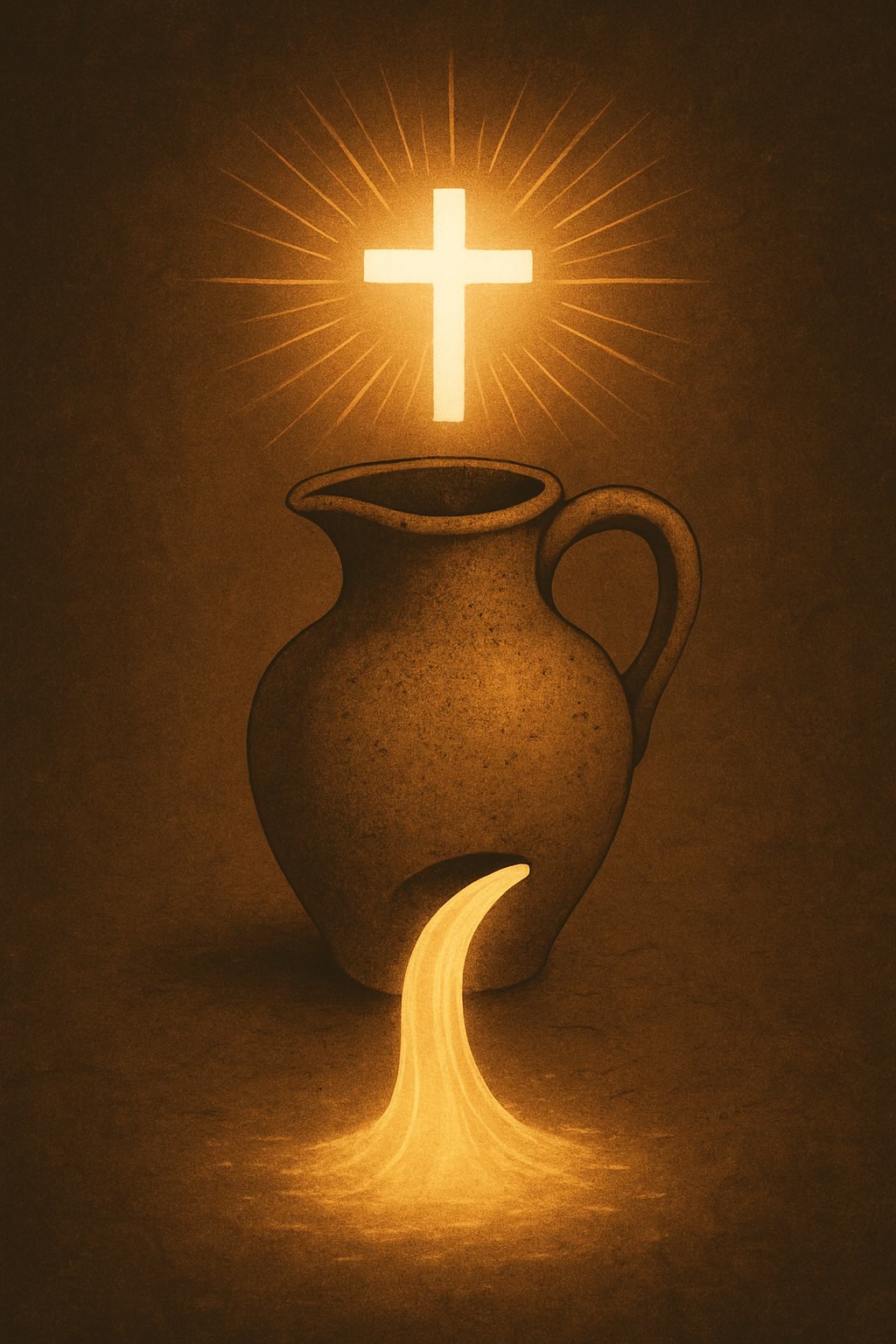
For the holy presence of God can flow only through a clean vessel.
The great deception: grace without holiness
The modern church has created a new gospel — a gospel of grace without holiness. A gospel that says: “God does not look at your sins; He only sees Jesus.” But if God looks at you and sees only Jesus, it means He has gone blind. And the God of the Bible is not
blind.
He Himself says:
“Be ye holy, for I am holy.” (1 Peter 1:16)
This is not a suggestion; it is a command.
God does not ask you to try — He commands you to be.
Because if His Spirit dwells in you, then you can be what He is — not through your own strength, but through His nature in you.
The ancient Christian writings understand this far better than the modern church has ever wanted to admit. In the Didache — one of the oldest teachings of the apostles (around 100 AD) — it is written:
“There are two ways: one of life and one of death, and a great difference is there between the two ways. The way of life is this: thou shalt love God who made thee, and thy neighbour as thyself; and whatsoever thou wouldest not have done to thee, do not thou unto another.”
Note — this is not only faith, it is conduct. It is obedience that testifies of inner change. Holiness has always been the evidence of life in the Spirit, not merely the result of moral discipline.
But the modern church preaches a tame gospel:
“God understands. He knows we are human.”
Yes, He knows — and that is why He sent His Spirit to make you something more than human.
The cross did not come only to cover sins; it came to change the nature of the sinner.
The essence of holiness
Holiness does not mean perfection.
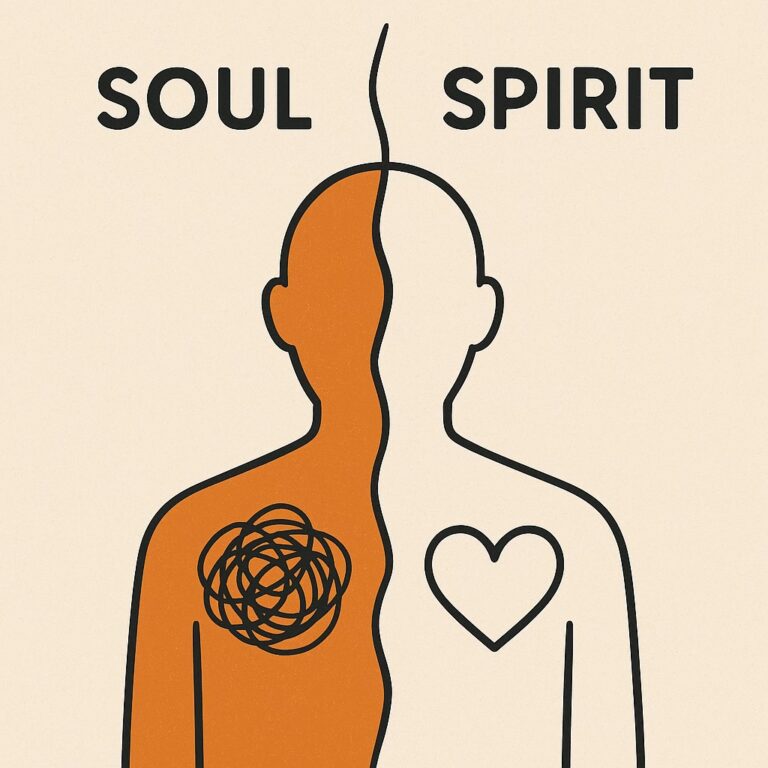
Holiness means set apart for God — cut off from the spirit of the world and available to
the Spirit of God.
In Hebrew the word qadosh is used — meaning: “to be different.”
That is the whole point: you cannot belong to the Spirit and still look like the world. That is why Jesus said:
“If the salt has lost its savour, wherewith shall it be salted?” (Matthew 5:13)
God does not seek perfect people; He seeks separated people.
People willing to say no to their own soul, to their own comfort, to their own “self.” For holiness is not an emotion — it is obedience.
It is to say: “Not my will, but Thy will.”
The Testament of the Twelve Patriarchs, a Jewish writing from just before the time of Christ, describes holiness as the presence of God within a person:
“The holy man is a temple for God; and as the sun cannot share with darkness, so the Spirit of God cannot dwell in a heart that mingles with wickedness.”
This is exactly what Paul later writes:
“Know ye not that your body is the temple of the Holy Ghost?” (1 Corinthians 6:19)
The two laws at work
Romans 8:2 says:
“The law of the Spirit of life in Christ Jesus hath made me free from the law of sin and death.”
These two laws still function today:
- The law of sin and death — where spirits of rebellion and self work through people;
- The law of the Spirit of life — where God Himself lives through people.
Man always lives under one of the two. There is no neutral ground.
You are either an instrument of Light or a carrier of Darkness.
The world calls this radical. God calls this truth.
The Wisdom of Solomon (a writing from the second century BC) puts it this way:
“The spirit of wisdom is a friend to men, but He cannot dwell in a body that is subject unto sin, nor in a soul that gives itself over to wickedness.”
This principle has never changed.
The Spirit of God settles only where there is purity. Not perfection — purity.
Not flawlessness — obedience.
The false image of “human holiness”
The greatest deception of the church is believing that holiness is something you produce yourself.
People try to be good, speak correctly, behave nicely, but it is the soul trying to manufacture its own version of holiness — religion without Spirit.
The Bible calls this “a form of godliness but denying the power thereof.” (2 Timothy 3:5)
True holiness is not self-control — it is Spirit-control.
It is not suppressing your sins — it is rejecting the spirit behind them. The world says: “Be your best self.”
God says: “Die to yourself.”
The apostle Barnabas writes in his epistle (circa 90 AD):
“He who names the Name of the Lord must keep himself pure from all wickedness. The temple of God is not made of stone, but of holy people in whom His Spirit dwells.”
Note — this is the combination of inner purity and outward obedience. It is not only faith; it is evidence.
Holiness is the visible sign of our invisible union with God.
Holiness: the evidence of the Spirit
Jesus said:
“By their fruits shall ye know them.” (Matthew 7:16)
The Spirit of God proves Himself not through emotion but through fruit.
The fruit of the Spirit — love, joy, peace, patience, gentleness, self-control (Galatians 5:22) — is the expression of holiness.
But the people of today seek the gifts, not the fruit. They seek manifestation without holiness.
They want to prophesy, but not live clean.
They want to cast out demons, but not crucify their own pride. They want to pray for power, but not for purity.
That is why Jesus said:
“Many will say to Me in that day: Lord, Lord, have we not cast out devils in Thy Name?… And I will say unto them: I never knew you.” (Matthew 7:22–23)
They had the power, but not the character.
And without character, power is dangerous.
Holiness is the wall that protects the power from corruption.
Holiness brings sight
Sin makes blind, but holiness brings sight.
Jesus says: “Blessed are the pure in heart, for they shall see God.” (Matthew 5:8)
The reason the modern church can no longer discern the spiritual realm is simple — she is no longer pure.
The world has taken over her definition of love, success, and even grace.
Her prophets preach popularity, her songs glorify the self, and her people enjoy Jesus as a symbol, not as Lord.
But holiness restores sight.
That is why the apostles lost everything — not because they wanted to be religious people, but because they wanted to see again.
The Book of Enoch describes how the angels who fell into sin lost their sight — they became blind to the light. But the righteous, he says, “shall shine as the light of the heavens, and their eyes shall be opened to behold the Lord of glory.” (Enoch 104:2)
This is precisely what Jesus meant.
Holiness is not a doctrine — it is a condition of visibility.
It is the ability to see God in everything, because nothing stands between you and Him.
The fire that purifies
True holiness does not come through study or ceremony, but through fire. Isaiah cried: “I am a man of unclean lips!”
Then an angel came from the altar with a burning coal and touched his lips. (Isaiah 6)
This is the picture of holiness: fire burning away what does not belong. Holiness is painful to the flesh but essential to the spirit.
The Holy Spirit is Himself that fire.
He does not come to comfort first — He comes to purify. Only then does He bring peace.
The world avoids the fire, and therefore remains cold.
The church no longer wants the fire — she wants light without heat, truth without judgement, God without fear.
But without fire there is no purity. And without purity, no sight.
Holiness and authority
Holiness restores authority.
When Jesus was tempted in the wilderness, He did not overcome through power but through obedience.
Every time He said: “It is written.”
He did not negotiate with the devil — He remained under God’s authority.
Authority in the spiritual realm does not come through position but through submission.
Even the devil knows this — which is why he tries to keep you in sin, for sin removes you from God’s authority.
And without holiness, you cannot have authority over him.
The Epistle of Barnabas says:
“The devil cannot stand before one who is pure, for he recognises the image of the Son in him.”
When you live holy, you become dangerous to hell.
Not because you speak loudly or lay hands on people — but because you carry what he lost: God’s presence.
Holiness and peace
Holiness sounds harsh, but it is actually the source of true peace. For sin always brings unrest.
The divided soul cannot rest.
But the person who is pure sleeps peacefully — not because he is sinless, but because he holds nothing between himself and God.
The Odes of Solomon, an ancient Christian hymnbook from the first century, says:
“The Lord has made me clean within; He has given me peace in my heart, and my tongue has sung His praise without fear. For the light has remained in me, and I have become like Him who made me.”
This is holiness — the condition in which your inner and outer life are one, without division.
The price of holiness
Holiness costs you everything. That is why so many avoid it.
It costs you your pride, your rights, your image before people. It is the path of the cross, not the path of comfort.
But it is also the only path to real life. Jesus said:
“Whosoever will save his life shall lose it; and whosoever will lose his life for My sake shall find it.” (Matthew 16:25)
The holy life is not a life of limitation but of freedom.
For only the one who is dead to the world is truly free from it.
Conclusion – The law of holiness
So, what is the Law of Holiness?
It is simple:
The Spirit of God can live only where a person allows himself to die. Sin brings control; holiness brings communion.
Sin makes you a tool of the enemy; holiness makes you a temple for God.
Holiness is the law of heaven — the atmosphere in which God lives.
And if you want to live in His presence, you must carry that atmosphere within you.
That is why Hebrews 12:14 says:
“Follow peace with all men, and holiness, without which no man shall see the Lord.”
Not “without which no one will go to church,” or “without which no one will preach” — no:
without which no one will see the Lord.
Holiness is the sight of the spirit.
It is the state in which you see again, hear again, and live again as in the beginning.
The world has its law of sin and death.
But the children of God live under another law — the Law of Holiness, the Law of the Spirit of Life.
Choose today under which law you will live.
For the one brings death, and the other brings Light.
The one steals, and the other restores. The one is Satan’s voice: “I will.”
The other is Christ’s answer: “Thy will.”
Deep calls unto deep.
Let the fire purify — and live.