Inside Heaven’s Government – Part 10
The Story of the Heavenly Host from Creation to the Coming Kingdom
Written by Andre Eksteen
By the end of the previous article we had arrived at a question that deserves a great deal more attention than it usually gets from most readers. What exactly was Lucifer administering? Ezekiel described merchandise passing through his oversight. We discovered that the language used there points toward organised administration rather than some kind of idle existence. We found Lucifer serving in Eden before his rebellion ever took place. We found him occupying one of the very highest offices within God’s heavenly government. Every piece of that has come straight out of the text itself, not out of speculation, and it has set us up perfectly for the question this article needs to answer.
That leaves us with another honest question to work through. What exactly was Eden? Most Christians would answer that one immediately without giving it a second thought. The Garden of Eden, full stop. But is that actually what the Bible itself says? Slow right down here for a moment. Open Genesis again and read the actual words sitting there on the page rather than reading what you have always simply assumed they meant.
“And the LORD God planted a garden eastward in Eden; and there he put the man whom he had formed.” Genesis 2:8. Notice carefully what that verse does not say anywhere in it. It does not say that Eden was the garden, full stop, end of discussion, with nothing more to it. It says God planted a garden in Eden. That might sound like a small difference at first glance, but it genuinely changes how you read the entire passage that follows. If I tell you there is a vineyard sitting in the Western Cape, you immediately understand that the vineyard is not the Western Cape itself. It exists somewhere within it, as one part of a much larger whole. If I tell you there is a city in South Africa, nobody walks away concluding that the city and the entire country are somehow identical. Exactly the same kind of language is at work here in Genesis. The garden was in Eden. The garden was not Eden itself.
That observation immediately swings open another door worth walking through carefully. How large was Eden as a whole region? Genesis never actually tells us. Where did Eden begin geographically? Genesis never tells us that either. Where did it end on a map? Once again, Scripture stays silent on the matter, leaving the boundary undrawn. What it does plainly tell us is that God planted one specific garden within a region that was already called Eden before that garden was ever planted there. That is simply what the text says, nothing more and nothing less.
Now set Ezekiel down right beside Genesis and let them speak to each other, the way we have been doing with other passages throughout this whole series. Ezekiel tells us that Lucifer had been in Eden before his rebellion ever took place. Genesis tells us that God later planted a garden in Eden and placed Adam there to live. Notice carefully what we are doing here as we work through this together. We are not trying to prove some theory we already had in mind before we started reading. We are simply allowing two separate passages of Scripture to stand side by side, without forcing either one of them to say something it does not actually say on its own. The questions arise naturally enough from that simple comparison. If Lucifer was already present in Eden, and Adam was later placed in a garden planted specifically within Eden, then what exactly was Eden before Adam ever arrived there?
That question becomes even more interesting the further we keep reading through Genesis. We discover rivers already flowing through Eden at that point. We discover lands already carrying their own names. We discover natural resources already identified and recorded for us. “The name of the first is Pison… there is gold; and the gold of that land is good: there is bdellium and the onyx stone.” Genesis 2:11 to 12. Stop right there for a moment and think about that. Why mention gold at all in this account? Why mention precious stones specifically? Why bother telling us exactly where they can be found? Most readers simply hurry straight past those particular details, because they seem entirely unimportant to the larger creation story unfolding around them. Scripture rarely wastes details like that, though, scattering them around for no reason. If God deliberately chooses to identify resources already present within that land, perhaps He genuinely expects careful readers to notice them rather than skip past them.
Gold has no real value to Adam at this particular point in the story. There are no cities standing anywhere yet. There are no markets to trade in. There are no nations established. There is no human economy of any kind in existence. There is nobody to mine it, nobody to mint it, nobody to trade it for bread or cattle or land. Yet God deliberately points out exactly where the gold can be found in that land regardless. Why would He bother doing that? The Bible does not answer that question for us immediately. It simply records the fact plainly and moves straight on to the next thought. Once again, Scripture leaves us holding another open question rather than handing us an immediate explanation tied up neatly.
These questions are beginning to genuinely accumulate as we work through this material together. That is exactly how careful Bible study tends to work in practice, when you do it properly. One observation leads naturally on to the next. One passage sheds real light on the one sitting beside it. Eventually all these scattered pieces begin fitting together into a picture far larger than any single verse could ever reveal on its own, standing alone.
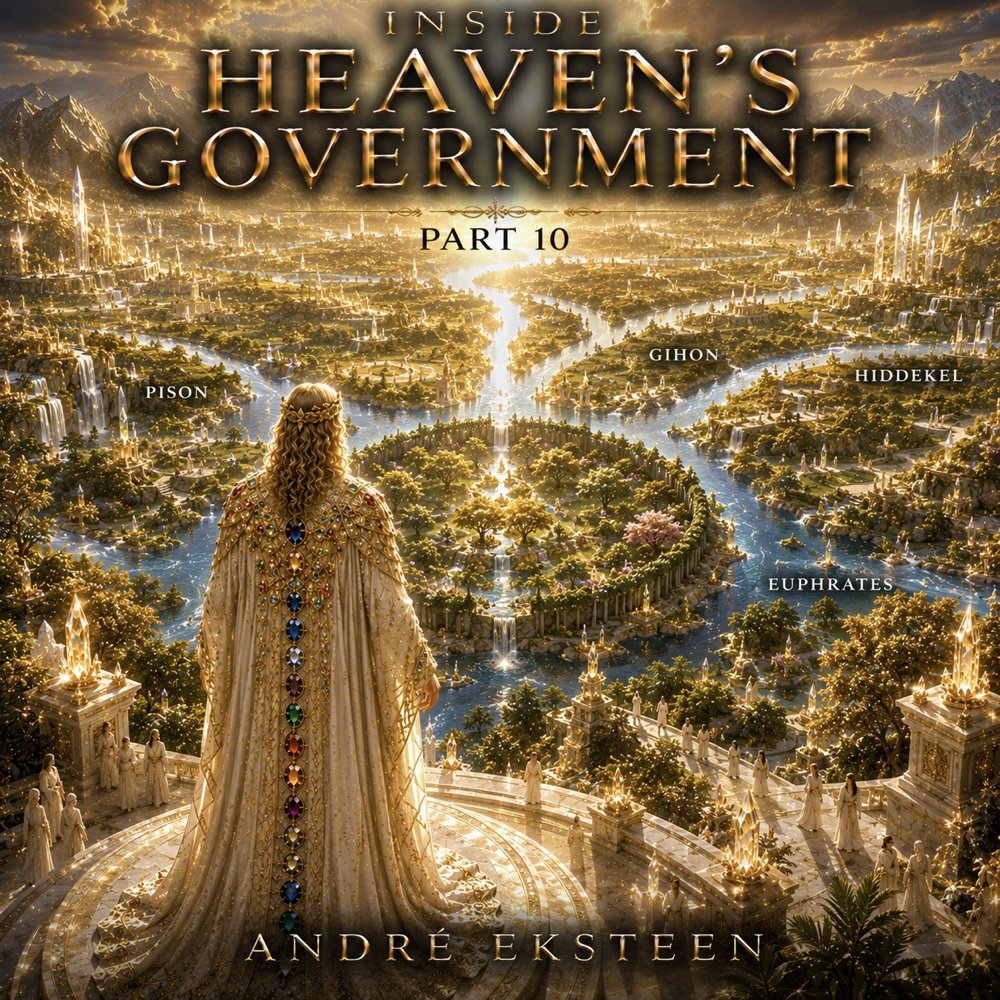
There is something else hidden away inside this Genesis account that most of us have read straight past countless times without ever noticing it properly. Read the description of the rivers carefully this time. “A river went out of Eden to water the garden; and from thence it was parted, and became into four heads.” Genesis 2:10. Again, notice exactly what the text actually says here, word by word. The river went out of Eden. It then watered the garden specifically. Then it divided further into four great river systems branching outward from there. The order in which this happens matters a great deal. The river did not originate inside the garden itself. It flowed out of Eden and into the garden from somewhere beyond it. The garden received its water from something considerably larger than itself, sitting outside its own boundaries. That fact alone tells us that Eden extended well beyond the boundaries of the garden God had specifically prepared there for Adam to live in. The garden was Adam’s home. Eden was the much larger region within which that home happened to exist. That is simply the plain language Genesis uses throughout this passage.
Then Moses hands us another remarkable detail to work with. He names all four of those rivers for us directly. Pison. Gihon. Hiddekel. Euphrates. Whether every single one of those rivers corresponds exactly to rivers we can still identify on a map today is not really the point we need to focus on at this particular stage of the study. The world we see around us after the Flood is not necessarily identical in every detail to the world that existed before it, and we will come back to that whole discussion much later in this series when it becomes relevant. For now, simply notice that Genesis is describing a real, concrete geographical setting here, with named rivers and named regions, not a vague spiritual metaphor floating somewhere in the clouds. This is not mythology dressed up in religious language. It is not some imaginary paradise floating somewhere entirely outside of reality, disconnected from any actual place. Moses writes as though he is describing an actual location that genuinely existed, with real rivers and real resources sitting inside it.
Now think back carefully to what Ezekiel already told us in the previous article. Lucifer had been there in that place. Not Adam. Lucifer specifically. Before his rebellion ever took place. Before his judgement ever fell on him. Before mankind ever appears anywhere in the biblical record at all. Immediately another honest question presents itself to us at this point. What exactly was Lucifer doing there in that location? Remember the very word that started this whole investigation a couple of articles back. Merchandise. Traffic. Administration. Movement. Those particular words do not describe someone merely passing through on a casual, one-time visit, the way a tourist might wander through. They describe someone functioning continuously within an established office, with real duties attached to it.
The evidence keeps pointing us steadily in the same direction every time we look closer. Lucifer was not simply granted casual access to Eden as a visitor. He appears to have genuinely administered something real there over time. Exactly what that administration actually involved is still unfolding in front of us as we work through this series together, but one fact is becoming increasingly difficult to avoid by this point. Eden was never merely a beautiful location sitting somewhere pleasant. It formed part of a much larger, organised kingdom that was already functioning before Adam ever arrived on the scene.
That should not surprise us anymore at this stage of the series, ten articles into a study that keeps building on itself. Everything we have discovered together throughout these ten articles has been steadily dismantling the popular image of heaven as a place where little of consequence happens beyond worship and singing. Worship has always stood central to God’s kingdom, and nothing we have said diminishes that. But it has never once been the only activity taking place there, not for a single moment. Government requires real administration to function properly. Administration requires genuine responsibility resting on someone’s shoulders. Responsibility requires actual places where those responsibilities get exercised in practice, not just discussed in theory. The more closely we read Genesis with that in mind, the more Eden begins looking less like some isolated, private garden tucked away somewhere quiet, and more like the actual centre of an administration that already existed well before Adam ever arrived there to take up his own assignment.
Notice something else worth pausing over here. When God placed Adam in the garden, Scripture tells us plainly, “And the LORD God took the man, and put him into the garden of Eden to dress it and to keep it.” Genesis 2:15. Those two particular words deserve careful attention from us. Dress it. Keep it. Adam was not placed there simply to admire the scenery and enjoy the view, the way a guest might relax on holiday. He was given real work to do from the very start. He was given genuine responsibility resting on him. He was given actual stewardship over something entrusted to his care. From the very beginning of his existence, mankind entered creation functioning as a governor serving under God, not as some tourist passing through on a pleasant visit with nothing expected of him.
That should sound thoroughly familiar to you by now, given everything we have studied together so far across nine previous articles leading up to this one. We have already seen this exact same principle operating consistently throughout God’s heavenly government in article after article. Authority is always connected directly to responsibility. Office is always connected directly to service rendered. Privilege is always connected directly to accountability owed. God has never once appointed anyone merely to hold an empty title for show, in heaven or on earth. Every appointment He makes carries real work attached to it, without exception, from the very highest office down to the very humblest.
That raises an interesting possibility worth sitting with carefully for a moment, rather than rushing past it. Could it be that Adam was actually receiving stewardship over something that had previously been administered by another being entirely, before him? Do not rush to answer that particular question too quickly here. Simply let it sit there in your mind for a while as we continue. Because the articles still ahead of us in this series are going to place several more pieces onto the table before we are ready to properly assemble the whole picture together.
One thing, however, has already become genuinely unmistakable by this point in our study, even with so much still left unanswered. The world Adam actually entered was far richer, far more organised, and far more purposeful than the simple children’s story version many of us grew up hearing repeated in Sunday school without question. Genesis is quietly introducing us to a real kingdom here, piece by piece, never rushing the reveal. It is doing so patiently, without rushing the reader past anything important. One careful observation at a time, building steadily toward something larger. And the more carefully we read it on its own terms, the more that kingdom continues coming into clearer focus for us.
Before we close out this article, I want to point out one final pattern that has quietly followed us all the way from the very beginning of this series, almost without us noticing it operating in the background the whole time. Whenever God wants us to properly understand something important later on, He often introduces it to us long before He ever bothers explaining it in full, leaving the reader to wait. He introduces Melchizedek to us long before the book of Hebrews ever properly explains exactly who he was and why he mattered to the story of Christ’s priesthood. He introduces the Passover lamb to us long before John ever points directly at Christ and declares, behold the Lamb of God. He introduces the tabernacle to us long before we eventually discover it was patterned deliberately after heavenly realities we could not yet see with our own eyes.
The very same thing appears to be happening right here in front of us as well. Genesis introduces us to Eden without fully explaining it. Ezekiel introduces us to Lucifer standing within Eden without fully explaining that either. Neither passage pauses to spell out every single detail for us along the way. Instead, God simply places the pieces out on the table in front of us and expects the careful, patient student of Scripture to compare them honestly for himself. That is exactly what we have been doing together throughout this whole series, article by article. Not forcing conclusions onto the text before their time. Not inventing entire doctrines out of thin air to fill the gaps. Simply reading carefully what is actually there on the page, and letting it speak for itself.
The picture that keeps emerging from all of this is both larger and considerably older than most of us were ever taught to imagine growing up. Before Adam, there was already a fully functioning heavenly government in place. Before Adam, there was already an organised kingdom running smoothly. Before Adam, there was already an Eden, established by God for His own purposes. Before Adam, there was already an anointed cherub serving faithfully there, carrying real responsibility.
That does not answer every single question we might want answered, not by a long way. In many real ways, it actually creates several new ones for us to sit with instead. And perhaps that is exactly what God intended all along, for readers willing to slow down and notice. Because there is one question now that stands head and shoulders above every other question we have raised together so far. If Lucifer was genuinely administering something real within Eden, what exactly had God entrusted into his hands to manage there?
The answer to that particular question reaches a great deal further than Lucifer himself, on his own. It reaches directly into the opening chapters of Genesis that we thought we already understood perfectly well before we started this series. It reaches into the actual reason mankind was eventually given dominion over the earth in the first place, rather than that authority simply staying where it had been before. And it reaches all the way into the first rebellion that would go on to change the entire course of creation itself, forever, in ways still unfolding today. That is exactly where we are going to turn next in this series. Before we can properly witness the first sin as it actually unfolds, we must first understand the full extent of the kingdom that stood to be lost the moment it happened.