From Genesis to Revelation: The One Story – The Golden Thread that Explains Everything – Part 11
By Andre Eksteen
And now we come to the line the world forgot for a very long time — the sleeping line of Japheth.
In the previous part we saw how God divided the nations at Babel: Shem, Ham, and Japheth — three lines, three destinies. Shem would carry the promise, Ham would carry corruption, and Japheth would carry expansion. But Japheth’s line became silent for centuries — absent from the biblical stage, unseen in Israel’s history, yet never disappearing.
They filled the world together with Ham’s descendants — north, west, and south. They lived under the pagan princes, under the spiritual rulers appointed over the nations at Babel. They remained under the control of the bene elohim whom God set over the peoples, and in this way they became spiritually unclean — but not genetically so.
Japheth’s line preserved Adamic DNA — the pure blood of the original man, without the contamination of the Nephilim. They were still flesh of Adam, but without the covenant of Shem. Pure in body, but blind in spirit. That is why the Bible calls them the nations — the goyim, the true Gentiles. Not half-men like Ham’s corrupted line, but lost people, cut off from the true God.
It is from them that you and I descend. Not from Shem, not from Israel — but from the northern peoples who once filled the earth with cities, ships, laws, and knowledge, yet were spiritually dead. We are the descendants of Japheth — the sleeping soldiers of the world, who lived for centuries under pagan gods until God Himself decided to awaken them.
And with the division at Babel, God placed the nations under heavenly princes — each people received a watcher, a prince, a spiritual authority. But one portion He kept for Himself: the line of Shem. And from that line came a man. One man from the blood of Eber, from Ur of the Chaldeans — Abram. A man who was not great in the eyes of men, but great in the eyes of God.
While the world had just been divided under the rule of heavenly princes, the Creator Himself spoke again. And He said:
“Get thee out of thy country, and from thy kindred, and from thy father’s house, unto a land that I will shew thee.”
That single sentence cuts through the centuries. Here God calls Abram out of the world — out of Babel’s system, out of the line of people who fall under other gods. He sets him apart. And through that separation, the Golden Thread becomes visible again.
God does not make a contract with a nation; He makes a covenant with a man. A man who believed Him when there was nothing to hold on to. Abram had no Scriptures, no church, no priest — only a voice. And that voice was enough.
In this way God restores the line He began in Eden. He once again calls a man to walk directly with Him. Not through angels, not through priests, not through rituals — directly. He does not begin with a law, but with a promise. And that promise was simple: I will bless you; I will make your descendants like the stars; and in you all the nations of the earth will be blessed.
Look carefully: God does not say only “your family”. He says “all the nations”. Even the sleeping line of Japheth, even the Gentiles living in darkness, would eventually be reached through this covenant. For Abram’s promise was not only for Israel — it was for the restoration of the whole of creation.
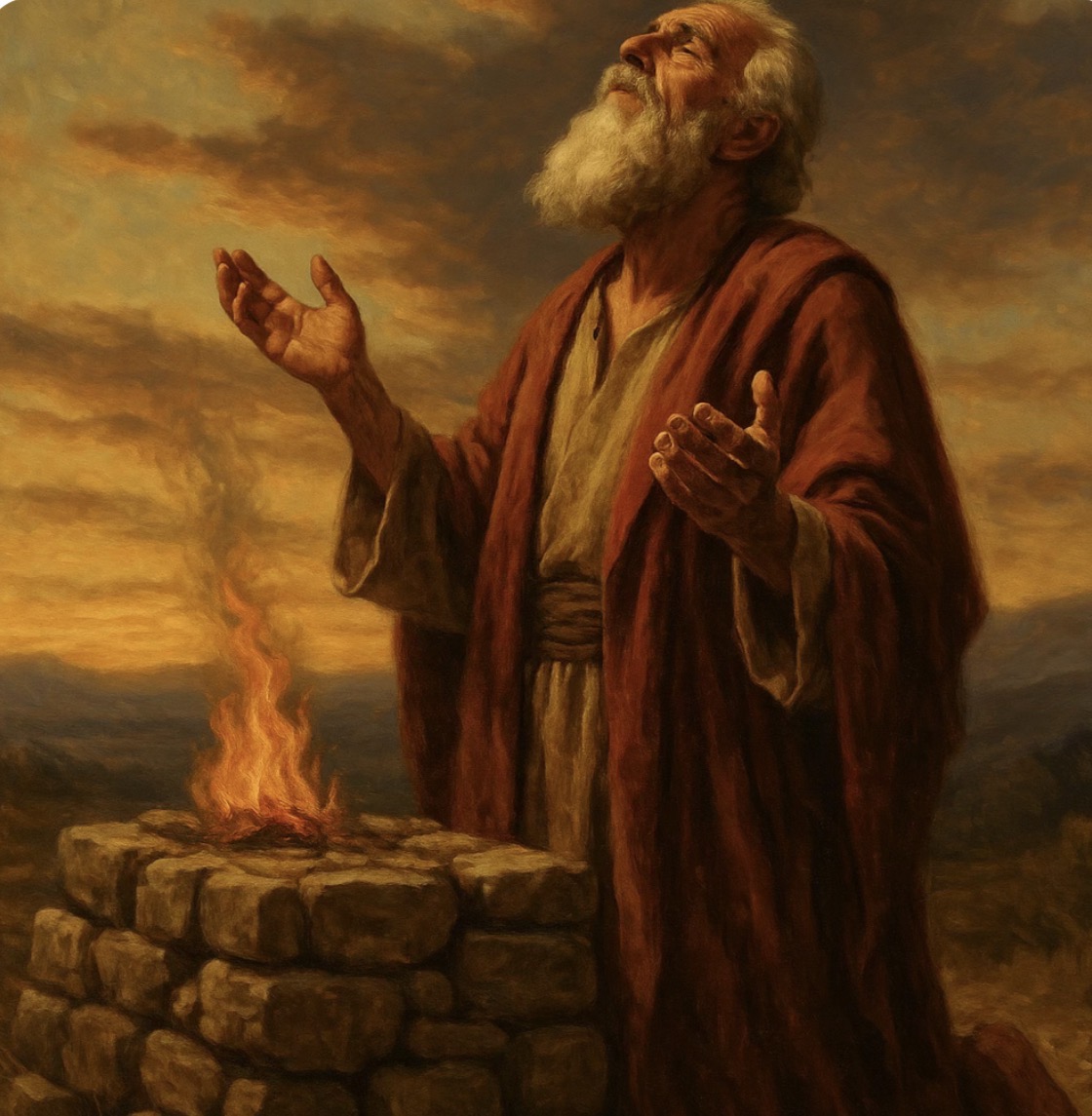
Abram builds his altars not to summon gods, but to acknowledge the true God. Each altar was a declaration: here God spoke, and I heard. His obedience becomes the path of faith, and through him God begins to build a people who do not fall under angels, but stand directly under Him — a people cleansed through obedience, not through blood sacrifices. A people without a heavenly prince, because their King is the Lord Himself.
And in that simple man, who leaves his home and steps into the unknown, God begins once again to bind Himself to humanity. Not through power, but through faith. Not through the blood of animals, but through the promise of spiritual blood — the line through which the Redeemer would come.
But it is precisely here that the modern church loses everything. They read the Bible through the lens of Western morality, using human emotion as the measure of truth. They try to understand God like a man — not as the Creator of life, but as a character in their own stories. They paste their ideas of “love” and “justice” over the text, and when God’s actions do not fit their emotional and moral standards, they call Him cruel, unjust, even misogynistic. They do not understand the war of the seed — the struggle between the line of God and the line of Satan.
They preach a Jesus of feelings, not of truth. A Jesus who smiles at sin, who never judges, who always understands but never commands. They like the idea of Jesus, but not the truth of God. Just look at the comments under the previous articles — the more the truth is exposed, the louder the darkness begins to scream. It is always the same voice, the same words, the same spirit speaking since Eden. They say: “Just preach the gospel! Leave the rest!” But what they really mean is: “Do not touch the truth of God; it disturbs my conscience.”
They want a cross without blood, a heaven without holiness, and a Christ without kingship — a religion that makes them feel good but never changes them. And when someone dares to say that the Bible is about war — about seed against seed, blood against blood, God’s image against Satan’s corrupted image — they become uncomfortable. Because then they realise: this battle is not symbolic. It is real. And every person stands on one side or the other.
So the evil powers in the air — the princes appointed over the nations after Babel — begin to scream through them. It is not merely people speaking; it is the voice of their rulers. The bene elohim who were once meant to lead, but have become corrupt, use their peoples as mouthpieces of rebellion. They hate God because He cast them out of His presence, and now they let humans carry that hatred for them.
People think it is their own opinion, their own anger — but it is not. It is the voice of the old rebel still speaking against God — just through new mouths. Some call God a murderer, others call Him a woman-hater, and still others say outright: “I want nothing to do with Him.” This is not mere unbelief — it is spiritual possession. It is people speaking under the influence of the princes who rule over them.
For them, the gospel is nothing more than a moral comfort blanket — a soft story about love and forgiveness that demands no change. A spiritual insurance policy for when they leave this life. No repentance, only promises of peace. No holiness, only the hope that God will be too good to be serious.
Would any soldier fight a war against an enemy he knows nothing about — and expect to win? Of course not. Who in his right mind walks into battle without knowing the enemy’s tactics, or even who the enemy is? It is the same with the gospel: if you do not know the nature of the battle — if you do not understand that there is a seed-war between God and Satan — how can you think your soul will somehow stumble unprepared and unequal into victory? A gospel without the war turns men into toothless soldiers; it gives people a faith without weapons in a time of war.
That is not the gospel of Christ. It is the gospel of comfort. A gospel without judgement, without truth, without the fear of God. A gospel that puts man at the centre and reduces God to a helpful service provider.
It is not hatred that drives them — it is guilt. The light has simply begun to shine where they wanted to remain in darkness.
But look closely: the more they curse, the quieter those who know become. For those who hear the truth do not need to shout — they recognise the voice of God in it.
For the world would continue to rise and fall in kingdoms, but God would build His own people — a people without a prince, without an earthly throne, but with an eternal promise in heaven.
A people who belong directly to Him, and through whom the sleepers would one day awaken.