Inside Heaven’s Government – Part 14
The Story of the Heavenly Host from Creation to the Coming Kingdom
Written by Andre Eksteen
The previous article left us standing at one of the most remarkable moments found anywhere in the whole of Scripture. God’s judgement had already fallen. The earth lay there in darkness. The deep covered its face entirely. Then the Spirit of God moved over those waters, and the Creator spoke the very first recorded words into that ruined world. Let there be light.
From that single moment onward, everything begins moving steadily in one clear direction. Not toward further judgement, but toward genuine restoration instead. Not toward greater chaos, but toward increasing order throughout. Day after day, God separates, gathers, appoints, fills and establishes everything in its proper place. Light is separated cleanly from darkness. Waters are separated from waters. Dry land appears where there was none. Vegetation springs up out of the ground. The heavenly lights are appointed to govern both the day and the night. The seas fill up with living creatures of every kind. The skies fill with birds in flight. The land fills with living creatures according to their own kinds.
Notice how carefully this whole account unfolds, step by careful step. God is not merely creating life here and there as it occurs to Him. He is preparing an entire realm for what is coming next. Every single day builds directly upon the one that came before it, with nothing skipped. Nothing here is random. Nothing appears out of its proper sequence. Everything is fully prepared before the very next stage is even allowed to begin. The pattern itself reflects the very character of God’s government that we have been studying throughout this whole series. He does not build anything through confusion. He builds everything through order, every single time.
Then the narrative suddenly changes its whole tone partway through. Throughout the previous days we have just walked through, God simply speaks plainly each time. Let there be. Let the waters. Let the earth. The work moves forward each time with a kind of majestic simplicity, almost effortless to read. But when we finally arrive at the creation of man in the account, everything noticeably slows right down. “And God said, Let us make man in our image, after our likeness.” For the very first time in this entire account, the Creator actually pauses before acting, rather than simply speaking the thing into existence outright. The words themselves tell us plainly that something extraordinary is about to happen here, different from everything that has come before it.
Exactly who is included in that word us has been discussed and debated for centuries by careful readers. Scripture leaves absolutely no room anywhere for the idea that angels somehow participated directly in the actual work of creation, because the Bible consistently and repeatedly declares that God alone is the Creator of all things. In the beginning God created. All things were made by him. Without him was not any thing made that was made. So God is plainly not asking permission here from His heavenly host before proceeding. Neither is He inviting them in any sense to become fellow creators alongside Him.
Yet the actual wording chosen here still deserves our careful attention regardless. Instead of simply acting the way He had each day before, God openly declares His purpose out loud before He ever carries it out this time. The text itself almost invites us to stop reading for a moment and properly listen to what is being announced. Something unlike anything that has ever existed before anywhere in creation is about to enter the picture here.
Throughout this whole series we have discovered together that God’s kingdom has never once been empty of activity. The heavenly host already exists in its various orders. The faithful administration among them still serves faithfully before His throne, exactly as before. The rebellion we studied earlier has already been judged decisively. Order has already been fully restored. Heaven itself is watching closely as God’s purposes continue unfolding before it. Now the Creator announces His very next act to everyone watching. Let us make man in our image, after our likeness.
Those particular words carry an enormous weight behind them that is easy to miss on a casual read. Nothing quite like this has ever been said before anywhere in the account. Nothing quite like this will ever be said again at any later point either. Every previous order of created being we have studied throughout this series had been made strictly according to God’s own wisdom and purpose for it specifically. Cherubim were simply cherubim, nothing more and nothing less. Seraphim were simply seraphim. The living creatures were exactly what God had designed them individually to be. Every single order reflected His own glory in its own particular, unique way, suited to its own assignment.
But now, suddenly, God speaks of something entirely different from any of that. Not merely another order slotted in within the heavenly host. Not another servant added to the roster. Not another administrator appointed somewhere. A creature made directly in His own image, something categorically new. The sheer significance of that particular announcement is genuinely difficult to overstate, however we try to express it.
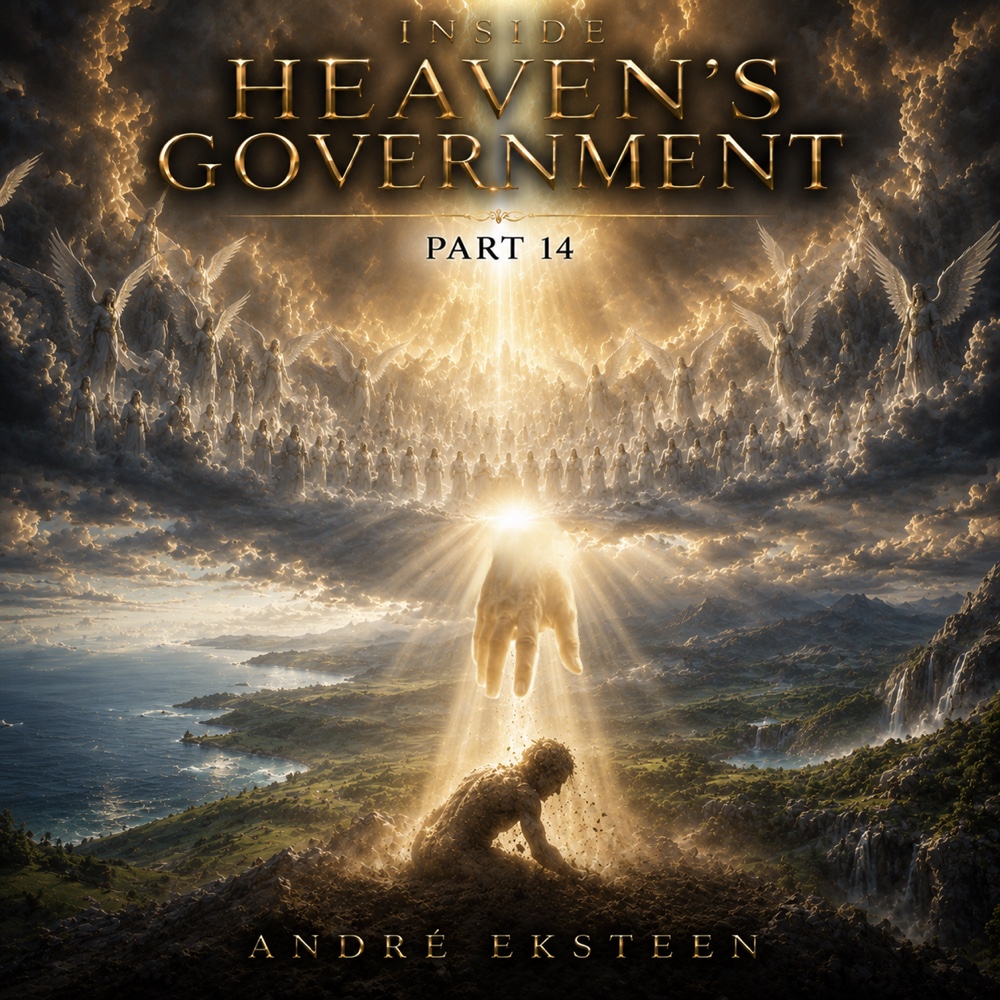
Imagine, just for a moment, standing among the faithful heavenly host as that decree is actually spoken out loud for the first time. You have personally witnessed entire worlds brought into existence from nothing. You have seen God’s government functioning in perfect harmony for as long as you can remember. You have watched the greatest rebellion creation has ever known unfold right in front of you. You have seen righteous judgement fall with absolute justice on those who rebelled. You have watched the Creator carefully restore a world that had been lying in total darkness. Now every eye among that host turns expectantly back toward Him once more, waiting to see what comes next. Who will be appointed to govern this newly restored realm? Surely it will be another mighty cherub, given everything that has come before. Surely it will be one of the great princes already serving faithfully. Surely it will be one of those already proven faithful all the way through the rebellion itself. Instead of any of that, though, God stoops down to the dust of the ground.
That single, surprising act says something genuinely profound about the actual character of God Himself. He is never impressed by outward greatness for its own sake, the way we so often are. He is never limited by whatever His own creatures might expect Him to do next, however reasonable that expectation seems. He delights instead in accomplishing His purposes in ways that no created mind would ever have predicted beforehand, however carefully they tried to guess. The highest rebel in all of creation had sought greatness for himself by exalting his own position above everyone else. God now begins this next chapter of His story by lifting up instead the very lowest material found anywhere in creation. Dust. From that same dust, He forms a living man with His own hands. Not merely alive in some basic biological sense. Not merely intelligent compared to the animals around him. Made directly in the very image of God Himself, something granted to no other creature before him.
At this point the careful reader should begin noticing another remarkable reversal quietly taking shape in the text. Lucifer sought likeness to God through sheer ambition, reaching upward by force. Man receives that same likeness instead purely as a gift, freely given to him without lifting a finger to earn it. Lucifer attempted to ascend upward toward a position that was never his to claim. Man, by contrast, never climbs upward at all in this account. God Himself comes down to him and forms him with His own hands instead. One sought glory for himself by taking it. The other receives genuine honour purely by grace extended to him. Scripture does not pause anywhere here to fully explain why God deliberately chose this particular path rather than some other one available to Him. It simply records plainly what actually happened.
Yet throughout the rest of the Bible we keep discovering that this has always, consistently, been God’s preferred way of working. He hath put down the mighty from their seats, and exalted them of low degree. God resisteth the proud, but giveth grace unto the humble. That same pattern genuinely begins right here in this account, long before either of those two verses was ever actually written down by anyone. Pride consistently reaches upward, grasping for more. Grace consistently reaches downward instead, offering freely. And right there, out of the dust itself, God begins something entirely new in the unfolding story.
Then comes the single moment that changes the whole direction of the entire biblical story from that point forward. “So God created man in his own image, in the image of God created he him; male and female created he them.” For centuries now, people have debated exactly what it genuinely means to be made in the image of God in this sense. Entire libraries have been written on those few short words alone, filling shelves with debate. We will devote a full article of our own to that exact subject shortly, further along in this series, because it genuinely deserves careful, focused attention in its own right rather than a passing mention here.
For now, simply notice one single, simple truth sitting plainly in the text. No other created order anywhere in Scripture is ever once described this particular way. The Bible never once says that cherubim were made in God’s image. It never once says that seraphim were made in God’s image. It never once says that the archangels were made in God’s image either. It reserves that exact description for mankind, and for mankind alone, out of every order of being we have studied throughout this whole series. That detail alone should immediately tell us that God was doing something entirely new here, not merely creating yet another rank to slot in somewhere within the existing heavenly host. This was a genuinely new order of being altogether. A new administration entirely. A whole new chapter opening up within His government.
Then comes the announcement that finally explains exactly why the previous six days had unfolded precisely as they did, in that exact careful order. “And let them have dominion.” Those four particular words stand among the most important found anywhere in the whole of Genesis, easy as they are to read straight past. Everything that came before them in the account has simply been preparation, nothing more. The light. The heavens. The seas. The dry land. The plants. The animals. None of those individual things was actually the climax of the story being told here. Dominion was the climax all along.
God had never simply been creating a beautiful world purely for mankind to stand back and admire from a distance. He had been carefully preparing an entire kingdom instead, one for mankind to actually govern under His continuing authority. That explains exactly why everything had to be properly prepared before Adam ever drew his very first breath into his lungs. A king always prepares his kingdom thoroughly before he ever appoints its governor to run it. A master always prepares his vineyard carefully before he ever sends labourers out into it to work. A father always prepares the home properly before he ever brings his family into it to live. God follows that exact same sensible pattern here in Genesis. Nothing here is accidental in the slightest. Nothing is out of its proper sequence. Everything has been deliberately, carefully arranged in advance for this very specific moment to finally arrive.
Then God speaks the actual commission out loud to the man and woman He has just made. “Have dominion over the fish of the sea, and over the fowl of the air, and over every living thing that moveth upon the earth.” Those few words deserve far more attention than we usually give them. This is not merely permission to enjoy the earth. It is a royal appointment. God is publicly entrusting the government of the earthly realm to mankind.
Notice once again how naturally this fits with everything we have already discovered together throughout this whole series. God does not surrender ownership of anything in handing this over. He delegates administration of it instead, exactly as He has done throughout His heavenly government. The earth never once stops belonging to God Himself. “The earth is the LORD’S, and the fulness thereof.” Adam receives genuine stewardship, not ownership. The King remains seated upon His throne. His appointed servant governs faithfully beneath Him.
By this point in the series that pattern should already feel familiar. God governs through faithful servants entrusted with real responsibility. That principle has never once changed anywhere we have looked in Scripture.
There is another detail here worth quietly noticing as well. God does not simply tell Adam to tend a garden. He gives him dominion over the earth itself. The full significance of that appointment is not explained here in Genesis. As so often happens in Scripture, God first makes the appointment, then allows the rest of His Word to unfold its full meaning over time. We should resist the temptation to answer questions before Scripture itself is ready to answer them. It is enough, for now, to recognise that Adam’s commission was far greater than the simple role of gardener that many of us have imagined. This was the formal appointment of God’s new governor over the earthly realm, and everything that follows in the biblical story will unfold from that single decision.
Yet there is something deeply significant here that Scripture never quite states outright in so many words, but quietly allows us to notice for ourselves if we are paying close enough attention. The administration that had once existed over this realm, before everything fell apart, had already been completely removed by this point in the story. God does not simply reinstall that same administration here. He does not appoint another cherub to take up where the last one left off. He does not place any of the faithful heavenly host over this newly restored earth in that former capacity. Instead, He entrusts its entire stewardship specifically to mankind, a being unlike any that had governed there before. That single decision changes absolutely everything that follows from this point forward in the whole biblical story.
From this exact point onward in Scripture, the earth has an appointed governor over it once again. Not an angel this time. Not a cherub this time either. A man instead, formed out of the dust.
Perhaps that single detail explains something many people have quietly wondered about for years without ever properly connecting these particular pieces together themselves. From the very moment Satan reappears again anywhere in Scripture after his judgement, his attention stays fixed almost entirely upon mankind specifically, rather than on heaven any longer. He appears directly in Eden, targeting the man and woman there. He opposes God’s wider purposes repeatedly through human kingdoms across history. He accuses God’s own people relentlessly before the throne. He seeks again and again to destroy the promised Seed before it can ever come. He wars continually against the saints throughout the whole of Scripture. His ongoing conflict is repeatedly, consistently centred on those specific beings whom God has now placed in authority upon the earth, rather than on the heavenly host he once belonged to himself.
We will examine that particular conflict a great deal more carefully in the articles still ahead of us in this series, as it touches everything from the garden itself to the final chapters of Revelation. For now, it is genuinely enough simply to notice where the story has now clearly begun to move from here. God has fully restored the realm that once lay in ruin. God has appointed an entirely new steward over it. The old administration that once governed there is completely gone now. The new administration has only just properly begun its work.
That is not, however, the end of this particular conflict we have been carefully tracing across these fifteen articles. It is, in fact, only the very beginning of an entirely new one starting up. The serpent has not yet spoken a single word in this account. Temptation has not yet entered anywhere into the garden we have been studying. Sin has not yet so much as touched mankind at this point in the story. But the stage has now been fully and carefully set for what comes next. The restored earth finally has its governor in place. The former ruler over that same realm has already become an open rebel against the very throne that appointed him. Soon enough, those two separate worlds are going to meet face to face inside a single garden. And when they finally do meet there, the very same conflict that first began up in heaven will spill directly out onto the earth itself, shaping the entire subsequent history of mankind from that fateful moment onward, all the way until the King Himself finally returns one day to reclaim His kingdom in full.