From Genesis to Revelation: The One Story – The Golden Thread that Explains Everything – Part 20
By Andre Eksteen
The heavens were silent.
For four hundred years no prophet spoke again.
No fire fell, no angel appeared, no voice called out.
Israel still brought sacrifices, still kept Sabbaths, still anointed priests — but the Spirit of the LORD no longer dwelt there.
And yet, in that silence, something moved.
Not in heaven, but in the air between heaven and earth.
For when the voice of God grew quiet, the voice of the princes began to speak louder.
They sang through philosophers, preached through kings, and wrote through the so-called wise.
They prepared the earth for their final great deception — light without truth, wisdom without holiness, faith without God.
The world became refined, civilised, educated — but heaven was closed.
Enoch says:
“And they appeared again among men and taught them the knowledge of the stars, of metals, and of sorcery.” (Enoch 8:1–3)
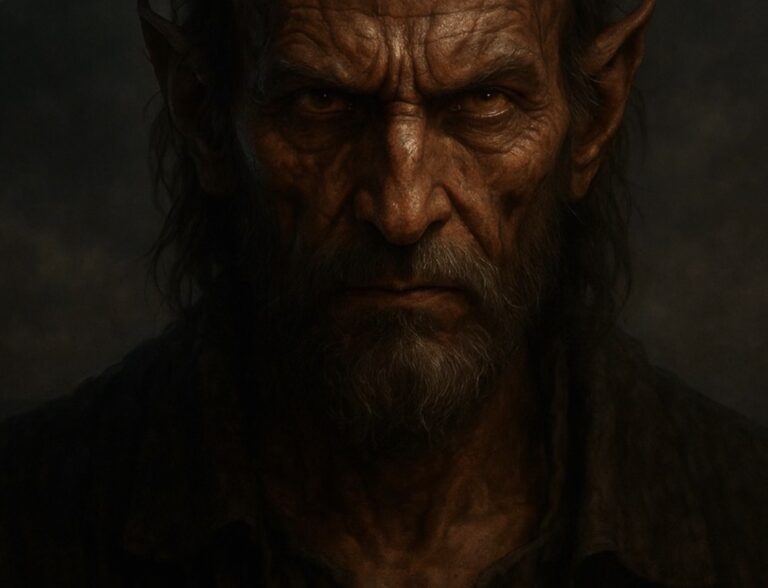
Not as gods, but as enlightened ones — the new faces of old powers.
What was once sung in temples now echoed in schools and courts.
What was once proclaimed by priests now came through philosophers.
The world became clever — but foolish towards God.
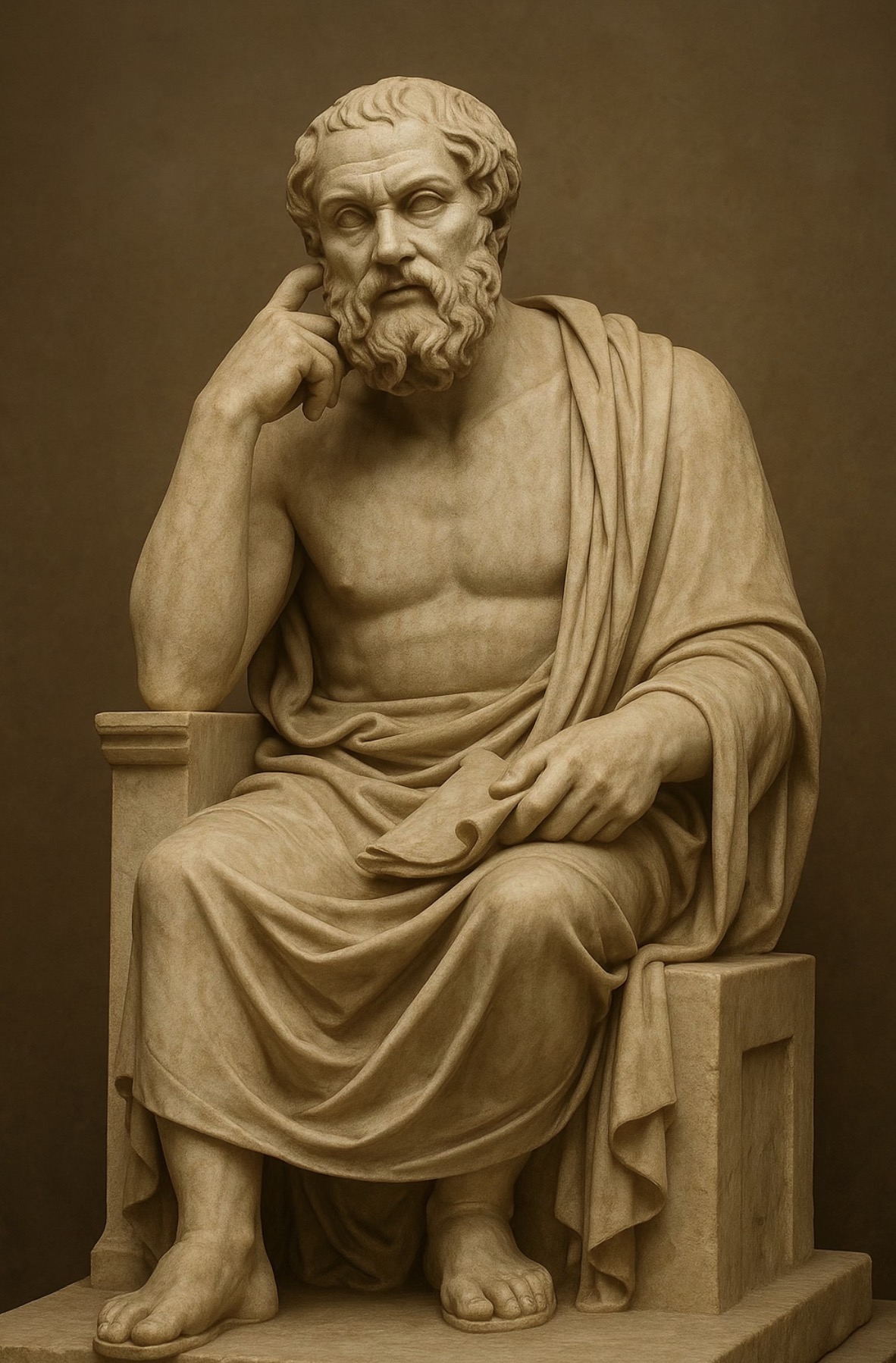
Greece took hold of the world, not with swords, but with thinking.
They began to teach that truth does not come from above, but from within man himself.
They said: “Man is the measure of all things.”
And so the first modern lie was born: that man is no longer a created being, but the creator of his own meaning.
It was the same serpent that whispered in Eden — just with different words, in a different language.
The Book of Wisdom warns:
“For the wisdom of this world is like smoke — it exalts itself, and vanishes.” (Wisdom 17:5)
The world believed it was building on knowledge, but knowledge without God is nothing more than pride with a qualification.
They denied heaven and said the gods were myths.
They renamed the spirits of the air “natural forces,” “influences,” “energies.”
And in doing so, the devil received his greatest disguise — the mask of reason.
Then came Rome — the iron of Nebuchadnezzar’s statue.
Not the spirit of wisdom, but the spirit of power.
Rome used Greek thinking to justify its authority.
They said order was divine, and obedience was salvation.
They connected the world with roads, but bound it with chains.
And over all those empires sat the same powers Enoch described:
“The authorities of heaven swore to rule among men again.” (Enoch 69:6)
Look how perfectly it fits today.
We live in a world that once again carries exactly those two spirits — that of Greece and that of Rome.
On the one hand, the spirit of wisdom without God: the world believes more in science than in Scripture, more in data than in prayer, more in artificial intelligence than in the Holy Spirit.
On the other hand, the spirit of Rome: a world of control, rules, structures, and “safety” that smells like slavery.
Man once again says: “We will bring peace through control.”
It is the same lie — just with Wi-Fi and satellites.
And it is striking to see how that same spirit awoke again centuries later.
After Christ’s ascension, long after the apostles, the voice of the princes returned under a new name: the Enlightenment.
Between 1650 and 1800 it swept across Europe — the spirit of reason and self-deification.
They called it “The Enlightenment,” but it was not heavenly light — it was the reflection of Lucifer’s flame.
The same voice, the same message: “You shall be as gods.”
They no longer worshipped idols of wood; they worshipped man — the intellect, the mind, the self.
Reason became an altar, and logic the new priest.
And now, four centuries later, that same spirit is washing over our time again.
We call it “awareness,” “energy,” “vibration,” “spirituality.”
It is the old serpent with a new tongue.
Many will crucify me in the comments for this, because these words strike the conscience.
But look closely how identical it is.
Then, as now, people said they were searching for truth, but in reality they wanted freedom from truth.
Then, as now, they spoke of light — but that light did not come from above; it burned from below.
Between Malachi and Matthew there were four hundred years of silence, in which heaven fell quiet and man began to believe that wisdom was enough without God.
And now, from the Enlightenment to today, another four centuries have passed — and the world looks exactly the same.
Once again people speak of “light,” of “energy,” of “peace,” of “self-love” — but without the Holy Spirit.
It is a second silence before a second storm.
A new Babel with better technology.
The earth boasts of its knowledge, but its soul is empty.
For just as before, mankind once again believes it is its own god.
Look around you: people play at being Christian and attend church, but worship sports heroes, celebrities, or their own image on social media.
They know more about rugby and politics than about Scripture.
They sing about grace, but live for applause.
They idolise their children, their families, their status, and call it “love.”
It is modern idolatry — the same spirit, only with new faces.
The altar is no longer made of stone; it is made of self.
The sacrifices are no longer animals, but time, attention, and obedience.
And just like then they say: “We serve God,” while their hearts beat for everything but Him.
The world calls it progress.
God calls it rebellion.
Every time man says, “I no longer need God,” the earth begins to grow dark, even while we believe we are enlightened.
Just as then, the world lives in Babylon — without towers, but with CERN’s Hadron Collider and many other monuments.
Israel itself was still in its land, but spiritually in exile.
No longer in Babylon, but under Rome, Greek philosophy, and Persian thinking.
The light of the temple burned, but without the fire of His presence.
The priests brought sacrifices without holiness; the people celebrated feasts without purity.
The LORD said:
“My house shall be called a house of prayer, but you have made it a den of robbers.” (Jeremiah 7:11)
They used the law to control people, not to honour God.
Worship became mere ritual — sounds without Spirit, sacrifices without faith.
In that silence, new names arose for old powers.
The Greeks called them “philosophy,” the Romans “virtue,” and Israel “tradition.”
But behind each stood a real, living power — the princes of the air who built their thrones in human thinking.
The Book of Wisdom says:
“God created man for incorruption, but through the devil’s envy death entered the world.” (Wisdom 2:23–24)
That death was not only physical — it was spiritual.
Man lost the voice of God, yet believed he still heard Him.
That is how deception works — you think it is God speaking, but it is only your own voice with a halo.
In that time the powers of the air gained new thrones.
Greece ruled through thought — turning heaven into an idea and truth into a debate.
They taught people to reason instead of to listen.
Rome took that thinking and bound it with power — “order above all,” “peace through control.”
And Israel absorbed those ideas, until they used the temple of God the way Rome used the senate — as a place of influence, not of presence.
And here we must say it plainly: the powers appointed at Babel still live. They are not gone, not destroyed, only renamed.
They still sit on thrones in the unseen heavens, ruling through people, systems, and ideas.
They have not stopped, because they know their time is short.
The same princes who ruled over the nations of Ham and Japheth simply received new banners — economy, media, religion, education.
They now wear the robe of progress, but their spirit is as old as sin.
And as then, they do not work through obvious evil, but through people who believe they are doing good.
They make kings clever, scholars proud, churches powerful — and so their thrones remain.
And look again today.
The modern world does exactly the same.
We have churches full of structures and plans, councils and committees — but little fire.
We have preachers full of knowledge, but empty of Spirit.
We have Bibles on shelves, but little truth in hearts.
The world says, “I believe in God,” but lives as if He does not exist.
It is the new Rome — organised religion without Spirit.
A church with form, but without flame.
Paul later warned:
“For the time will come when they will not endure sound doctrine, but after their own lusts shall heap to themselves teachers, having itching ears.” (2 Timothy 4:3)
That time is now.
People no longer want to hear about sin or judgement; they want to hear about self-image and success.
Just look at the comments on this series. Many shout and complain, attack and accuse, because the truth hurts.
They want God to love them, but they do not want to change.
They want blessing without repentance, heaven without a cross.
This is the new gospel of the world — the same deception in a nicer coat.
In those days Israel’s priests divided into factions: Pharisees, Sadducees, Essenes, Zealots.
Each with its own doctrine, its own truth, its own way of “defending” God.
But not one of them still heard Him.
For when the Word of God falls silent, people begin to speak on His behalf.
And that is always where deception begins — when people speak for God without His Spirit.
Look at the modern church — it does exactly the same.
They have formed factions under the name of denominations, each with its own confession, its own truth, its own way of “representing” Christ.
But there was only one church — the body of Christ.
There was only one doctrine — the truth of the Word.
Under Jesus and His disciples there were no Baptists, no Catholics, no Pentecostals, no Charismatics — only believers filled with the Spirit of God.
Now they fight over names that do not appear in the Bible and call it faith.
They no longer serve Christ; they serve their systems.
Every church says, “We are right,” but few ask, “Are we still holy?”
And just like the Pharisees of old, they became so busy defending God that they lost Him long ago.
The temple of Jerusalem became a market, the priests sought political power, and the people waited for a Messiah who fitted their image — a king of iron, not a Lamb of grace.
So Israel built a trap for itself once again: a kingdom without God, a temple full of rules without presence, a people with a law without light.
And while the people worshipped in the dust, the princes of the air strengthened their thrones.
In Egypt, Hermes appeared again as “master of wisdom.”
In Greece, Apollo and Athena returned as “light” and “art.”
In Rome, Jupiter and Venus took the place of El and Ishtar.
And Israel?
Israel made its own gods: status, tradition, fear of people.
They forgot that the war was not against flesh and blood.
They stopped fighting — and then began losing.
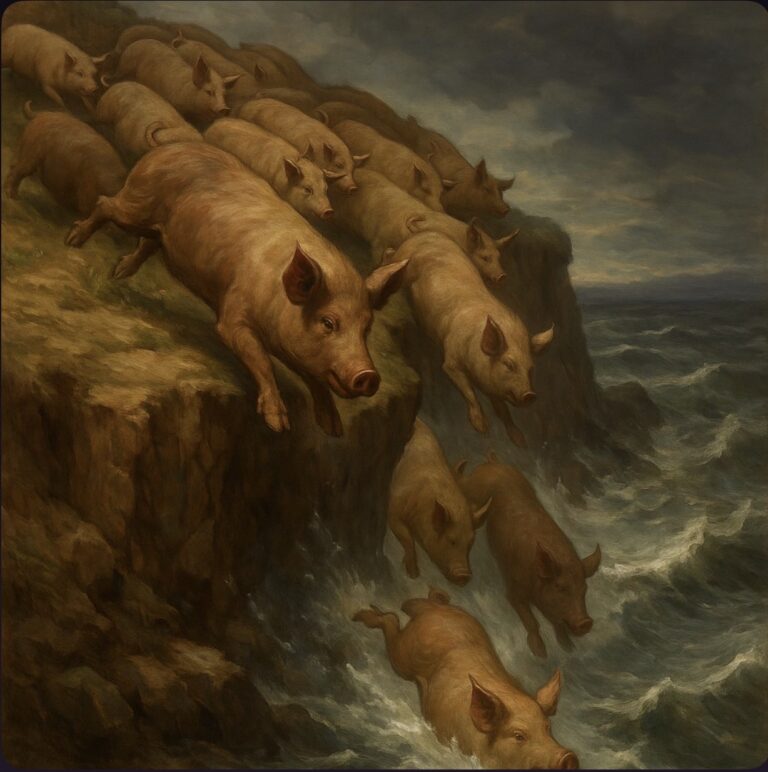
The Book of Maccabees tells how the Greeks defiled the temple, polluted the holy altar with pig’s blood, and forced the people to break the Sabbath.
But this is not only history — it is a pattern.
The enemy still does the same: he contaminates what is holy with worldly things, makes faith fashionable, and calls it progress.
The spirit of Antiochus, the king who declared himself “god on earth,” still lives.
He is in every leader who says, “I am the saviour.”
He is in every system that says, “We do not need God.”
It is the same prince, the same voice, the same deception.
Yet even in this dark time, God did not break His line.
The Maccabees rose — a remnant who refused to bow.
They fought against the powers of the earth and the princes of the air — with sword, but also with faith.
And God used them to show that light may be dimmed, but it is never extinguished.
Through Ezra the LORD had His law read again.
Through Nehemiah He rebuilt His walls.
Through Esther He showed that even in exile His hand still protects — even when His Name is not mentioned.
And through Daniel He promised that all the kingdoms of this world would become dust, and that only one Rock would stand forever.
But in the centuries after them, heaven closed again.
No prophet spoke, no angel appeared.
The world thought God had forgotten — but He was only waiting.
For every deception must become full before truth can break it.
And when everything was full — the wisdom of men, the power of Rome, the pride of Greece, the silence of Israel — then it was time.
Not for judgement, but for birth.
Not for fire, but for light.
Not for a king of iron, but for a child in a manger.
But before we get there, we must understand how dark the world was when that Light appeared.
For to understand the meaning of the manger, you must first hear the silence that preceded it.
In the next part — Part 21 — we will look at the silence before the star:
the centuries of preparation in which God showed that even when He is silent, His plan still speaks.
We will see how the powers of the air cast their final net, and how the Golden Thread was drawn through the darkness to the manger in Bethlehem — where the war of all ages would reach its climax.