Inside Heaven’s Government – Part 3
The Story of the Heavenly Host from Creation to the Coming Kingdom
Written by Andre Eksteen
At the end of the previous article we arrived at a place every serious student of Scripture eventually reaches. We established that the heavenly host existed before Adam. We saw that the heavens were already populated long before mankind entered the picture. We saw the morning stars sing together and the sons of God shout for joy the moment God laid the foundations of the earth.
That leaves us standing in front of a question most Christians never bother to ask. What exactly were these beings created for?
That question matters more than it might first appear, because the picture modern Christianity hands us is far too small to hold the answer. Mention angels in most church settings and people immediately picture winged figures drifting around heaven, humming a few praises, occasionally getting dispatched to deliver a message and then disappearing again until the next assignment comes along. That is the cartoon version, the same harmless wallpaper image we have been handed our whole lives without ever questioning it. Scripture hands us something a great deal bigger than that, and once you see it, you cannot go back to the cartoon version with a straight face.
The deeper we dig into Scripture, into the ancient writings, and into the fragments of information scattered across God’s Word, the harder it becomes to ignore a simple reality staring back at us. The heavenly host was not created merely to exist, the way a decoration exists. They were created with purpose, with authority, with responsibility, and with assignment. In other words, they were created as part of God’s government, not as background scenery for it.
That should not catch anyone off guard. Everything God creates has purpose. Nothing in His creation simply exists without function. The stars have a purpose. The planets have a purpose. The oceans have a purpose. The animals have a purpose. Mankind has a purpose. Why on earth would the heavenly host be the one exception to that rule, the one piece of creation with no job to do and no reason for being there at all?
One of the mistakes a lot of believers make without even realising it is assuming that Genesis is primarily the story of mankind. It is not. Genesis is the story of God’s creation, and mankind only walks onto that stage later, well after the curtain has already gone up. By the time Adam appears, a great deal has already happened, more than most readers ever stop to notice. The heavens already exist. The heavenly host already exists. God’s throne is already established. Worship is already taking place. Authority is already functioning. Government is already operating, in full swing, with nobody waiting around for instructions on how any of it works.
That means the heavenly host were not created into an empty universe with nothing else going on. They were created into a kingdom that was already alive with activity.
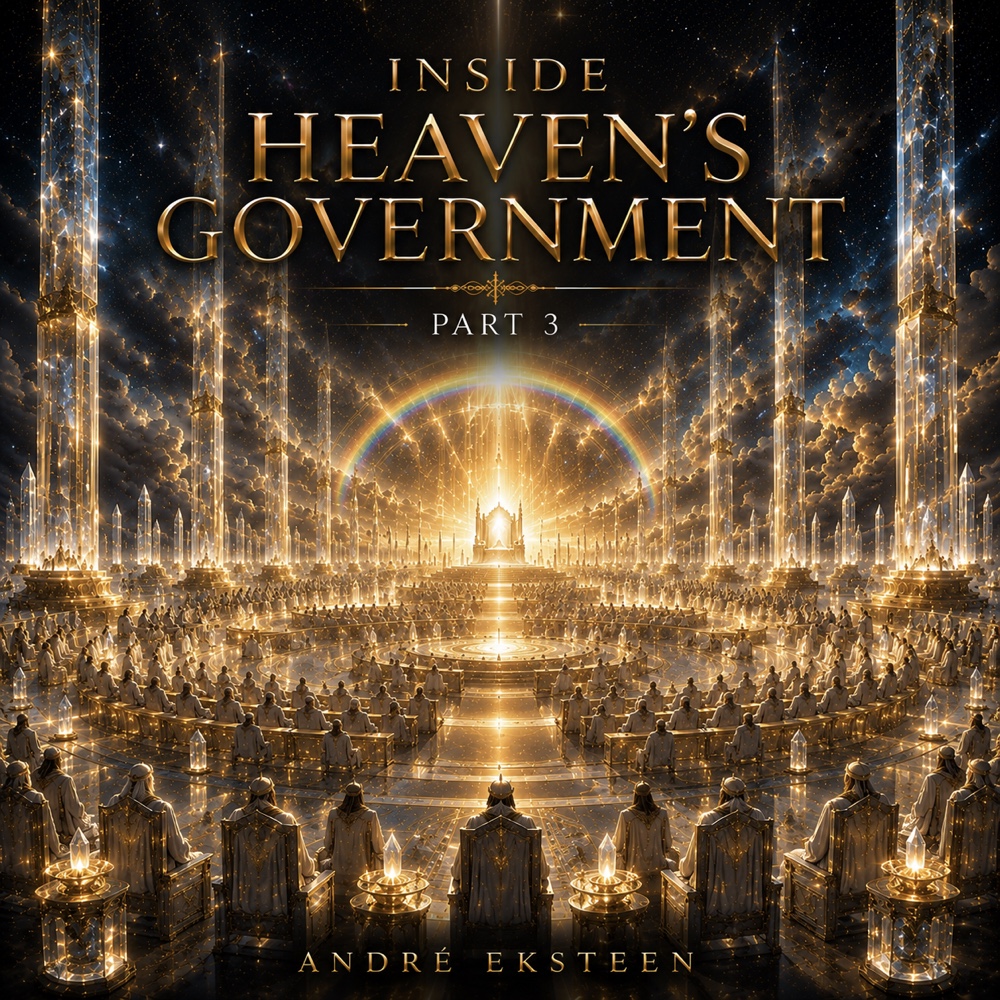
Scripture gives us glimpses of that kingdom from beginning to end, scattered like footprints across the whole Bible if you know to look for them. Job shows us the sons of God presenting themselves before the Lord. Daniel reveals princes connected directly to earthly kingdoms, fighting battles in places we cannot see. Isaiah sees seraphim stationed around the throne. Ezekiel describes cherubim carrying out specific functions, not floating around without direction. Paul speaks of thrones, dominions, principalities and powers, naming them the way you would name ranks in an army. John sees elders, living creatures, angels and heavenly assemblies all operating in their places around the throne of God. Pick any one of those passages on its own and you might shrug it off as a single strange detail. Put them all next to each other, written by different men, in different centuries, in different parts of the world, and the pattern stops looking like coincidence.
None of that sounds random. None of it sounds unstructured. It sounds organised. It sounds governed. Honestly, it sounds very much like an administration, the kind you would find running a kingdom rather than the kind you would find running a choir practice.
The more I have studied these passages over the years, the more one conclusion has become unavoidable. The heavenly host appears to be the first created administration in the whole of God’s creation. Not rulers operating independently from God. Not gods equal to God in any sense of the word. Not beings free to set up their own authority on their own terms. Created servants, every last one of them, operating strictly under God’s authority and within the limits He set for them. There is no committee in heaven voting on policy. There is no council of equals deciding how things should run. There is a King, and there is a host that serves Him according to the rank and assignment He gave each one of them.
This becomes even sharper once you slow down and look at the actual language Scripture uses to describe them. Paul writes to the Colossians, “For by him were all things created, that are in heaven, and that are in earth, visible and invisible, whether they be thrones, or dominions, or principalities, or powers: all things were created by him, and for him.” Colossians 1:16. Most Christians read straight through that verse without pausing for breath. Stop and actually think about what Paul is saying here. He is not rattling off a list of random objects for the sake of filling a sentence. He is naming positions. Offices. Authority structures. Governmental terms, plain and simple. Thrones. Dominions. Principalities. Powers. Those are not words anyone uses to describe a choir standing around singing. Those are words you use to describe a government, with ranks and offices and chains of command.
Long before the first human king ever sat down on an earthly throne, God had already established authority within His heavenly kingdom. Long before mankind ever built a single city, formed a single nation, or drafted a single law, God’s government was already up and functioning. Once that sinks in, it should reshape the way you think about the heavenly host from this point forward.
The ancient books fill in some fascinating detail around the edges of this picture. The Book of Enoch repeatedly describes heavenly beings entrusted with specific responsibilities. Some are tied to the stars. Some are tied to the movement of heavenly bodies across the sky. Some function as watchers. Some function as messengers. Some carry authority over particular tasks assigned to them and nothing beyond that. Jubilees paints a similar picture. The heavenly realm there is never portrayed as an empty space filled with idle beings drifting around with nothing to do. It is portrayed as an active kingdom where responsibilities get assigned and then actually carried out, the same way a well-run business has people in specific roles doing specific jobs rather than everyone wandering around doing whatever they feel like. The Dead Sea Scrolls speak again and again of heavenly assemblies and organised ranks serving before God in good order.
Do any of these books carry the authority of Scripture? No, and I want to be plain about that every time we mention them. But they do show us how ancient believers, far closer to the original culture and language than we are today, understood the heavenly world that Scripture only describes for us in fragments. Their understanding lines up remarkably well with what we already find scattered through the Bible itself. The heavens appear populated. The heavens appear organised. The heavens appear governed. Most importantly of all, the heavens appear active, not idle.
That brings us back around to the morning stars. Job tells us they sang together the moment God laid the foundations of the earth. Why does that detail matter so much? Because it reveals something about their relationship to creation itself. They were not created after the fact, brought into being once the work was already finished, the way you might hire staff after the building is already standing and the doors are already open for business. They were witnesses. Observers. Participants in God’s kingdom who watched His work unfold in real time, with their own eyes, as it happened, the way you would watch a sunrise rather than reading about it the next morning in a report.
Picture it for a moment. The heavens freshly created. The heavenly host already present and watching. God bringing order out of nothing right in front of them. And the morning stars breaking out in song as they witness the raw power of their Creator at work. That is a very different image from the one most people carry around in their heads when they picture angels, and it is a far more glorious one besides.
The same picture holds for the sons of God. In Job they appear before the Lord. They gather before Him. They receive instruction directly from Him. They operate within a clear structure rather than wandering around doing whatever they please. Once again, the picture is governmental, not democratic, not independent. Governmental. A kingdom operating under a King, with everyone in their assigned place.
As we move further into this series, we are going to discover that these sons of God occupy a whole range of positions and responsibilities. Some remain faithful to their assignments. Some rebel against them. Some are entrusted with real authority. Some go on to abuse that authority badly. But at this particular stage in the story, we are still looking at God’s original creation exactly as it stood before any of that played out. The heavenly host as they were created. The heavenly host before rebellion. The heavenly host before corruption. The heavenly host functioning inside God’s perfect order, the way it was always meant to function.
One of the strongest conclusions we can draw from all the evidence taken together is that knowledge itself formed part of their responsibilities. I do not mean knowledge in the modern academic sense, degrees and lecture halls and that sort of thing. I mean knowledge of God’s creation. Knowledge of heavenly operations. Knowledge tied directly to their specific assignments. Enoch repeatedly connects certain heavenly beings to specialised knowledge of exactly this kind, the workings of the stars, the calendar, the weather, the deep things of creation that mankind had no way of grasping on its own. Later in this series, when we get to the rebellion of the Watchers, that knowledge becomes a major part of the story, and a dangerous one at that, because knowledge handed over to the wrong hands at the wrong time is exactly what set that whole tragedy in motion. For now, the point worth holding onto is simply this. The heavenly host were never ignorant beings drifting aimlessly through creation with no real understanding of what they were doing. They were intelligent servants operating within God’s government, fully aware of their role. They understood things mankind would only stumble onto and discover much later. They moved between realms most of us will never see in this life. They carried messages. They executed assignments. They served inside an administration that God Himself had set up and put in motion.
This is where many Christians lose the timeline completely.
For an unknown period, God’s heavenly government functioned exactly as God intended. The heavenly host served under His authority. Every office, every responsibility and every assignment existed for one purpose: to carry out the will of the Creator. Heaven was not a place of confusion. It was a kingdom governed by perfect order.
Then something happened.
Sin entered God’s creation for the first time.
A rebellion took place within the heavenly host, followed by God’s judgement. The consequences were so far-reaching that they changed the course of creation itself. We will examine those events carefully later in this series. For now, it is enough to understand where they fit into the timeline.
Only after those events do we find God preparing the earth for a new chapter in His plan. He creates mankind, not as another member of the heavenly host, but as a completely different creation made in His own image. Then He entrusts the dominion of the earth to man.
That single act changed everything.
As this series unfolds, we will discover that much of the conflict recorded throughout the rest of the Bible can only be understood once we recognise this sequence. First came God’s heavenly government. Then came rebellion and judgement. Only afterwards did God place mankind on the earth and give him dominion over it.
Man is not another member of the heavenly host. Not another order of heavenly beings slotted in alongside the rest. Something entirely different from anything that had come before. Something made in His own image, which no angel, cherub, seraph or son of God had ever been called.
That distinction is critical, and we cannot move past it too quickly. The sons of God were created by God. The heavenly host were created by God. Mankind, however, was created in the image of God. That single difference immediately set humanity apart from every other created being. It was not a minor detail or a poetic flourish—it was a defining characteristic that carried profound implications for identity, purpose, and destiny. To be made in the image of God means that humanity was designed to reflect Him in a way no other creature was. It speaks to authority, relational capacity, moral responsibility, and Ia unique role within creation that cannot be replicated by any other order of beings.
There is, however, one more truth tied to this that most believers have never fully grasped, and I am not going to soften it. While plenty of Christians simply assume that angels permanently outrank mankind in every respect, Scripture points toward something far more unsettling than that comfortable assumption. A very small group, chosen by Christ Himself, will be transformed, given glorified bodies, and made co-heirs with Him. They will reign together with Him, and according to Scripture, they will even judge angels. That is not the destiny waiting for the masses. It is not the inheritance handed out to the lukewarm or the indifferent. It is reserved specifically for a small, faithful remnant who actually pursued it through obedience, sacrifice, and endurance rather than coasting through life on the strength of a single prayer prayed years ago. This is not about earning salvation, but about responding to it with a life that reflects genuine allegiance and commitment.
The rest will live under that reign rather than sharing in it. That reality alone should cause a person to pause and reconsider what they have been taught about the Christian walk. Read that twice if you need to, because most pulpits will never tell you that, and it changes how seriously you ought to take your own walk with God. It reframes the entire conversation from one of mere belief to one of faithful participation in what God is doing. It forces the question: are you simply present, or are you actually pursuing what has been set before you?
Then God did something that changed the course of history in a way that is often overlooked or underestimated.
He entrusted the dominion of the earth, not to the heavenly host, but to mankind. Adam was not placed in the Garden merely to enjoy God’s creation or to exist in passive harmony with it. He was placed there to govern it as God’s appointed representative, exercising delegated authority under the Creator Himself. This was not symbolic authority—it was real, functional dominion. Adam was meant to steward, oversee, and extend the order of God’s kingdom into the physical realm.
Stop and consider what that means, because it carries implications that ripple throughout the entirety of Scripture.
By this point, God’s heavenly government was already established. The heavenly host already existed in their various ranks and responsibilities. The sons of God already served within His kingdom, fulfilling their roles with precision and order. Yet when the time came to place the earth under delegated authority, God did not give that responsibility to cherubim, seraphim, or any other order of the heavenly host. He gave it to man. That decision alone should challenge many of our assumptions about hierarchy, purpose, and the role humanity was intended to play.
That decision was no accident. It became one of the defining moments in God’s plan for creation. It reveals intention, not randomness. It shows that mankind was not an afterthought, but a central component in the unfolding of God’s purposes. It also helps us understand why the earth became the centre of a conflict that runs throughout the rest of Scripture—a conflict that involves both the seen and unseen realms.
We are not ready to examine that conflict yet. Before we can understand why the dominion of the earth became so significant, we first need to understand the heavenly government that existed before mankind was ever created. Without that foundation, the events that follow can easily be misunderstood or reduced to oversimplified explanations.
We will build that picture step by step in the articles that follow, carefully laying out the structure, roles, and dynamics of that heavenly order so that what comes next can be seen with clarity rather than confusion.
For now, we simply need to take hold of the significance of what we have uncovered so far in this series. The heavenly host were the first created beings revealed to us anywhere in Scripture. They existed before Adam. They existed before human history began. They existed before nations and kingdoms were ever formed on this earth. They served within God’s heavenly government. They operated entirely under His authority. They rejoiced in His works. They witnessed His creation unfold with their own eyes. And they formed part of a kingdom far larger, and far older, than most Christians have ever stopped to imagine, let alone study for themselves with an open Bible in hand.
The further we dig into Scripture and the ancient writings surrounding it, the clearer this picture becomes. The heavens were not empty. The heavens were not silent. The heavens were alive with activity, with responsibility, with authority and with purpose, long before anything we would recognise as human history ever began. God’s government was already functioning. The heavenly host was already serving. The foundations of a kingdom were already firmly in place, complete in itself, long before the first man ever drew breath on the earth God had made for him.
That leaves us with a question we cannot avoid moving forward. If the heavenly host already existed in such numbers and with such order, who exactly were they? Were all of them angels in the same sense? Were they all the same kind of being, doing the same kind of work, or did rank and difference exist among them from the very start? Or did God, right from the very beginning, create different orders, different ranks and different responsibilities within His government? That is exactly where we are turning next, because before we can properly understand rebellion, judgement or restoration later in this series, we first have to understand the kingdom that existed in full before any of those things ever took place.