
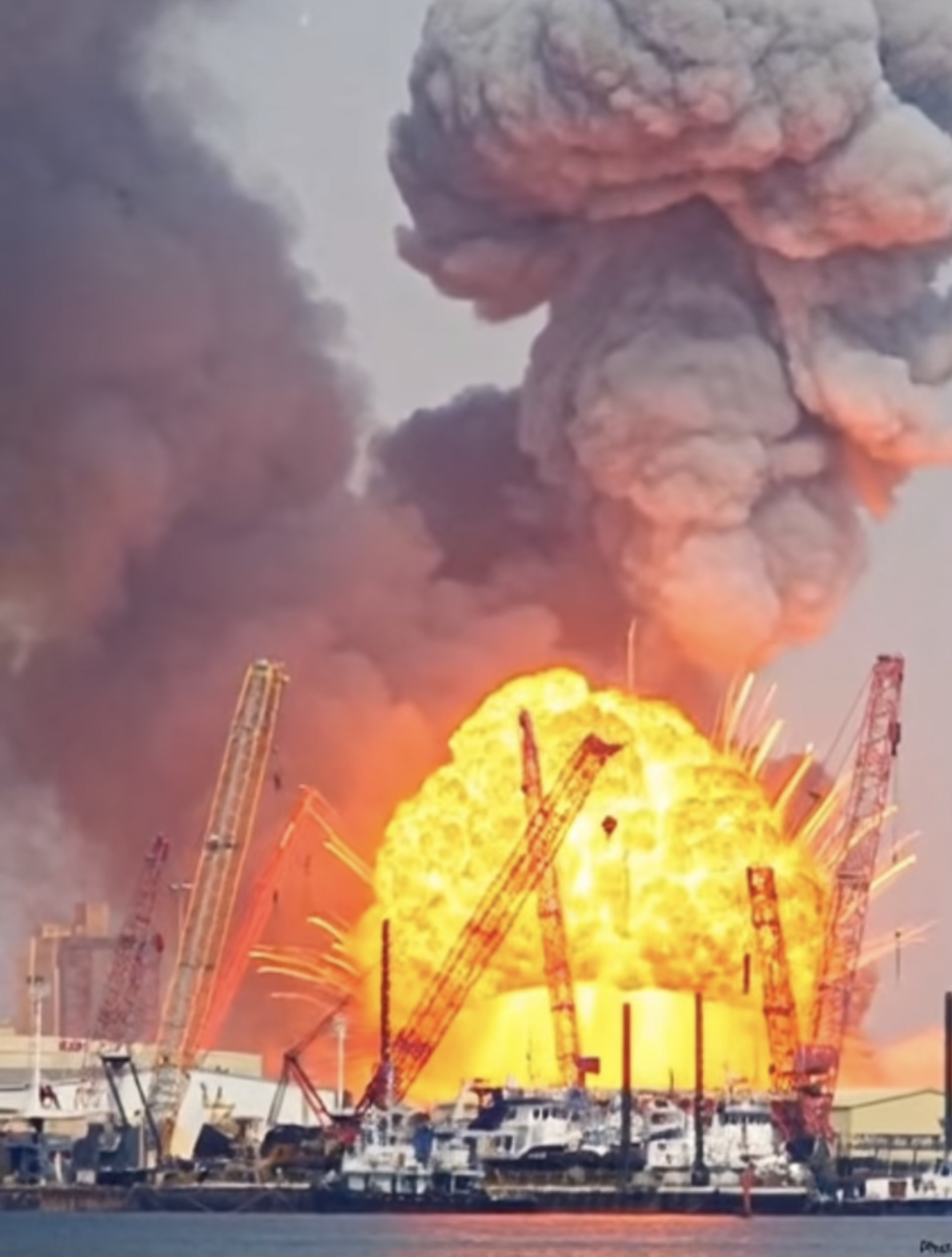
Iran Invokes God After U.S. and Israeli Strikes — The World Enters Dangerous Territory
By Andre Eksteen
“The Foreign Ministry of Iran has denounced the actions of the United States and Israel as ‘criminal military aggression.’
In a statement, the Iranian Foreign Ministry said the Middle Eastern state had taken necessary steps to avoid war by participating in the nuclear negotiation process but would now defend itself against military aggression.
‘And now, at a time when the great test of history has arrived, the armed forces of the Islamic Republic of Iran, inspired by the great epic heritage of this land and relying on God Almighty, with faith in the promise of divine victory, and relying on national power, will not hesitate to defend our beloved homeland with all their might.’”
This statement was released today following reported military strikes involving Israel and the United States against Iranian targets. Most analysts will read it politically. Military commentators will measure escalation risk. Economists will calculate oil price shock. Social media prophets will rush to declare winners and losers before the smoke has even settled.
But if you read this statement through Scripture — not through headlines — something far deeper becomes visible.
Because the moment a war is framed in the language of God, history changes.
War stops being negotiation between governments and becomes conviction between belief systems. Soldiers stop fighting for territory and begin fighting for eternity. Fear of death disappears because death itself becomes meaningful. And once that happens, human deterrence loses its power.
As many men of my generation will know all too well, this is not theory to us. We have lived it. When we were called to fight in the Bush War — sent to protect our country from forces we understood at the time to be hostile to our faith, our way of life, and the civilisation we believed we were defending — something changed inside ordinary young men. We did not go there as politicians. We went as sons, farmers, mechanics, students, and workers who believed we were defending our people, our faith, and our future.
And when a man believes he stands before God for what he does, fear changes its shape.
We fought like lions. Not because we loved war, and certainly not because we were reckless, but because we feared nothing except God alone. Death was real — we saw it, smelled it, carried our friends home under canvas — yet fear of the enemy lost its grip. Survival stopped being the highest priority. Duty became greater than life itself.
That is something modern commentators cannot understand from behind screens and studio desks.
The young soldiers of that time were known across the world as among the most effective fighting forces of their era. Smaller in number, often isolated, operating far from home, yet extraordinarily resilient. Not because of superior equipment alone, but because conviction removes hesitation. When men believe they defend something sacred, they endure hardship others cannot imagine and face danger others instinctively avoid.
This is precisely the reality modern analysts miss when they watch conflicts like the one now unfolding in the Middle East.
Once belief enters warfare — whether rooted in the true God or in a false understanding of Him — the psychology of battle changes completely. Training matters. Weapons matter. Strategy matters. But conviction becomes decisive.
A man who fears death fights cautiously.
A man who has already surrendered his life to what he believes is divine purpose fights without reservation — without fear.
And that is why wars driven by religion become so dangerous.
Because the moment soldiers believe eternity outweighs survival, human deterrence loses its power entirely.
That is the part modern commentators observing war safely from behind keyboards do not understand.
And tragically, many modern Christians do not understand this either. They no longer grasp the weight or the true meaning behind the words, “we fear naught but God.” To them it has become a phrase — something spoken lightly — but to those who have stood where life and death meet, it meant surrendering every human fear because accountability before God alone remained. Even today, simply typing those words makes my skin break out in goosebumps, because men who have lived that reality know exactly what it costs — and exactly what it awakens inside a man.
The Bible never presents world conflict as purely political. From Genesis onward, nations are shown to exist under spiritual influence. Daniel was allowed to see behind the curtain when an angel told him that the “prince of Persia” resisted him for twenty-one days until Michael intervened. Persia was not merely an empire; it operated under spiritual authority influencing earthly events.
Paul later confirms the same reality when he writes that we wrestle not against flesh and blood, but against principalities, powers, rulers of darkness, and spiritual wickedness in high places.
In other words, nations have spiritual ecosystems.
So when Iran declares that its armed forces act “relying on God Almighty” and with faith in divine victory, we must be clear about what is being said. Iran is not invoking the God of Abraham, Isaac, and Jacob as revealed through Jesus Christ in Scripture. It is invoking Allah as understood within Islamic theology — a god that explicitly denies the Son of God and rejects the crucifixion and redemption as revealed in Scripture. From a biblical standpoint, this distinction is not academic; it is fundamental.
Yet this is still not empty rhetoric. It represents mobilisation at the deepest psychological and spiritual level available to a society, because once a nation believes divine authority stands behind its cause — even under a false understanding of a god — fear of human opposition disappears.
And here is the uncomfortable truth many Christians refuse to face.
When men believe their god is with them — whether rightly or wrongly — fear of man disappears completely.
History proves this repeatedly.
The Crusaders marched into overwhelming odds singing hymns because they believed heaven sanctioned their cause. Islamic warriors historically advanced against numerically superior enemies convinced martyrdom guaranteed reward. Jewish defenders in ancient Israel stood against empires because they trusted covenant promises. Early Christians faced lions rather than deny Christ because death had lost authority over them.
Religion removes the final restraint: fear of death. And once fear of death is removed, ordinary deterrence between nations begins to fail.
A soldier fighting for politics calculates survival.
A soldier fighting for God calculates obedience.
That difference changes wars.
Modern Western analysis assumes rational actors whose primary goal is self-preservation. Scripture reveals something very different. When men become convinced that they stand within divine purpose, preservation is no longer the highest priority. They become willing to lose everything — even their own lives — for the glory of their god. I deliberately write god in lower case here, because this principle applies universally to every deity mankind chooses to worship, whether true or false.
And this is precisely why religious war is the most dangerous form of conflict humanity knows.
Once war becomes sacred, compromise becomes betrayal of one’s god.
Now we must confront another reality plainly.
The God invoked by Iran is not the God revealed in Scripture through Jesus Christ. Islam explicitly denies the Son of God and rejects the crucifixion and redemption central to the Gospel. From a biblical standpoint, theological equivalence does not exist.
But here is where shallow preaching creates catastrophic misunderstanding.
Many voices flooding social media today are already declaring, “Islam is finished,” or “This proves God is destroying Iran,” or “The enemies of Israel will collapse overnight.”
These statements reveal something alarming: not prophetic insight, but biblical illiteracy.
Because the Bible never teaches that opposing belief systems vanish quickly simply because they oppose truth.
Babylon did not disappear instantly.
Persia ruled long after confronting Israel.
Rome persecuted Christians for centuries.
False systems often grow stronger under pressure, not weaker.
Scripture repeatedly shows that deception persists until the end precisely because spiritual powers sustain it.
Paul warns in 2 Thessalonians that strong delusion will come upon the world so that many believe lies. Revelation describes nations continuing rebellion even after catastrophic judgments.
So the idea that Islam collapses overnight because military strikes occur is not biblical thinking. It is emotional reaction dressed up as prophecy.
In fact, history suggests the opposite outcome is more likely.
External attack often strengthens religious identity.
When believers perceive themselves under existential threat, faith hardens. Identity deepens. Recruitment increases. Martyr narratives multiply. Resistance becomes sacred duty.
And this is where the princes over nations become visible again.
The spiritual powers influencing nations thrive on escalation rooted in belief. Their objective is not victory for one side alone but sustained conflict that hardens opposition, deepens division, and moves humanity toward global instability.
Daniel’s vision shows these powers resisting heavenly intervention itself. Revelation portrays spirits gathering kings for final confrontation.
War driven by ideology is useful to them.
War driven by religion is ideal.
Because once humanity fights in the name of a god — even falsely — restraint collapses.
Look carefully at Iran’s wording: “the great test of history.”
That phrase prepares an entire population psychologically for sacrifice.
It tells citizens suffering is meaningful.
It tells soldiers death is honourable.
It tells families loss is sacred.
From a military psychology standpoint, this transforms endurance capacity dramatically. From a spiritual standpoint, it signals activation of collective belief under perceived divine mandate.
And here lies the warning for Christians.
Many Western believers have lost understanding of spiritual warfare entirely. They interpret events through nationalism or media alignment instead of Scripture. They celebrate strikes as if geopolitical success equals spiritual victory.
But Scripture never allows such simplification.
God used Babylon as judgment — then judged Babylon.
God raised Persia — then replaced Persia.
God permitted Rome — then shattered Rome.
Earthly alignment with God’s temporary purposes never equals covenant approval.
The danger today is not merely Islamic conviction.
The danger is Christian ignorance.
False teachers now dominate social media declaring triumph without discernment. They speak confidently about prophecy while ignoring the Bible’s consistent pattern: conflict intensifies before resolution, deception increases before truth prevails, and religious certainty rises across all nations before final confrontation.
Jesus Himself warned that many would come in His name and deceive many.
Notice — deception comes wearing religious language.
So when influencers proclaim the end of Islam without understanding history, theology, or prophecy, they unknowingly participate in the very confusion Scripture warned about.
Because the issue is not whether Islam survives militarily.
The issue is that humanity increasingly interprets global conflict through divine justification.
And that includes the West as well.
Secular societies imagine themselves beyond religion, yet their ideologies function religiously — complete with moral absolutes, sacred narratives, and unquestionable doctrines.
The battlefield is becoming spiritual again whether modern culture admits it or not.
And once competing civilizations believe heaven stands behind them, deterrence theory weakens dramatically.
You cannot threaten someone who believes death opens paradise.
You cannot intimidate someone convinced history itself fulfils divine destiny.
That is why religious conflict historically lasts longer and costs more lives.
Now consider the biblical framework again.
The Old Testament repeatedly shows God allowing nations to rise according to their own convictions while still steering history toward His ultimate purposes. Even rulers who did not know Him fulfilled prophetic roles unknowingly.
Cyrus of Persia is called God’s anointed despite not worshipping Israel’s God. Nebuchadnezzar becomes an instrument of judgment before later humbling himself before heaven.
God’s sovereignty operates above human theology.
Which means Iran invoking their god does not place events outside biblical control — but neither does it mean immediate collapse awaits them.
Instead, Scripture suggests something more sobering.
As history approaches its climax, nations become more spiritually defined, not less. Identity hardens. Alliances polarise. Belief systems collide openly rather than coexist quietly.
Religion returns to the center of geopolitics.
We are watching that shift now.
And Christians celebrating prematurely reveal they have forgotten Christ’s warnings.
Jesus wept over Jerusalem not because enemies were strong, but because His own people misunderstood the time of their visitation. They expected political victory. They missed spiritual reality.
Today many believers repeat the same mistake — interpreting military action as prophetic fulfilment without understanding the broader framework.
The Bible never instructs believers to mock opposing nations or celebrate destruction. Instead, it repeatedly calls for discernment, humility, and readiness.
Because wars driven by religious conviction rarely end quickly. Many argued with me after the attacks of 7 October 2023, insisting that the conflict would be over within weeks — that political pressure, negotiations, or military superiority would force a rapid conclusion. I said then, and I repeat now, that this is a religious war, and religious wars do not end through political agreements. The moment compromise requires either side to surrender what they believe their god demands, peace becomes betrayal. And no nation, no army, and no believer willingly betrays the god they believe they serve.
They expand.
They radicalise populations.
They redraw alliances.
They destabilise regions far beyond the initial battlefield.
And spiritually, they create conditions where fear spreads globally — preparing humanity to seek stability at almost any cost.
Revelation describes exactly such a world: exhausted by conflict, desperate for order, willing to accept centralized authority promising peace.
Religious war accelerates that trajectory faster than economic or political rivalry ever could.
So when Iran declares reliance on divine victory, the correct biblical response is not mockery or triumphalism.
It is sober recognition.
Humanity is moving toward conflict framed increasingly in sacred terms.
And once multiple nations believe God supports them simultaneously, escalation becomes almost inevitable.
This is why shallow preaching is dangerous now.
Statements like “Islam is finished” comfort audiences but blind them to reality. They replace discernment with emotional satisfaction.
Scripture never encourages believers to underestimate opponents.
David respected Goliath’s threat even while trusting God.
Paul understood Roman power even while proclaiming Christ.
Wisdom recognises reality without surrendering faith.
The real danger facing Christians today is not Islamic belief alone but spiritual complacency within the Church itself.
Many believers no longer understand sacrifice, endurance, or conviction because faith has been reduced to comfort and prosperity. Meanwhile, millions elsewhere hold beliefs strong enough to die for.
That imbalance matters.
Because history shows that civilizations willing to sacrifice often outlast those devoted only to convenience.
The princes over nations exploit exactly this imbalance. They stir zeal where ignorance reigns and confusion where truth should stand. Their goal is not theological accuracy but sustained division among humanity.
And while nations invoke their god, the true battle remains unseen.
The Bible’s consistent message is that God alone directs history’s conclusion. Human declarations of divine backing do not determine outcome.
But they do determine intensity.
And intensity is rising.
Today’s statement from Iran should therefore not be read merely as diplomatic protest but as evidence that global conflict is entering openly spiritual language again.
Fear of humans decreases when belief in divine purpose increases.
That applies to every side.
Which means the world becomes more dangerous, not less.
The Church’s response must not be celebration of destruction nor naïve predictions of immediate collapse.
It must be understanding.
Understanding that wars framed in a god’s name reshape civilizations.
Understanding that deception thrives in times of religious certainty.
Understanding that prophecy warns not of quick victories but of increasing turmoil before redemption.
And above all, understanding that loud voices online often speak without knowledge of Scripture at all.
The Bible was never given so believers could cheer geopolitical events.
It was given so they would recognise the times and remain spiritually awake.
The tragedy of Jerusalem was not enemy strength but spiritual blindness among those who should have understood.
That warning remains.
Because the greatest danger today is not that nations invoke false gods.
It is that many claiming to follow the true God no longer understand His Word well enough to interpret the world unfolding before them.
And when religious war removes fear of man, history accelerates — exactly as Scripture said it would.



Dankie vir jou insig André.
Maar êrens moet die streep getrek word of ons word verswelg. Kyk na die subtiele Gift of the Givers. Ons arme naive ou volume.
Lees Trump se verklaring asb.
VOLKIE
Thank you for your input. I agree that every society eventually reaches a point where boundaries must be drawn — history makes that very clear. But the point of my article is precisely that the world is entering a phase where political solutions alone will no longer resolve the deeper problem. Nations are trying to save themselves, yet the spiritual crisis remains unchanged. That is exactly why the time we are living in is so dangerous — people are looking for earthly saviours while the real battle lies elsewhere.
We also need to look honestly at ourselves. Just look at what our people have become after we traded our faith principles for wealth, acceptance, and comfort in 1994. We believed compromise would bring peace, but in the process we lost our moral anchor. When a nation gives up its foundation, decline does not begin politically — it begins spiritually. And that is the lesson the world is now starting to learn again, on a much larger scale.