Live the Golden Line – Heaven in the Everyday: Part 17
By Andre Eksteen
In Part 16 we saw how the voice of the Spirit speaks in silence — not through noise or display, but through peace. Now we move to something many people struggle to understand: the same Spirit does not speak only when you pray or read the Bible — He lives through you in every ordinary moment of your day. Heaven is not far above; you are already living in the first heaven — the expanse that God Himself called “heaven” when He said, “Let the birds fly above the earth in the open expanse of heaven.” (Genesis 1:20) It is the sphere of life and breath in which His Spirit moves. It is not a future place, but a reality that flows through your breath right now. The boundary between the spiritual and the physical is thin — it is only that most people have become too blind through their soul to see it.
The world has limited God to churches, gatherings, and “holy moments.” People wait for “the presence of the Lord” as if He must arrive only once the guitar starts playing or the pastor takes the microphone. They cry, “Come, Lord, come dwell among us!” as if He wanders somewhere outside until Sunday at 9 a.m. It is an insult to the Spirit who already dwells in His children. The truth is: He is already there — He was there when His child woke up this morning — He was there when His child drove to church — He is there tomorrow when His child remains calm in difficult circumstances, under heavy pressure, knowing that God is in control.
I have heard more than one preacher say: “Is it not wonderful to meet God here again today?” And every time I want to ask: Where was He then when you wrote the sermon? Was He sitting on the chairs waiting for you until the parking area filled up? Or does He only get involved on Sundays with people who ignore His Name during the week? Is your congregation so far from God that they can only hear Him when you climb onto your soapbox?
The Spirit of God is not a visitor who pops in and then leaves again — He is a resident. He does not dwell in buildings, not in “programmes” or “services,” and certainly not in unredeemed hearts. He dwells in those who have been cleansed by the blood of the Lamb, who have surrendered themselves to Him. If He does not walk out with you after the service, He was never there — He was never part of you — never.
And now we come to the part most churches do not want to hear: the only one who is sometimes there and then not, is Satan and his forces. They are not omnipresent like God — they are limited, bound to time and space. They can only be in one place at one time, just like you and me. And it is exactly for this reason that they must “multiply” themselves through people — through influence, through emotion, through deception.
So yes — they can wait in a church building. They can sit in the gallery, in the sound booth, or behind the pulpit. They can wait between the pews and the chairs; they can lean over people’s shoulders and stroke their souls with false warmth and sentimental tears when the preacher says: “Is it not wonderful to meet God here again today?” They can even imitate a so-called “presence” — make lights flicker, stir emotion, make people fall, scream, and shake — and all the people say is: “The Lord has come!” But the truth is: He was never there. That is how deception works. The feeling is right, but the Spirit is absent.
The enemy knows how humans work — he plays with emotion. He knows that if he can make you feel, you no longer need to believe. And that is exactly what happens in many churches. The song begins, the drum beats, the guitar cries, and people say: “Do you feel it? The Lord is here!” No — it is not the Lord, it is endorphins. It is an emotional reaction, not a spiritual revelation. The Holy Spirit does not work through adrenaline — He works through truth.
God is everywhere, but not everything that is tangible is God. That is why Jesus said: “The Father seeks those who worship Him in spirit and in truth.” (John 4:23) He did not say “in feeling and music.”
The Spirit of God is a resident, not an atmosphere. You cannot “call Him in” or “call Him down” — He dwells in you. That is why Paul says: “Do you not know that you are the temple of the Holy Spirit?” (1 Corinthians 6:19) And yet today the church acts as if His presence depends on the right song or the right preacher.
The true presence of God does not lie in the atmosphere, but in obedience. It is not something you feel — it is Someone in whom you live.
He is in the workshop, in the kitchen, in the field, in the conversation with your neighbour, and even in the financial struggle you face. He is with you when you get your hands dirty to provide for your family, when you pray silently over your child, when you lie awake at night over something you cannot change. The problem is not that God is not near — it is that humans no longer look.
The church says: “Seek God,” but the Word says: “He is already in you.” (Luke 17:21)
And that is the tragedy — because if you begin to seek outside Him who already dwells in you, you soon find Satan waiting with open arms. He sits waiting in every so-called “search” for the supernatural — in New Age practices, energy healing, yoga, vibration therapies, and even in “Christian meditation” which has nothing to do with Christ.
The moment you begin to seek experience instead of obedience, the enemy stands ready with imitation. He shows you lights, makes you feel good, gives you emotions, strokes your soul — and you think it is God. But it is not God you have found; it is the one who has always tried to look like Him.
When the Spirit truly dwells in you, the ordinary becomes holy. Suddenly work becomes worship, quiet becomes prayer, and routine becomes service. You begin to see how heaven hides in the small things — in the honest handshake, the gentle word, the humble task. You begin to understand what Paul meant when he said: “Do everything, whatever you do, to the glory of God.” (1 Corinthians 10:31)
For the child of God there are no more “holy moments” — there is only a holy life.
The Shepherd of Hermas says: “The Spirit of God does not rest in the idle, but in the one who does His work with clean hands.” (Hermas, Parable 10:4) It is not in great sermons or displays that the Spirit rests, but in simple faithfulness. Your work, your honesty, your quiet obedience — these are the altars on which you worship. When you realise this, life stops being divided. Suddenly there is no longer time for God and time for work — everything is His time. Heaven lies between your hands.
Our age makes faith a performance. Every third message on social media says: “Share this or that if you love God.” People seek the dramatic, the supernatural, the big moments, but the power of the Spirit lies in simplicity. He does not dwell in noise — He dwells in purity. The Book of Baruch says: “Wisdom does not dwell in excess, but in a quiet and orderly life.” (Baruch 3:29) That is why Jesus said: “Blessed are the meek, for they shall inherit the earth.” Not the loud ones, not the popular ones, but the quiet and faithful who do their work every day as if it is for Him alone. The Testament of Issachar says: “I found peace in the work of my hands, for the Lord was with me in the field.” (Issachar 7:2) The ancient writings understood something we have forgotten — that God walks with ordinary people, not only with prophets and kings.
Holiness does not mean you must flee from the world; it simply means the world can no longer separate you from God. It is not distance — it is closeness. God created creation in rhythm: day and night, light and dark, work and rest. The same rhythm lives in the person who carries His Spirit. When you work with honesty, you create with Him. When you rest in peace, He restores you. The Book of Jubilees says: “The works of the hands of the righteous are like songs of praise, and their rest is like prayer.” (Jubilees 7:35) Your working day can therefore be a liturgy — if your heart is right.
God never said “be spiritual”; He said “be faithful.” Spirituality without faithfulness is nothing more than mysticism, but faithfulness without display is faith. When you build, repair, or care for something, you are doing what comes from the nature of God Himself. He is the first Worker. Exodus 31 says that He filled Bezalel with the Spirit of God to build, design, and shape. Notice carefully: the Spirit did not fill him to preach, but to work. Therefore, when you do your work honestly, your hands carry the breath of the Creator Himself. The Odes of Solomon say: “My hands worked, but it was Your breath that moved them.” (Ode 17:5)
We sometimes think that God moves only in great things, but He dwells in routine — those repetitive tasks that teach you to be faithful without applause. The Wisdom of Solomon says: “The soul that endures in the small things is a throne for the Spirit.” (Wisdom 6:17) Noah, Joseph, Daniel — all served God through everyday work. Joseph remained faithful as a slave, and God exalted him in His time. Daniel prayed in silence, and God made kings tremble at his faith. Heaven is built by people who simply endure.
Even your home can be a temple. Jesus said: “When you enter a house, say: Peace to this house.” (Luke 10:5) The Epistle of Barnabas adds: “Where love and peace dwell together, God rests; but where strife is, He departs.” (Barnabas 15:5) Places where peace reigns become dwelling places of the Spirit. You can pray that He fills your home, but if there is strife, criticism, or bitterness, He will depart quietly and shake the dust from His feet. Heaven does not begin one day far above — it begins at your kitchen table, in your spirit, in your silence.
Holiness has nothing to do with titles. It is how you act when no one is watching. The Testament of Zebulun says: “I learned that holiness is to do no harm to any person, even those who act against you.” (Zebulun 5:3) True holiness is gentleness under pressure — purity in a defiled world, simplicity in a time of display. This is how Jesus lived. He was not a man of platforms, but of streets, boats, houses, and marketplaces. He carried Light everywhere He went. And this is exactly what the Spirit does in you if He truly lives in you: He makes the ordinary holy again.
Many people see their work as punishment, but work is grace. It is your chance to create alongside God. The Book of Enoch says: “The works of the righteous rise like fragrant smoke, and their labour is counted as praise.” (1 Enoch 94:4) When you do your work with a pure motive, it is not labour — it is worship. That is why Paul says: “If a man will not work, he shall not eat.” Not as punishment, but as principle. Work keeps you in rhythm with God — giving and receiving, planting and harvesting, breathing in and breathing out.
Look at those who refuse to work and live on handouts. They are always the victim, always the wronged one, always the one who “gets no chances.” What do you see in the pattern? The self-idol. The great “me” becomes their centre. Everything revolves around their lack, their pain, their unfulfilled expectations. It is the fruit of a life where the soul rules and the spirit is dead — where a person waits for God to serve them, instead of becoming the hands and feet of God themselves.
The Spirit of God does not work only in churches; He works in people who are faithful in His service. The Ascension of Isaiah says: “The Lord walks with the humble, and His rest is in the diligent hand.” (Asc. Isa. 6:8) When you forgive, sweep, cook, or build with a pure heart, you worship. When you remain silent where you could have been angry, you serve. When you rest without guilt, you trust.
Simplicity tests pride, because it steals its platform. Humans seek recognition, but God works in silence. He does not form character on the stage, but in the workshop. The Apocalypse of Zephaniah says: “The Lord looks at the heart of the one who does his work without wanting to be seen; and He says: this is My beloved.” (Zeph. 7:14) When you stop trying to look spiritual, you begin truly to live spiritually. Jesus said: “Go into your room and shut the door.” Not because He was against others, but because He was against display. His power was in silence. His relationship with you is personal.
When you come to know the Spirit, you realise heaven is not waiting for your death — it is waiting for your awareness. Jesus said: “The kingdom of God is within you.” (Luke 17:21) The world waits for a place; God waits for a person. The Odes of Solomon say: “The Lord has filled my spirit with Light, and I saw Him who is unseen.” (Ode 19:3) Heaven is not above — it is within the person who obeys.
When you understand this, you stop searching for miracles, because you realise you are the miracle. Every breath, every action, every act of faithfulness is proof that God still lives in His creation. The world sees God in great things; the child of God sees Him in small things — in the steam of coffee, in the smell of oil on steel, in the sun over dry ground, in the silence of the morning.
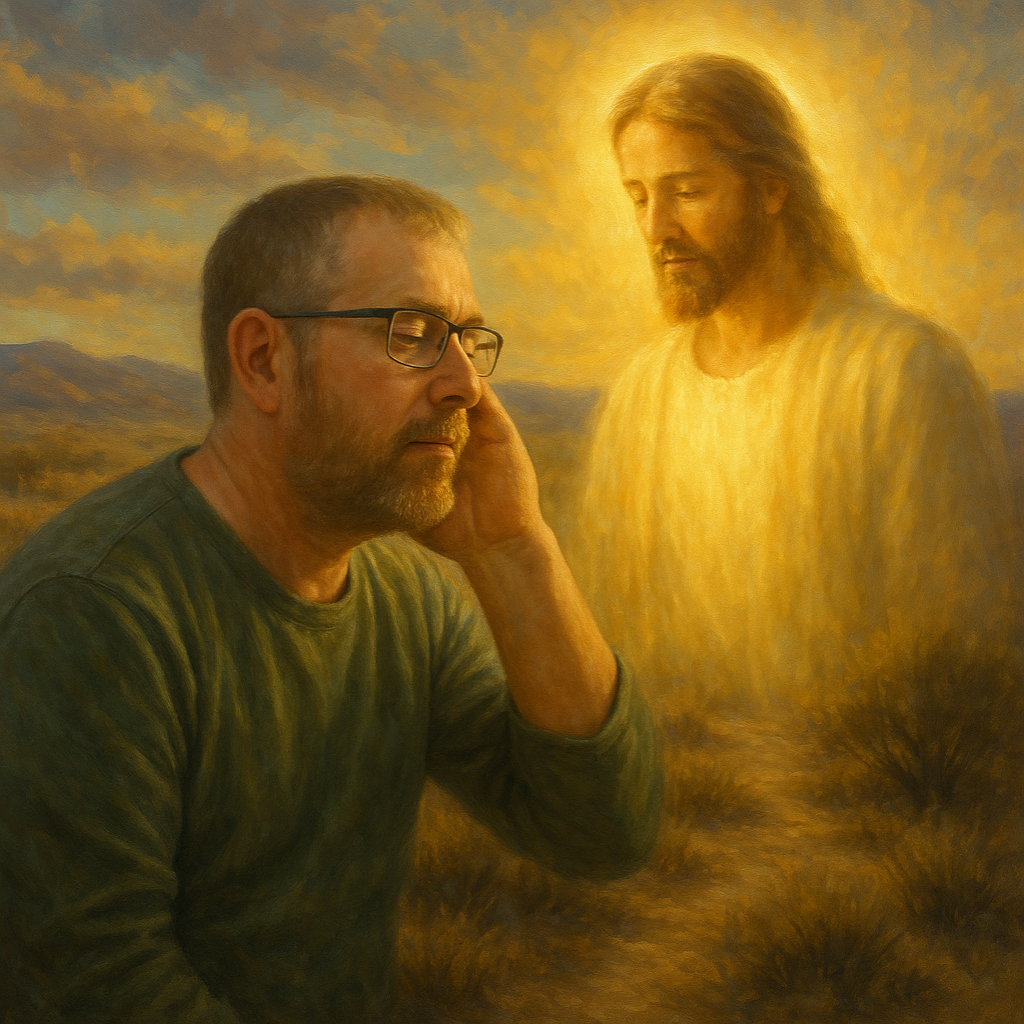
God is not far. He does not wait in the church; He waits in your hands. He is not locked away in heaven; He lives in your spirit. When you grasp this, nothing outside you changes, but everything inside you becomes Light.
It is the Spirit who breathes in you, who lives in your work, who speaks in your rest. Heaven is not a place you will one day reach — it is a reality you carry every day.
Deep calls unto deep. Answer Him.