Inside Heaven’s Government – Part 13
The Story of the Heavenly Host from Creation to the Coming Kingdom
Written by Andre Eksteen
For twelve articles now we have deliberately allowed Scripture to build its own case for us, one careful piece at a time, never rushing ahead of the evidence. We began with God’s heavenly government already firmly established before mankind ever appeared on the scene. We discovered that heaven was alive with purpose, responsibility and order running through every level of it. We met the heavenly host serving faithfully within that kingdom. We learned that Lucifer occupied one of the very highest offices found anywhere beneath God’s throne, entrusted with truly immense responsibility. We watched pride enter creation for the very first time in its history. We witnessed the greatest rebellion creation had ever known unfold before us. Then we watched God’s judgement fall decisively upon that rebellion, removing Lucifer and his entire administration from the offices they had once held.
That is exactly where we left the story sitting. Now we return to the very opening verses of Genesis itself. Not to force some clever new idea into the text that was never there. Simply to read carefully what has actually been sitting there in plain sight all along, waiting for us.
The Bible opens with one of the clearest statements found anywhere in the whole of Scripture. “In the beginning God created the heaven and the earth.” Nothing in that particular verse suggests failure of any kind. Nothing suggests disorder. Nothing suggests incompleteness left hanging. It simply presents to us the perfect, finished work of a perfect Creator, with nothing lacking. Then, without a single word of explanation offered, the very next verse says something altogether different from that. “And the earth was without form, and void; and darkness was upon the face of the deep.” Most of us have read those particular words hundreds of times across our lives without ever properly stopping to ask the rather obvious question sitting right there. How exactly did we get from verse one to verse two so suddenly?
Notice carefully what I am actually asking here, because the wording matters. I am not asking how God eventually went on to restore the earth afterward. I am asking how the earth came to be described this way in the very first place. Those are two entirely different questions, even though we often blur them together without noticing.
The answer genuinely matters here, because it touches directly on the character of God Himself. Throughout the whole of Scripture we repeatedly discover the very same consistent truth, no matter where we look for it. God creates order. Never confusion. God creates life. Never death. God creates beauty. Never ruin. James tells us plainly that every good and every perfect gift comes down to us from the Father of lights above. Paul reminds us just as plainly that God is not the author of confusion in anything He does. Again and again, the Bible presents us with that same consistent picture, book after book. The work of God always reflects the character of God behind it.
That immediately raises another honest question worth sitting with. If God created the earth perfectly in verse one, why is it suddenly described as being without form and void only one verse later? The underlying Hebrew words here deserve our careful attention. The word translated without form is tohu. The word translated void is bohu. Together, those two words describe something laid waste, something emptied out, something desolate, something brought down into ruin. These are simply not the words we would normally reach for to describe the fresh masterpiece of a perfect Creator immediately after He had just finished making it with His own hands.
That observation becomes a great deal more interesting once we compare Scripture carefully with Scripture, exactly the way we have been doing consistently throughout this whole series so far. Jeremiah writes, “I beheld the earth, and, lo, it was without form, and void.” Those exact same two Hebrew words appear there again, word for word. But notice carefully the setting Jeremiah places them in this time. Jeremiah is not describing creation happening there at all. He is describing judgement falling. God’s own judgement had reduced that particular land to utter desolation through what He brought upon it. The very same language found in Genesis appears again here, but this time not in the context of creation. In the context of judgement instead.
Isaiah uses remarkably similar language elsewhere when speaking of nations being brought low under God’s mighty hand. The Psalms repeatedly connect darkness, the deep, and overwhelming waters together with divine judgement falling on the wicked. The pattern quietly repeats itself again and again the further you search for it across Scripture. Whenever these particular pictures appear bundled together like this, they consistently point toward devastation having taken place, rather than toward an original, fresh creation being formed for the first time. I find that genuinely remarkable to sit with. Not because it proves absolutely everything we might want to know about this subject on its own. It does not do that. But because Scripture itself is quietly beginning to ask questions that many of us have simply never thought to ask before in our lives.
Then there is the darkness mentioned right alongside all of this. Again, notice carefully exactly what Genesis actually says here. Darkness was upon the face of the deep. Darkness itself is not inherently evil, and we should be careful not to overstate this point. Night was later deliberately built into God’s good created order as something useful and good. But throughout the rest of Scripture, darkness repeatedly accompanies judgement, separation, and the withdrawal of blessing from a place. Egypt experienced real darkness immediately before the Exodus finally came. Darkness covered the whole land during the crucifixion of Christ Himself. The Day of the Lord is repeatedly described throughout the prophets as a day of darkness specifically. Once again here, Genesis quietly introduces language that the rest of Scripture repeatedly goes on to associate directly with judgement falling.
Then comes another remarkable detail tucked into the same verse. Upon the face of the deep. The deep. The great waters. The abyss itself. Those particular words begin appearing throughout the rest of Scripture in contexts that genuinely deserve our careful attention rather than a quick skim past them. Sometimes they simply describe great bodies of water, nothing more sinister than that. At other times, though, they become closely associated with imprisonment, with judgement, and with powers actively opposed to God’s own authority. The Bible never once invites us to treat the deep casually, as though it were a throwaway detail. It consistently presents it instead as something genuinely mysterious, something connected directly with God’s authority over forces considerably greater than mankind could ever hope to be.
Notice something else here that has quietly changed since Lucifer’s judgement fell on him in the previous article. Before his rebellion, we found him upon the holy mountain of God. Walking freely among the stones of fire. Serving nearest of all to the throne itself. After his judgement, though, Scripture consistently presents us with a very different picture of where he operates from now on. God asks Satan directly in the book of Job exactly where he has come from. His answer is genuinely striking once you notice it properly. From going to and fro in the earth, and from walking up and down in it. His sphere of operation is no longer described anywhere as heaven’s administration. It is the earth instead, plain and simple.
Jesus says elsewhere that He personally watched Satan fall from heaven like lightning. Revelation describes him being cast down specifically unto the earth, not simply removed sideways. Paul calls him the prince of the power of the air in one of his letters. Jesus Himself calls him the prince of this world in the Gospels. A clear pattern begins emerging from all of this taken together. The rebel administration no longer appears anywhere serving faithfully before God’s throne the way it once did. Instead, it repeatedly appears connected specifically with the earth and with the realm immediately surrounding it.
Scripture does not pause anywhere to explain every single detail of exactly how that change came about for us. Neither should we pretend to know more than what it actually reveals to us plainly. But it does quietly allow us to observe, simply by comparing passage with passage, that the sphere in which this rebellion now operates is clearly no longer the same sphere it originally came from before everything changed. That is an observation genuinely worth holding onto carefully as we keep moving forward together through this series.
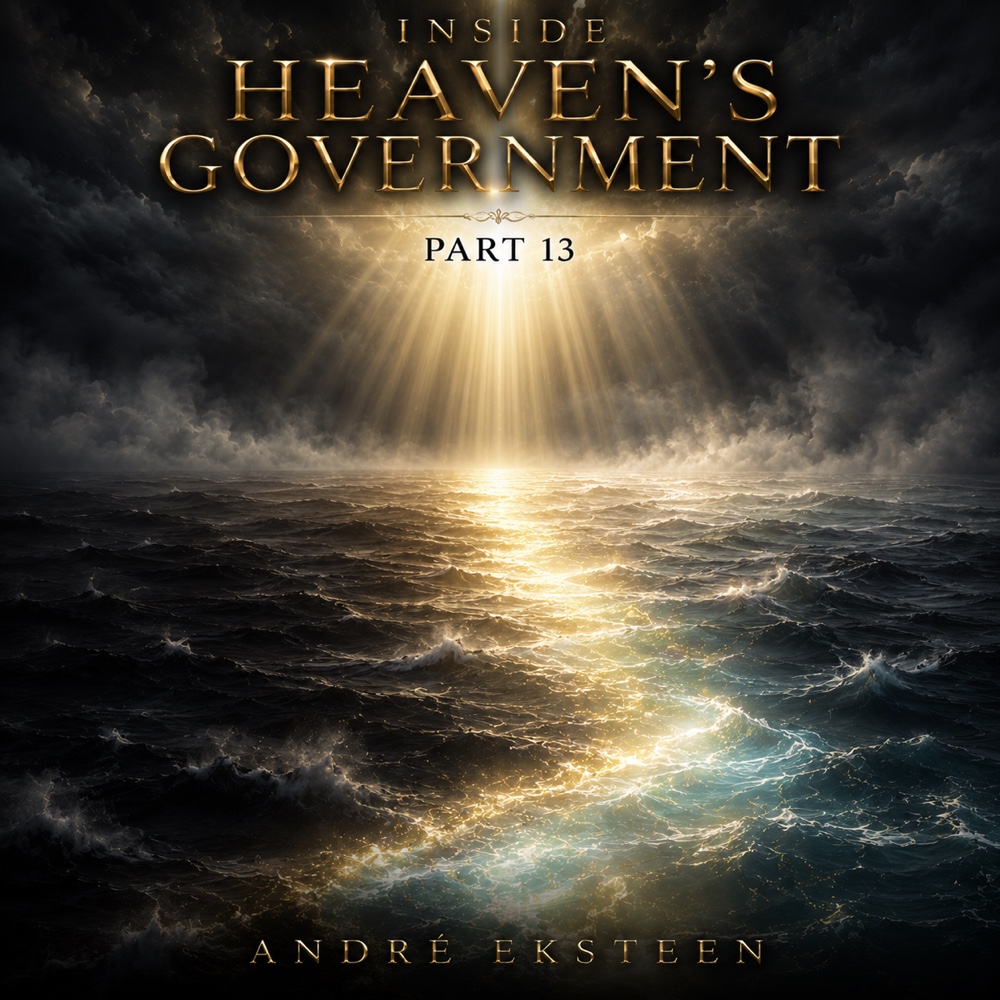
Then Genesis presents us with another extraordinary scene immediately afterward. “The Spirit of God moved upon the face of the waters.” Think carefully about that particular picture for a moment. God is not creating the waters fresh in this verse, out of nothing. They are already there waiting, already present. He is not creating the earth itself in this verse either. It already exists at this point in the account. Instead, the Spirit of God moves quietly over a world already lying in darkness, already covered over by the deep. Immediately afterward comes the very first recorded command found anywhere in Scripture. “Let there be light.”
That particular command has always genuinely fascinated me, every time I sit with it. Not because God somehow lacked light before He ever spoke those words out loud. God Himself is light, through and through, without any shadow in Him at all. His throne is already surrounded by unimaginable glory before any of this. The heavenly kingdom we have been carefully studying throughout this whole series already existed in full at this point. Lucifer himself had originally been called the son of the morning, the light-bearer, before everything went wrong with him. Light was certainly never something unknown to God in any sense. So why, then, does this particular restoration begin specifically with light being spoken into existence? Perhaps because throughout the whole of Scripture, light consistently marks the beginning of God’s renewed work wherever darkness has previously taken firm hold of something. Again, I am not forcing some predetermined conclusion onto the text here. I am simply allowing Scripture itself to keep asking its own honest questions of us.
The further we move carefully through these particular opening verses together, the more Genesis begins reading less like God creating everything from absolute nothing, moment by moment, in one smooth unbroken sequence. And the more it begins reading instead like God bringing fresh order to something that now lies in genuine ruin before Him, requiring real restoration. Whether any individual reader actually reaches that particular conclusion or not is something each person has to decide honestly for themselves, only after carefully weighing the whole testimony of Scripture on the matter. My own purpose here has never been to persuade you through some clever rhetorical argument. It is simply to encourage you to slow down enough, finally, to notice properly what the text itself is actually saying to us, rather than what we have always assumed it says.
Perhaps that has always been the single greatest challenge anyone faces with Genesis specifically. It has become so deeply familiar to us over a lifetime that we often stop reading it carefully at all. We end up reading it from memory instead of reading it fresh off the actual page in front of us. Yet when we compare Genesis carefully against Ezekiel, against Isaiah, against Jeremiah, against Job, against the Psalms, against the Gospels, and against Revelation, something genuinely remarkable slowly begins taking shape before us. The Bible presents us with a perfect creation to begin with. It presents us with a perfect heavenly government running through it. It presents us with the birth of evil entering that perfect picture for the first time. It presents us with the greatest rebellion creation has ever witnessed unfolding within it. It presents us with God’s righteous judgement finally falling upon that rebellion in full force. Then, almost quietly, almost in passing, it opens the book of Genesis with an earth lying in darkness, covered over by the deep, simply waiting there for the Spirit of God to begin His renewing work upon it.
Whether all of those things genuinely belong together as one connected story is a question every single reader has to answer honestly for himself, after weighing the evidence carefully. The Bible has now placed every one of those individual pieces out on the table directly in front of us across these fourteen articles. The next article in this series will take us properly into the six days of creation that follow immediately afterward. Because whatever exactly happened before we ever reach Genesis 1:2 in the text, one thing remains beyond any real dispute. God did not abandon His creation to ruin. The very first words He speaks into that darkness are words of genuine restoration. Let there be light. From that single moment onward in the text, the whole story begins moving, not toward further destruction, but firmly toward renewal instead. And right at the very centre of that newly renewed world, God is about to place an entirely new creation unlike anything that had ever existed anywhere before it.
There is one more observation that genuinely deserves careful attention before we leave Genesis 1:2 behind us for now, because it has quietly followed us through almost every single article in this whole series without us fully stopping to properly appreciate it along the way. Throughout the whole of the Bible, God rarely explains His greatest works to us all at once, in one single sitting. Instead, He consistently reveals them to us progressively, piece by piece, across the whole sweep of Scripture. The true identity of the Messiah unfolds slowly across literally thousands of years of revelation. The coming Kingdom unfolds for us in exactly that same gradual way. The mystery of the Church itself unfolds little by little until the New Testament finally reveals it to us in full near the very end of the story. Why, then, should the earliest chapters of Genesis be treated as the one exception to that consistent pattern running through everything else?
Perhaps they were genuinely never intended to answer every single question in total isolation from the rest of Scripture surrounding them. Perhaps they were always meant from the very start to be read carefully alongside the whole of the rest of God’s Word, rather than standing entirely alone. That would certainly help explain why Ezekiel goes on to tell us things that Genesis itself never directly tells us on its own. Why Job shows us scenes unfolding in heaven that Moses himself never once records for us in his own writing. Why Isaiah allows us to actually hear the private thoughts that gave birth to Lucifer’s rebellion in the first place. Why Revelation finally shows us, much later, the great dragon being cast down decisively to the earth. Each individual writer contributes his own particular piece of the larger puzzle. No single book of the Bible ever attempts to tell us the whole sweeping story entirely by itself, in isolation. That is exactly how God has chosen to write His own Word for us across the centuries. Not as sixty-six entirely disconnected books sitting side by side on a shelf. But as one single, continuously unfolding revelation, building steadily from one book to the next.
Seen properly from that particular angle, Genesis 1:2 begins to feel a great deal less like some awkward interruption sitting in the text, and a great deal more like the actual doorway leading into mankind’s own particular chapter within a much larger story already under way. God does not begin His account by explaining absolutely everything that happened before Adam ever arrived on the scene. Instead, He deliberately begins His account precisely where mankind himself enters into it. That particular distinction is remarkably easy to overlook if you are not specifically looking for it.
Genesis is simply not primarily the history of angels, however much it might touch on them in passing. It is not primarily the history of Lucifer either, however central he turns out to be to understanding it properly. It is not even primarily the history of the original creation itself, in all its fullest detail. It is, at its very heart, the beginning of God’s ongoing dealings with mankind specifically. That is precisely where Moses himself deliberately chooses to place his own attention throughout the book. Everything that came before that particular point gets revealed to us only as much as is genuinely necessary for us to properly understand everything that follows afterward in the story.
Perhaps that is exactly why so much of the earlier part of this larger story appears scattered piece by piece throughout the rest of Scripture, rather than being gathered together neatly into one single, tidy location for our convenience. God consistently gives us enough information to properly understand what we need to understand. He does not set out to satisfy every last curiosity we might happen to bring to the text. There is genuine wisdom hidden inside that particular restraint, even when it frustrates us. If He had genuinely wanted to tell us every single detail of the original creation in full, He could certainly have done exactly that without any difficulty at all. If He had wanted to describe every single stage of Lucifer’s administration, every single moment of the rebellion itself, and every single detail of the judgement that followed it, He could easily have filled entire books with nothing else at all. Instead, He tells us only precisely what serves His own greater purpose in the larger story He is telling. He leaves the rest for careful, patient students of His Word to compare diligently across the whole sweep of Scripture for themselves, the way we have been doing together throughout this entire series.
I find that both genuinely humbling and deeply encouraging at the very same time, in equal measure. Humbling, because it reminds us plainly that we do not, and never will, know absolutely everything there is to know. Encouraging, because it reminds us at the very same time that the Bible fits together with truly astonishing consistency the moment we allow Scripture itself to interpret Scripture properly, rather than forcing our own assumptions onto it from outside.
As we have followed this whole journey together, one article after another across these fourteen instalments now, something genuinely remarkable has happened almost without any of us fully noticing it happen in real time. The opening chapters of Genesis have slowly grown considerably larger in our understanding. Not because we have personally added anything new to them ourselves that was not already there. But because we have patiently allowed the rest of the Bible to shine its own light back onto them properly, the way it was always meant to. That is exactly how the original writers of Scripture themselves often understood the earlier revelation that had come before their own time as well. Later revelation never replaced what had come before it in the story. It illuminated what had already been written, filling in detail that had always been there waiting to be properly seen.
Now another remarkable moment stands directly in front of us as we close this article. The earth lies there in darkness. The deep covers over its face completely. The Spirit of God moves quietly over those same waters. Then the Creator finally speaks into that darkness. Let there be light. Those particular words are not simply the routine opening words of just another ordinary day in creation, ticking by like all the rest. They are the very first recorded words God speaks directly into a world lying before Him in exactly the condition that Genesis 1:2 describes for us in such stark terms. Everything from that single point forward in the text moves steadily toward life. Toward order. Toward fruitfulness. Toward real purpose. Toward mankind himself, waiting to be formed.
The next six days of creation that follow will become some of the most familiar verses found anywhere in the whole of Scripture, verses most of us could recite from memory without even trying. Yet perhaps, all along, we have only ever been reading them as the simple story of creation taking place for the very first time, when they may also, at the very same time, be quietly telling us the deeper story of restoration unfolding instead. That is exactly the question we are going to begin exploring properly together in the very next article of this series.