The Dangerous Lie of Appealing to Authority
By Andre Eksteen
There is a tactic used constantly in modern debates, especially when Christians begin speaking about Scripture, creation, morality, or God’s design for life. It is a tactic that sounds intelligent, sounds sophisticated, and is repeated so often that many people no longer notice the trick hidden inside it.
The tactic is simple.
Instead of dealing with the argument, someone points to an expert.
“A scientist says…”
“A professor has proven…”
“Scholars agree…”
“The scientific consensus is…”
And just like that, the discussion is expected to end. The message is clear: someone with credentials has spoken, therefore the matter is settled.
But if you slow down and examine what is actually being said, you quickly realise something important. In many cases there is no real argument at all. There is no evidence presented, no reasoning offered, no facts examined.
There is only authority.
Someone important believes something, therefore it must be true.
This is one of the most common logical fallacies in modern thinking, and it is called the faulty appeal to authority.
It works like this.
“Dr. Smith believes X. Therefore X must be true.”
It sounds convincing because people are trained from childhood to respect authority. If a teacher says something, it must be correct. If a professor says something, it must be well researched. If a scientist says something, it must be proven.
But that assumption collapses the moment you examine it honestly.
Human beings make mistakes.
Experts make mistakes.
Entire communities of experts have made enormous mistakes throughout history.
Truth does not bow to titles, degrees, or popularity.
Truth stands on evidence.
And if there is one thing the modern world desperately needs to relearn, it is this: experts are not gods.
Now before anyone misunderstands what I am saying, let me be clear. Expertise has value. People who spend years studying a subject often know more about that subject than the average person. There is nothing wrong with listening to knowledgeable people.
The problem begins when expertise is treated as if it were infallible.
And that is exactly what modern culture does.
If a scientist makes a statement, many people assume the discussion is finished. If a scholar writes a paper, it is treated almost like sacred text. If the majority of experts agree on something, people assume disagreement is foolish.
But that assumption ignores one of the most basic realities of human history.
Experts have been wrong repeatedly.
Not occasionally.
Repeatedly.
There was a time when respected scientists insisted heavier-than-air flight was impossible. The Wright brothers proved them wrong.
There was a time when medical authorities believed stomach ulcers were caused entirely by stress. Two Australian researchers eventually proved they were caused by bacteria. The medical community mocked them for years before admitting the truth.
There was a time when the majority of scientists rejected the idea that continents move. Today plate tectonics is accepted fact.
The majority was wrong.
Again and again.
History is full of moments when respected authorities confidently declared something that later collapsed under better evidence.
So when someone tells you that “experts agree,” that statement should not end the conversation.
It should begin it.
Because the real question is not who believes something.
The real question is whether it is true.
Let me say something personal here, because this is something I have seen from the inside.
I grew up in a family where the titles “Doctor” and “Professor” were part of everyday life. These were not distant figures on television or in newspapers. They were family. They sat at the same tables, joined the same conversations, and lived ordinary lives like everyone else.
So when people speak as if those titles somehow elevate a person into a higher class of humanity, I cannot help but shake my head.
Do I respect qualifications? Of course I do. It takes discipline, hard work, and many years of study to earn those titles. That deserves respect.
But having grown up around it, I can tell you something with absolute certainty.
Those titles do not make someone better than the man living next door.
They do not make someone wiser in every subject.
They do not make someone incapable of making mistakes.
The only real difference is that a person with that training has learned how to interpret and analyse information on a somewhat deeper level within a specific field.
That is all.
They are still human.
They are still limited.
They are still capable of being wrong.
We are all human.
And we are all fallible.
That simple truth alone should make people far more cautious before surrendering their thinking to someone else’s credentials.
Now let us talk about how the faulty appeal to authority is often used in the debate about origins, because this is where it appears constantly.
You will often hear statements like this.
“The majority of scientists believe in evolution.”
The implication is obvious. If most scientists believe something, it must be correct.
But that conclusion does not logically follow.
First, the majority has been wrong many times in history.
Second, the majority of scientists share a similar worldview. Most operate from the assumption that the universe developed through purely natural processes. If you begin with that assumption, you will interpret evidence through that lens.
Worldview shapes interpretation.
Two scientists can examine the same fossil layer and reach different conclusions because they start with different assumptions about the past.
One begins with the belief that the earth is billions of years old. The other begins with the belief that Scripture gives an accurate history of creation and the Flood.
The data may be identical.
The interpretation is not.
Science does not exist in a philosophical vacuum.
Every scientist interprets evidence through a worldview.
And when a worldview excludes God from the beginning, the conclusions will inevitably exclude Him at the end.
So when someone says, “Most scientists believe evolution,” they are not presenting proof.
They are presenting the opinion of a group whose philosophical starting point already assumes naturalistic explanations.
That is not evidence.
That is bias.
There is another version of the faulty appeal to authority that appears everywhere in modern culture.
It is called the appeal to the majority.
This argument says something must be true because most people believe it.
“The majority of scientists believe evolution.”
“The majority of historians reject the Bible.”
“The majority of scholars agree.”
But truth is not determined by votes.
If ten million people believe something false, it does not magically become true.
There was a time when the majority believed the earth was flat.
There was a time when the majority believed diseases were caused by bad air.
There was a time when the majority believed slavery was morally acceptable.
Majorities have been wrong repeatedly throughout history.
Yet people still find this argument persuasive because of human psychology. We are social creatures. We instinctively assume that if many people believe something, there must be good reasons behind it.
But that assumption is not always justified.
Sometimes people believe something simply because everyone around them believes it.
That is not evidence.
That is social pressure.
And if we are honest, this is exactly how many ideas spread today.
People accept them not because they have examined the evidence, but because they fear standing alone.
But the Bible has never measured truth by popularity.
In fact, Scripture repeatedly warns that the majority often moves in the wrong direction.
Before the Flood, almost the entire human race had rejected God. Only Noah and his family remained faithful.
The majority was wrong.
In Elijah’s time, most of Israel worshipped Baal. Only a remnant remained loyal to God.
Again, the majority was wrong.
Jesus Himself warned that the broad road leading to destruction would be crowded, while the narrow road leading to life would be found by few.
Truth has never depended on numbers.
Now let me address something else directly, because critics often misunderstand this point when Christians speak about the authority of Scripture.
They accuse believers of committing the same fallacy.
They say, “You are appealing to authority when you quote the Bible.”
But that accusation misunderstands the difference between human authority and divine authority.
Appealing to the opinion of a fallible human expert is very different from appealing to the revelation of an all-knowing God.
Human beings can be wrong.
God cannot.
Human beings possess limited knowledge.
God possesses perfect knowledge.
Human beings sometimes deceive.
God cannot lie.
If God truly revealed His Word in Scripture, then appealing to that Word is not a logical fallacy.
It is the most rational thing a person can do.
Because when the Creator of the universe speaks, His authority surpasses every human opinion.
That is why the Bible says,
“Let God be true, but every man a liar.” (Romans 3:4)
That verse does not mean every person deliberately lies. It means human conclusions are fallible.
God’s Word is not.
This is precisely why the authority of Scripture is under such intense attack today.
If the Bible stands as the ultimate authority, then human institutions lose their claim to final authority.
Universities lose their ability to redefine morality.
Governments lose their power to rewrite human identity.
Cultural leaders lose their ability to reshape truth.
And the modern world does not like that.
So the strategy is simple.
Undermine the authority of Scripture and replace it with human authority.
Replace God’s Word with the opinions of experts.
Replace divine revelation with academic consensus.
And slowly, almost invisibly, people begin to treat human opinion as if it were the final voice on truth.
But once that shift happens, truth becomes unstable.
Because human opinion changes constantly.
What experts declare certain today may be rejected tomorrow.
What scholars mock today may be rediscovered later.
But the Word of God does not change.
It does not evolve with culture.
It does not bend under pressure.
And that is exactly why it continues to stand in conflict with the spirit of this age.
The world prefers flexible truth.
God declares eternal truth.
The world wants authority that can be negotiated.
God speaks with authority that cannot be rewritten.
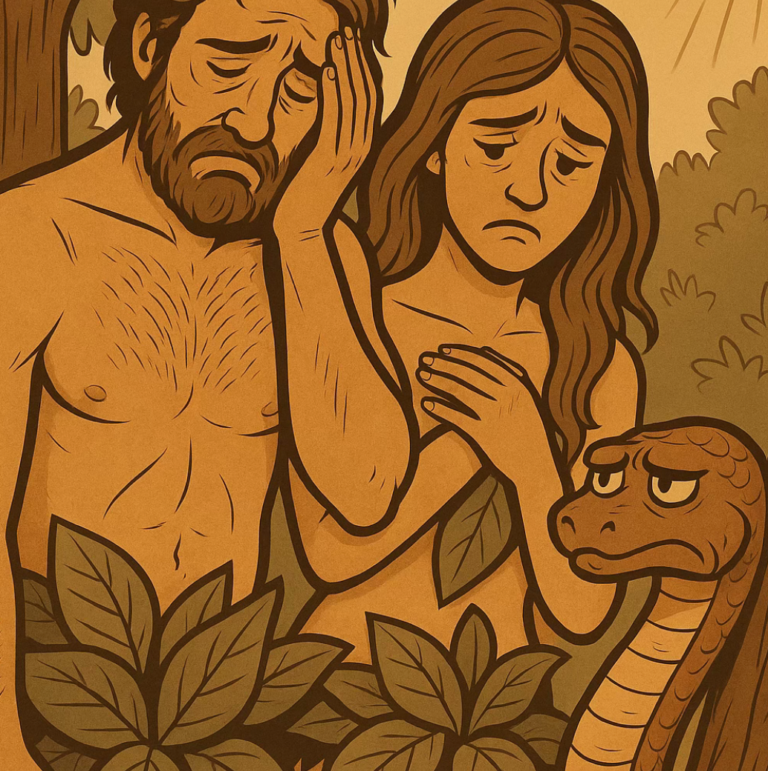
And that brings us right back to the very first lie ever spoken to humanity.
In the Garden of Eden the serpent did not begin by denying God outright.
He began with a question.
“Did God really say?”
That question was the beginning of humanity’s rebellion.
Instead of trusting God’s Word, Eve began evaluating it.
Instead of submitting to God’s authority, she began weighing it against another voice.
And that same strategy continues today.
Did God really say the earth was created?
Did God really say there were only two genders?
Did God really say marriage is between a man and a woman?
Did God really say life begins in the womb?
Did God really say sin leads to judgment?
And once people begin measuring God’s Word against human authority, the battle is already half lost.
Because once God’s voice becomes just another opinion, the door is open for every other voice to compete with it.
Christians must resist that shift.
Respect knowledge.
Value expertise.
Listen to people who study God’s creation.
But never forget something critical.
Every human authority is limited.
Every expert is fallible.
Every scholar has biases.
And when human opinions conflict with the Word of God, the choice for a Christian should never be complicated.
We stand with the Word of God.