The Truth Behind Unclean Meat
By Andre Eksteen
I am asked so often about pork: “Are we allowed to eat it or not?” People say the Bible forbids it, and so they rather stay away from it. But very few understand why it is considered unclean, and even fewer understand that the reason runs far deeper than a simple law about food. I am now going to show you why it is unclean — not because God randomly chose certain animals, but because something in creation itself was broken. I will also show you which other types of meat are unclean and why they may not be eaten. But then I will also show why certain people may eat it now, and how it becomes clean when they eat it — not through the food itself, but through the blood of Christ.
When God created the earth, He did so with perfect order and balance. Everything had its place, every animal its purpose, every seed its kind. Scripture repeatedly says: “And God saw that it was good.” This is important to understand — God cannot create uncleanness. To say that He did is to say there is something imperfect in Him, and that is impossible. Uncleanness did not come from God’s hand; it came when the Sons of God — the Watchers — corrupted creation.
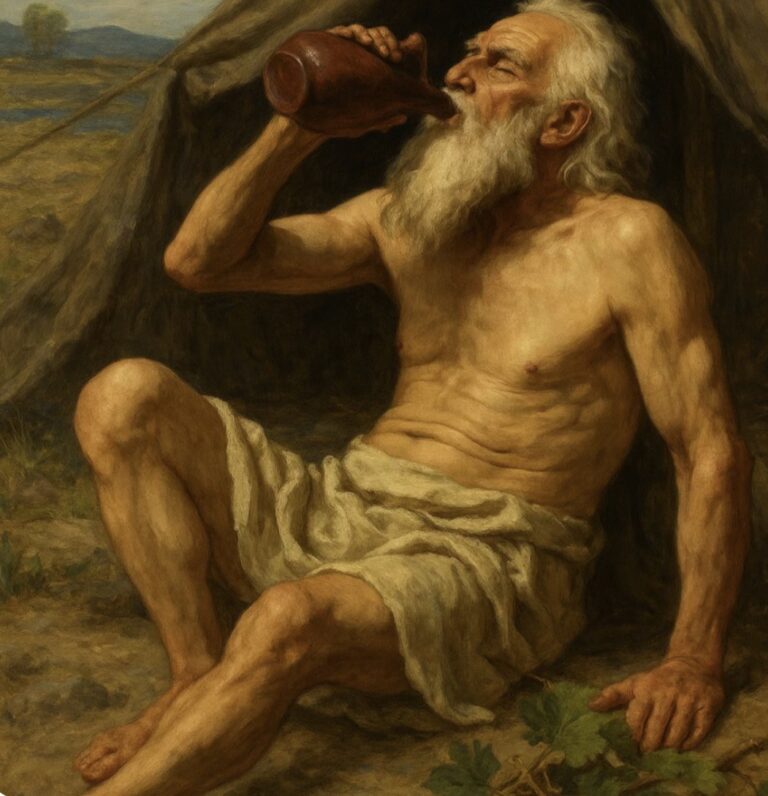
In the beginning everything was clean. Genesis 1:29–30 says that God gave plants as food to Adam and to all the animals. “Behold, I have given you every herb bearing seed … to you it shall be for meat.” And to the animals He says: “And to every beast of the earth, and to every fowl of the air … I have given every green herb for meat.” So, before the Flood, neither man nor animal ate meat. Everything lived in peace and harmony — no hunting, no death, no bloodshed. The world was full of life, not fear.
The Book of Enoch describes how the Watchers, when they descended to the earth, began interfering with nature itself. They did not only teach mankind to sin — they experimented with creation. They hybridised animals and humans, crossed boundaries, and mixed life that God intended to remain separate. From this corruption the Nephilim were born — beings that no longer conformed to God’s image or order.
Here lies a great truth: when this new generation arose, they did not only bring sin, they introduced new instincts that had never existed in creation before. The corrupted bloodline changed something in nature itself — something in the flesh. Animals that originally ate plants began to eat flesh. Insects that once lived on nectar and fruit began to live on blood. Predators, which had not existed before, began to appear. The world changed.
The carnivorous instinct did not arise simply because the Nephilim themselves ate meat — it arose from their corrupted bloodline. Their DNA introduced corruption into nature. Animals exposed to them, or whose seed and bloodlines were mixed, began to display new traits — aggression, the instinct to hunt, and the desire for blood. This is where the first predators, insects, and parasites originated. This was not part of God’s design; it was the result of genetic decay and spiritual contamination.
Thus the world that once existed in peace became one where blood flowed. And this is why God eventually said that He would “destroy the earth with all flesh.” The Flood was not merely punishment for a few people’s sins, as the church often teaches — it was an act of cleansing. He had to wipe out the corrupted bloodline of the Watchers and their offspring, and with it the animals that had been affected by that corruption.
This hybridisation changed everything. Where God had said that each must reproduce according to its kind, the Nephilim broke that law. They erased boundaries between species and broke something in the order of life itself. In humans, this damaged the natural growth process: where a normal human stops growing after puberty, the Nephilim never stopped. They continued growing into grotesque giants — an abnormal and corrupted form of life. That is why God says in Genesis 6:3: “My Spirit shall not always strive with man … yet his days shall be an hundred and twenty years.” In other words, God limited human lifespan to prevent this deviation from ever returning.
In animals, the hybridisation had different consequences. Where God designed animals to both chew the cud and have a cloven hoof, the corruption broke this pattern. In some, the hoof was altered; in others, the ability to chew the cud was lost. The result was new creatures that no longer lived according to the original order of creation. Some began eating carrion, others began hunting, and some began drinking blood. This is why God later makes a clear distinction between clean and unclean animals in Leviticus.
A clean animal had to meet both criteria — it had to chew the cud and have a cloven hoof. This was not a random set of rules. Each aspect carries spiritual meaning. The cloven hoof is a sign of discernment — the ability to distinguish between right and wrong. Chewing the cud points to continual cleansing — to repeatedly meditating on and digesting what gives life, as one does with the Word of God.
So when the Flood came, God did not only cleanse the earth of people, but also of animals infected by this corruption. The animals that had the genetic growth deviation — those that, like the Nephilim, continued growing into grotesque and unnatural forms — were completely wiped out. They no longer fitted into God’s plan. They were part of a distorted creation that could never be restored.
But the animals that only had a purity deviation — such as those with a cloven hoof that did not chew the cud, or the new carnivores that arose from the corrupted bloodline — were spared in limited numbers. Because after the Flood, the world would change. Humanity would no longer eat plants only, but also meat. God knew this in advance, and therefore there still had to be animals that would fit into the new ecosystem — animals that would help balance the earth by eating carrion, removing dead flesh, and completing the cycle of decay.
That is why He said to Noah: “Of every clean beast thou shalt take to thee by sevens, the male and his female: and of beasts that are not clean by two.” The clean animals were preserved because they still lived according to their original pattern. The unclean animals were taken only in pairs because they were not intended for sacrifice or food — they would play a limited role in restoring the earth after judgement.
After the Flood, when the earth was once again clean and fresh, God gave Noah a new instruction. In Genesis 9:3 He says: “Every moving thing that liveth shall be meat for you; even as the green herb have I given you all things.” This was the first time God allowed meat to be eaten — but note, it only happens after judgement. God immediately places a restriction: “But flesh with the life thereof, which is the blood thereof, shall ye not eat.” In other words, He allows meat as food, but the blood — the symbol of life and of the corruption from before the Flood — remains holy to Him.
Even after the Flood, however, the human bloodline was no longer completely pure. God preserved Noah and his family because they were “perfect in their generations,” but one remnant of the corrupted line entered the ark through Ham’s wife. She carried the weaker Nephilim strain in her blood, and through her that corruption survived. That is why giants appear again after the Flood — not with the same power or numbers as before, but still present. The blood of rebellion found its way back, and the spirit of the Nephilim began operating among men again.
Unclean animals according to Leviticus 11 and Deuteronomy 14:
• Pig — has a cloven hoof, but does not chew the cud.
• Camel, llama, and alpaca — chew the cud, but do not have a cloven hoof.
• Rock hyrax or coney — resembles a small rodent, but does not have a cloven hoof.
• Horse, donkey, mule — have a single hoof and do not chew the cud.
• Dogs, cats, bears, lions, tigers, jackals — predators that drink blood.
• Octopus, crabs, prawns, oysters, snails, reptiles, amphibians — do not move according to their kind, do not cleanse their food internally, and eat waste or carrion.
All these animals share a common pattern: they live off death, blood, or decay. They symbolise corruption. They were not part of God’s original herbivorous creation. That is why God calls them unclean — not because He made them unclean, but because they became unclean.
Now we understand why certain people may not eat them. Anyone who is not in Christ is still under the old state of creation — under the curse of sin and corruption. Without the cleansing blood of Christ, the world remains under the influence of the Nephilim’s corruption. When such a person eats from an unclean animal, he partakes in something outside God’s holiness. That is why the unbeliever, the unconverted person, or even the Jew who still lives under the Law, may not eat it. Without the cleansing of Christ’s blood, what is unclean remains unclean. For those who do not eat pork but freely eat other animals like crab, octopus, or anything else from the same list, it is simply proof of how great their deception is. They pick and choose according to their own reasoning, but reject the principle. Either you avoid everything on the list, or you avoid nothing — there is no middle ground.
But here comes the wonder of the Gospel. When Christ shed His blood, He did not only cover human sin — He began breaking the curse over the entire creation. His sacrifice brings creation back under God’s rule. That is why Paul says in 1 Timothy 4:4–5: “For every creature of God is good, and nothing to be refused, if it be received with thanksgiving: for it is sanctified by the word of God and prayer.” And that is why you always ask Christ’s blessing over everything you eat. You do it in private, you do it in a restaurant, you do it always — because if you do not, you eat judgement upon yourself. Through that thanksgiving you acknowledge that Christ’s blood is the only cleansing power. Without His blessing you eat from the world’s hand; with His blessing you eat from God’s.
That is why I so often see people — in restaurants, markets, and food stalls — grabbing food and devouring it like animals, without even thanking the Lord first. They eat hurriedly and greedily, and are ashamed to bow their heads before the One who provides the food. Many of them are even hypocritical enough to later say at a table: “I don’t eat pork,” while they do not cleanse their food at all, simply because they fear being mocked. It is a sign of how far man has drifted from true faith — that he is more ashamed of people than of God.
In other words: the flesh itself did not suddenly change, but the status of the one who eats it did. The one who is in Christ does not eat out of habit or desire, but under grace. He thanks God, acknowledges the blood of Christ, and through that thanksgiving the food is declared clean. It is not diet that makes clean; it is redemption. The blood of Jesus is the only filter that brings the natural back under the spiritual.
God did not change His plan — He fulfilled it. The purity laws were always a picture of spiritual truth. The cloven hoof points to discernment; chewing the cud points to continual cleansing. Those who live in Christ carry these two qualities spiritually: they discern good from evil, and they continue to “chew” on His Word. Their lives are a picture of purity, not because of their diet, but because of their new nature.
God did not design pigs, predators, or scavengers as filthy. They are the result of a fallen world — reminders of what became corrupted. But Christ came to make all things new. One day, says Isaiah, the wolf will lie down with the lamb, the child will play at the hole of the adder, and nothing will hurt or destroy anymore. That is creation as it was meant to be — clean, perfect, without corruption.
God does not create uncleanness. What became unclean did so through rebellion. What becomes clean again does so through Christ. Therefore, when I fold my hands over my food and say, “Thank You, Lord,” I know it is not just a habit. It is a declaration of faith — that the blood of Jesus still has the power to restore what the Watchers broke, to cleanse what was contaminated, and to make perfect again what God declared good in the beginning. So stop diminishing Christ’s sacrifice on the cross to the point where you say you do not eat pork or shellfish because Jesus’ sacrifice is too weak to cleanse it. That is unbelief, not holiness. But at the same time — if you reject Jesus, or present yourself as a Jew while you do not know Him, stay away from these things, because you have no part in His blood. You cannot eat from His grace if you do not believe in His grace.