From Genesis to Revelation: The One Story – The Golden Thread that Explains Everything – Part 24
By Andre Eksteen
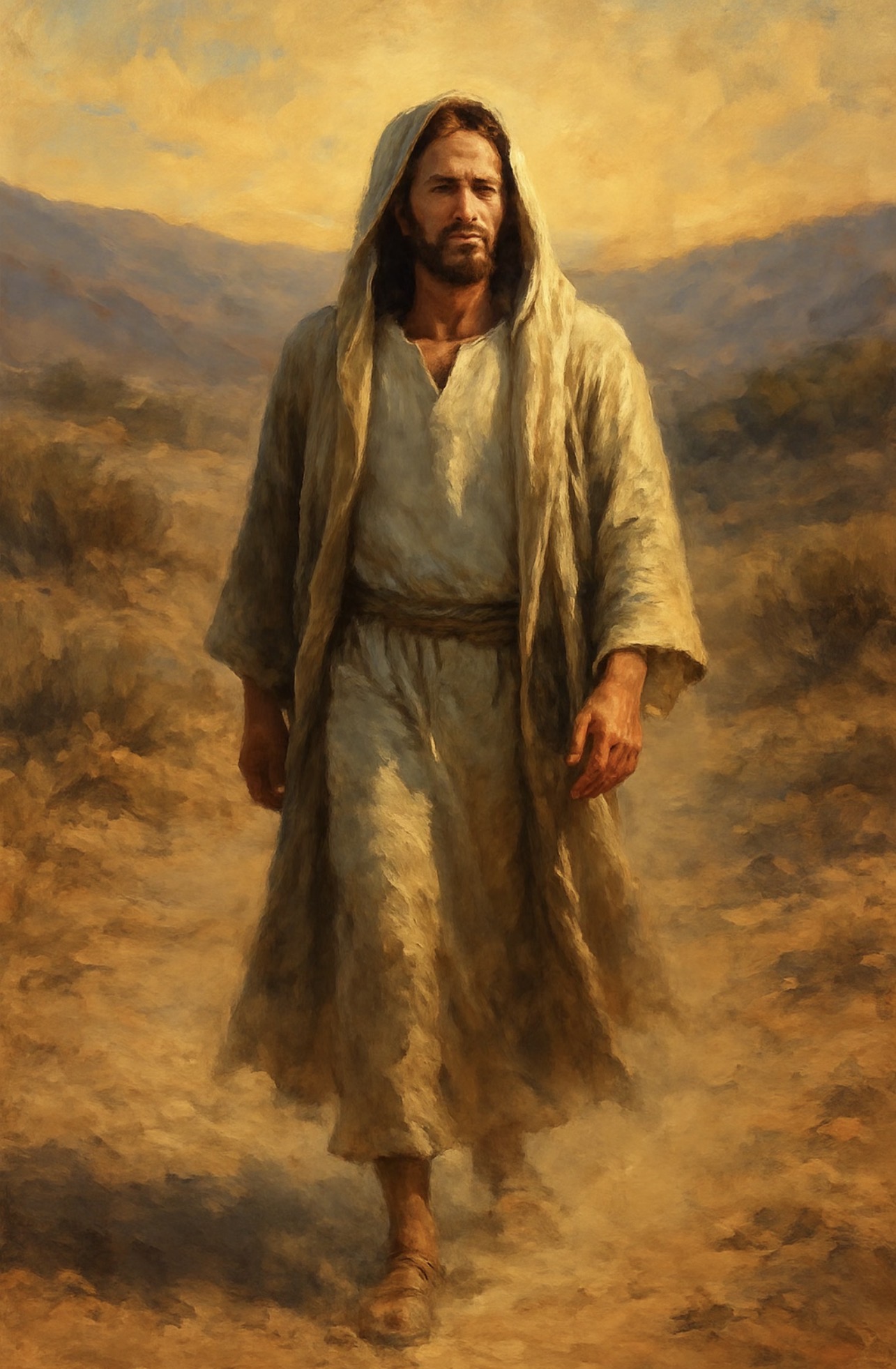
The sun hangs low over Galilee. The wind moves across the water, and in the silence after the wilderness the earth hears the voice of her Creator again — but this time not from the clouds, through the breath of a man. He walks slowly, without followers, without a crown, without the sound of greatness. Yet every footstep is a command, every stride a declaration of authority. He is the Word made flesh — and the flesh now walks among its own creation.
For the first time since Eden, the Creator walks again in His creation. The earth recognises Him, the water obeys Him, even the wind waits for His command. Only mankind, who should know Him best, does not recognise Him. Man, created in His image, is too busy exalting himself to even recognise his Creator.
The world does not yet know that the war has entered a new dimension. That the seed of the woman has now become human, just as God said in Eden. Heaven knows. The powers of the air know. Even the demons beneath the earth know. Only man is too consumed with self to know, because for the first time since Eden there walks a Man who carries no guilt. Not the seed of the serpent, but the seed of the woman — the One of whom God said: “He shall crush your head.” (Genesis 3:15)
This Man is heaven’s weapon, clothed in flesh, and He begins to move.
John is still baptising at the Jordan. The crowds still come, but his eyes already look elsewhere. He knows his time is almost over. When he saw Jesus approaching, he said: “He must increase, but I must decrease.” (John 3:30) The prophet who works with water makes way for the One who will work with fire. For now the baptism of fire begins.
Jesus walks through Galilee — ordinary villages, fishermen, traders, labourers. The Pharisees call it a backward region, but that is exactly where God begins again. Not in Jerusalem with its temples and gold, but by the sea, among men with calloused hands. It is always so. God works through those who are not important, because power blinds the eyes, but humility opens them.
He calls: “Follow Me, and I will make you fishers of men.” (Matthew 4:19) It is not a polite invitation — it is a command. Simon and Andrew look up. They do not understand the full meaning, but something in that voice pierces flesh and mind. They immediately leave their nets. Then James and John, the sons of Zebedee. Four ordinary men — fishermen, but chosen for war. The first soldiers of the Kingdom.
Notice the pattern. He does not choose priests or scribes. He chooses working men, men who believe before they understand. He does not build a church as people understand it today — He forms an army. A spiritual army. They do not yet grasp the scale of it, but heaven knows. These four will be the beginning of twelve — one for each tribe, one for each foundation stone of the new Jerusalem. The powers of the air know this too, and they begin to stir.
As He walks through the villages, people hear the first sermon: “Repent, for the kingdom of heaven has come near.” The same words as John, but with a different authority. John preached about what was coming, but Jesus preaches as the One who brings it. He does not say “it is coming” — He is it. The kingdom moves with Him. Wherever He walks, darkness is driven out, because the Light is no longer just prophecy — it is present.
Matthew says: “He taught in their synagogues, preached the gospel of the kingdom, and healed every sickness and disease among the people.” (Matthew 4:23) Most people read this as miracles. They see healing; heaven sees war. He did not only restore bodies — He reclaimed ground. Every sickness He confronts is a spirit He commands. Every healing is a battlefield against a power that long ruled over people.
But people see only the physical — pain disappearing, eyes opening, bodies restored — and they think that is the whole picture. They do not understand that healing itself is a battlefield. They preach and live a false gospel without knowledge of the war that began in Genesis 3:15. For even the devil can heal the body. He can make symptoms disappear, wounds close, pain fall silent — but only to create a greater bondage in the spirit. This is the false peace, the false light, of which Jesus warned.
That is why true healing is not only the restoration of flesh, but the expulsion of darkness. When Jesus heals, He does not merely remove sickness — He drives out the spirit behind it. And this is the difference between His work and the work of the false miracle-workers of our time. They give bodies relief, but leave souls captive. They offer healing without repentance, comfort without truth, light without Light.
Jesus heals to set free. He touches to make clean. He commands, and the spirit of sickness obeys, because His authority does not lie in touch, but in truth. And every time He heals, a piece of ground is reclaimed — a victory in the unseen war between Light and darkness.
In the synagogue, a man with an unclean spirit cries out: “What have You to do with us, Jesus of Nazareth? Have You come to destroy us?” (Mark 1:24) And He simply says: “Be silent, and come out of him.” No gesture, no ritual — only authority. The spirit trembles and obeys. This is not symbolism; it is takeover.
When He made the blind see, He did not only open eyes — He drove out the spirit of darkness that keeps people blind to truth. When He touched the leper, He did not only heal the skin — He broke the curse of rejection. When He made the paralysed man rise, He said: “Your sins are forgiven.” Because before He heals the body, He releases the soul. And when He called Lazarus out of the tomb, death itself trembled. He did not only raise a friend; He plundered the realm of the dead.
Every touch, every command, every word was a clash between light and darkness. People see a miracle; heaven sees a battle won. For wherever He walks, the borders of kingdoms retreat — and the spirits of the air know their territory is being systematically taken from them.
The Gospel of Peter says: “Where He walked, the earth trembled, for the power of darkness lost its place.” That is why people feared Him — not because He was strange, but because the powers within them recognised Him. When He spoke, the unseen realm moved. The fallen spirits, the children of the ancient beings, cried out: “We know who You are — the Holy One of God!” (Mark 1:24) They recognised Him long before people did, because in the spirit they had heard His voice before — the same voice that once drove them out of heaven.
Yet it was not only the spirits who were afraid — the people were too. They could not understand Him. They saw Him as a threat to order, to tradition, to the “peace” created by their own fear of change. In that time, anyone who challenged religion or Roman authority was seen as a troublemaker — an enemy of the state and of the temple. Such people were not merely mocked; they were bound, beaten, and often crucified.
And here comes a young man from Nazareth — without office, without title, without recognition — who speaks with the authority of heaven and earth. He heals without offerings, forgives without priests, commands spirits without ritual. He breaks every rule on which the religion of that time was built. No wonder they were afraid — because if He is right, their entire system is false.
Ordinary people followed Him, but with fear and curiosity. They heard Him speak with authority, but not like the scribes. (Mark 1:22) For the voice that spoke through Him did not come from training — it came from heaven. And every time He spoke, the unseen world reacted. The air trembled, the sick shook, and the spirits screamed.
That is why even the Romans later said: “Never has a man spoken like this.” For they felt what they could not explain — the vibration of divine authority not subject to human power. He did not only stand against the devil; He stood against everything influenced by the devil — temple, throne, and tradition.
When He spoke, the spirit within people began to tremble. The Word made flesh spoke directly to the spirit of man — not to their ears, but to their being. Even those who wanted to hate Him could not ignore Him. His words cut through layer upon layer of false certainty, through pride, through tradition, into the core of the human soul. That is why some wept without reason, others wanted to kill Him without reason — because the spirit within them knew what the mind still denied. The light began to move within them, and the darkness could not endure it.
He did not only bring the light of truth — He confronted the spirits in people that had lived undisturbed for years. Every word He spoke was a command to the things they thought were merely emotions, habits, or “personalities”. He spoke to the spirit in man — and the spirit responded.
And so the world began to fear Him. Not because He did evil, but because He did truth — and truth is deadly to the lie.
Notice this: people do not yet know, but the spirits know. They recognise the voice of their Judge. They remember Him from before the Flood, when their fathers fell from heaven. Now He stands before them in flesh. This is the true meaning of: “The light shines in the darkness, and the darkness did not overcome it.” (John 1:5)
When He says: “Come out of him,” the ground trembles. This is not only a demonic encounter — it is a reminder of Eden. The serpent that once spoke through man now speaks again through man, and the Son from the seed of the woman again commands him to be silent. Genesis 3:15 lives.
The people of Galilee call Him a prophet. The Pharisees call Him a threat. The demons call Him “the Son of God.” All are partly right, but none yet fully understand. For what on earth looks like a man healing people is in heaven a battle between two kingdoms.
And we know this today — not because we are wiser, but because we have the writings they had and which the church later rejected. Enoch, Jubilees, the Wisdom of Solomon, the Twelve Patriarchs, Baruch, and many others — these were not “extra-biblical” as people say today; they were the Bible of their time. These were the sources from which Jesus, Peter, Jude, and John quoted. These were the writings that opened the world of the spirit and explained how demons, sickness, and sin are part of the same war that began in Genesis. But the modern church discarded them — replacing them with a collection of books chosen centuries after Christ by councils, emperors, and kings for safety and control.
Yes, the Bible we have today is inspired by God, but it is only a small fraction of what God gave us. The Bible is, as Paul himself says, milk for children — a collection of writings softened through the centuries so that people would not have to see the supernatural and tremble. “I gave you milk, not solid food, for you were not yet able to receive it.” (1 Corinthians 3:2) And today most still cannot receive it.
For the moment you bring solid food — the full story of the heavenly war, the truth of the fallen beings, the reality of the powers behind the throne — they call you a false teacher, a heretic, or even a demon.
It is ironic. The church that claims the Holy Spirit works in her becomes enraged when someone says something she herself does not understand. They preach “the full gospel”, but exclude half the truth because it is uncomfortable. They say the war is over, yet live like people still trapped in the enemy’s camp. They say Jesus has done everything already, but forget that He also said: “Whoever believes in Me will do the works that I do, and greater than these.” Yet no one dares to stand and command anymore, because faith has been replaced with theology, and authority with tradition.
I see it in the comments on this series. People say I speak outside the Bible, that I quote “dangerous” books. They call the series “false teaching” because it disturbs their comfort. They ask: “Where is the gospel?”
Well, I say it plainly: the gospel of the false Christ — the one who approves everything, overlooks everything, forgives everything without repentance, and has become every person’s personal servant — that gospel is not here, and does not belong in the true Church of Christ.
The church that proclaims it is the church of Satan himself. It is the church married to the world. The church that says “do not judge” while folding its hands to protect sin. The church that lulls people to sleep with bright lights and soft words, so that no one can distinguish between Light and darkness. It is the church that preaches peace while laying itself on the altar of compromise. And when you bring the truth, they burn you with their words, just as the old temple leaders stoned the prophets.
They call it love, but it is fear. They call it peace, but it is apathy. They call it grace, but it is rebellion dressed in fine clothes. They have forgotten that true love carries truth, and true grace always comes with holiness. The church of this age is not silent because she is humble; she is silent because she is afraid of being exposed.
But Jesus was not afraid. He did not wait for the approval of the crowds or the consent of the priests. He spoke with authority — and that is why people feared Him. Not because He was strange, but because the spirit within them recognised Him. When He entered the synagogues, people did not only hear His words; they felt His presence. The powers within them trembled. That is why even the Romans later said: “Never has a man spoken like this.” For they felt what they could not explain — the vibration of divine authority not subject to human power.
He did not only stand against the devil; He stood against everything influenced by the devil — temple, throne, and tradition. When He speaks, the spirit within people trembles. The light of truth pierces their pretence, and the spirits that control them begin to cry out: “We know who You are — the Holy One of God!” (Mark 1:24)
And so, among ordinary people, the greatest advance in history begins. Not with weapons or banners, but with truth. The King of heaven walks among the dust of His creation, and the thrones of darkness begin to crack. People see a man, but the spirits see their end. The seed of the woman has begun to move — and every step brings the prophecy of Eden closer to fulfilment.
In the next part we will see how this war deepens. The Son of Man climbs a mountain to speak the law of His Kingdom — not engraved in stone, but written in the hearts of men. There He will show the world that the true war is not won with swords, but with truth, purity, and authority from heaven.