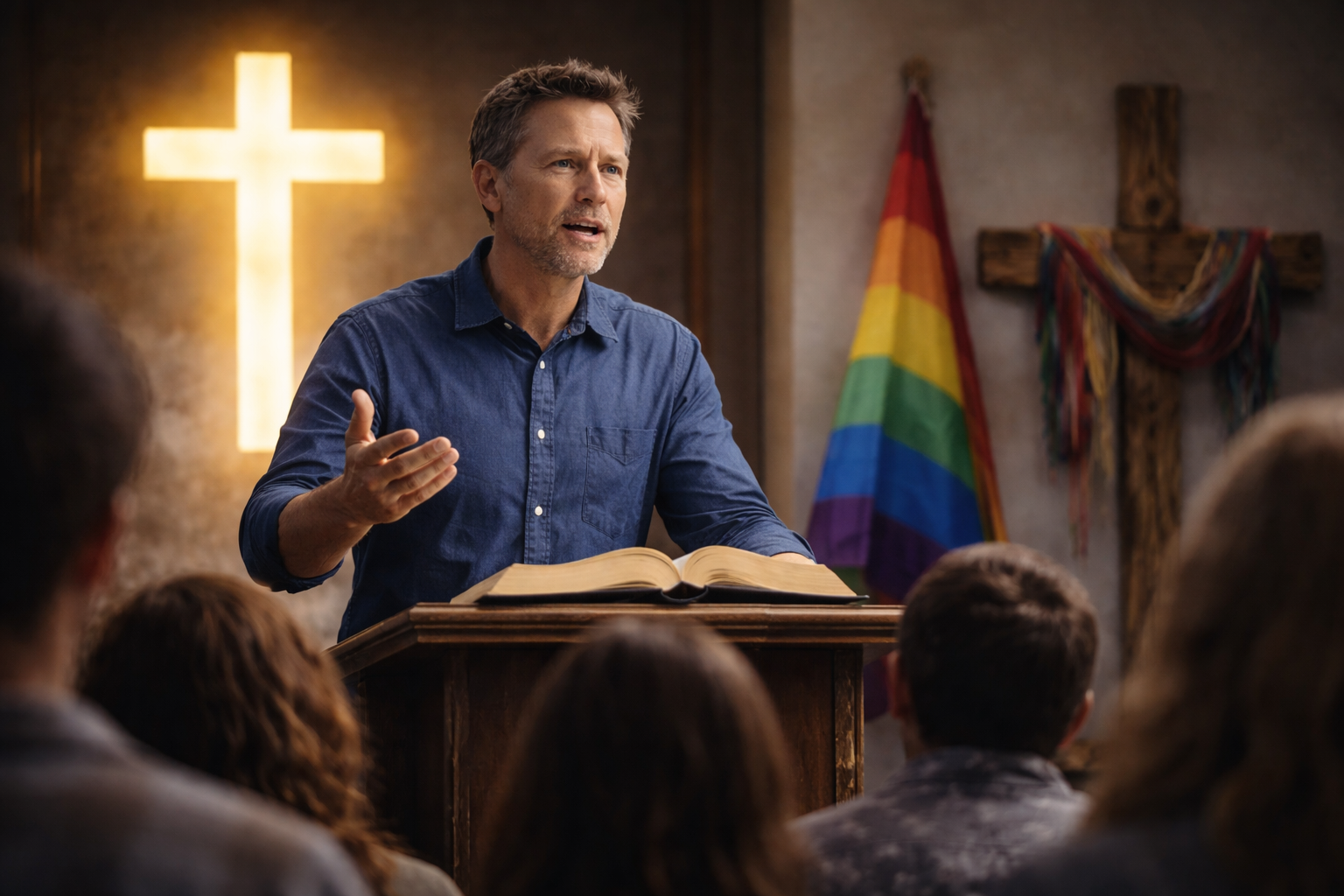
Christianity Did Not Fail — It Was Replaced
By Andre Eksteen
People keep saying that Christianity is in decline. That the church is losing relevance. That faith no longer speaks to the modern world. But that diagnosis is wrong. Christianity did not fail. It was replaced. Quietly, politely, and often from inside its own walls.
What most people call “Christianity” today bears little resemblance to the faith described in Scripture. It uses the same words — God, Jesus, grace, love — but the meanings have changed. And when meanings change, truth disappears without anyone noticing.
This did not happen overnight. It happened one compromise at a time.
Christianity was never meant to be comfortable. It was never designed to blend seamlessly into culture. From the beginning, it stood in direct opposition to the spirit of the age. It challenged power, exposed sin, confronted pride, and demanded repentance. That is why it was persecuted. That is why it transformed lives. And that is why it mattered.
Modern Christianity, by contrast, has made peace with the world. And in doing so, it has surrendered its authority.
The problem is not that people reject Christianity. The problem is that they are not rejecting the real thing. They are rejecting a diluted, powerless imitation that offers comfort without truth and belonging without transformation.
Biblical Christianity begins with God as Creator. Not as an idea. Not as a metaphor. As the literal, sovereign Creator of all things. From that foundation flows everything else: human value, moral law, sin, judgment, redemption, and hope.
Remove that foundation, and Christianity collapses into sentiment.
This is exactly what has happened.
Many churches now treat Genesis as optional. Creation is negotiable. Adam becomes symbolic. Sin becomes psychological. Judgment becomes uncomfortable. And the cross becomes a vague expression of love rather than the necessary payment for real guilt.
Once that happens, Christianity loses coherence.
If God did not create us, then He does not own us.
If He does not own us, He has no authority over us.
If He has no authority, sin becomes preference.
And if sin is preference, salvation becomes unnecessary.
At that point, Christianity becomes a lifestyle brand.
This is why so many churches focus on feelings rather than truth. On affirmation rather than repentance. On relevance rather than faithfulness. Because once truth is negotiable, the only thing left to offer is experience.
And experience cannot save.
The Bible does not present Christianity as one option among many spiritual paths. It presents it as reality itself. God is not competing for attention. He is declaring truth. And truth does not ask permission to exist.
Modern Christianity struggles with this because it fears offence. It fears exclusion. It fears being labelled intolerant. So it softens its message until it no longer confronts anything.
But a gospel that does not confront sin cannot heal it.
Christianity is not primarily about self-improvement. It is about death and resurrection. The death of self-rule and the resurrection of new life under Christ’s authority. That message will never be popular, because it strikes at human pride.
This is why the church has increasingly replaced repentance with self-esteem. Sin with brokenness. Judgment with misunderstanding. And holiness with authenticity.
Words matter.
When sin becomes “mistakes,” repentance becomes unnecessary. When judgment is removed, grace becomes meaningless. And when Christ is reduced to a moral teacher, the cross becomes excessive.
Biblical Christianity teaches that humanity is fallen, not merely flawed. That we are rebels, not just confused. And that salvation is not advice, but rescue.
Modern Christianity struggles with this because it offends modern sensibilities. We like to believe people are basically good. The Bible says otherwise. And the world has always hated that message, because it exposes the lie of self-sufficiency.
This is where many churches made their fatal mistake: they tried to make Christianity more acceptable by aligning it with the world’s assumptions instead of challenging them.
Instead of asking, “Is this true?” they asked, “Will this be received?”
And the moment reception becomes the goal, truth becomes expendable.
This is why modern Christianity often avoids topics like judgment, hell, obedience, and authority. Not because Scripture is unclear, but because culture is hostile. And rather than preparing believers to stand, churches chose to adapt.
The result is a generation raised in church who know Christian language but lack Christian conviction.
They know how to worship, but not why.
They know how to belong, but not how to obey.
They know how to feel, but not how to discern.
And then we wonder why they leave.
They are not rejecting Christianity. They are rejecting confusion.
When the church cannot explain why God created the world, why sin exists, why Christ had to die, and why truth matters, young people look elsewhere for answers. And the world is always happy to supply them.
Christianity, properly understood, is not anti-intellectual. It is the most coherent worldview available. It explains origin, meaning, morality, and destiny. It grounds human dignity. It confronts evil. And it offers hope that does not depend on circumstances.
But it only does this if it is allowed to speak plainly.
Once Scripture is filtered through cultural approval, Christianity loses its sharpness. And blunt truth cannot cut through deception.
This is why we now see churches affirming things Scripture clearly condemns. Not because the Bible changed, but because authority shifted. Culture became the interpreter of Scripture instead of Scripture judging culture.
That is idolatry.
Whenever the church takes its cues from the world, it ceases to be salt and light. Salt that loses its saltiness is useless. Light hidden to avoid offence is no light at all.
Christianity is not meant to be safe. It is meant to be true.
Truth will always create division. Not because it is cruel, but because it exposes lies. Jesus Himself said this. He did not promise peace with the world. He promised conflict, persecution, and rejection — not as failures, but as signs of faithfulness.
Modern Christianity avoids this reality by redefining faith as private, subjective, and non-confrontational. But a faith that makes no demands makes no difference.
The early church did not change the world by blending in. It changed the world by refusing to bow.
It proclaimed that Jesus is Lord — not Caesar. That declaration alone was enough to get believers killed. Because it challenged ultimate authority.
Today, many churches avoid proclaiming Christ’s lordship in any meaningful sense. They speak of Him as helper, friend, or inspiration — but rarely as King.
And a Christianity without a King is not Christianity at all.
The decline we see is not the failure of Christianity. It is the exposure of counterfeit faith. A version of Christianity that removes God’s authority, downplays sin, avoids judgment, and prioritises comfort was never going to endure.
Because it was never built on truth.
True Christianity begins with surrender. Not negotiation. It begins with acknowledging that God is God and we are not. That He defines reality. That He sets moral boundaries. And that salvation is His work, not ours.
That message will always offend human pride. And that is precisely why it saves.
The church does not need to reinvent Christianity. It needs to recover it. To stop apologising for truth. To stop editing Scripture for comfort. To stop fearing the world’s opinion more than God’s judgment.
We are not called to be liked. We are called to be faithful.
And faithfulness has always come at a cost.
If Christianity is losing influence, it is not because it lacks truth. It is because too many churches have stopped trusting it.
The answer is not better branding.
Not better music.
Not better messaging.
The answer is repentance.
Repentance from compromise. Repentance from fear. Repentance from replacing God’s authority with cultural approval.
Christianity will never be accepted by the world. It was never meant to be. But it will always transform those who submit to it.
And that is enough.
The question is not whether Christianity still works.
The question is whether we still believe it is true.