From Genesis to Revelation: The One Story – The Golden Thread that Explains Everything – Part 31
By Andre Eksteen
The blood of the martyrs soaked into the earth, but it did not destroy the Church. It made her stronger. Every time a believer died, the fire spread even further. The world thought persecution would extinguish the Light, but it only burned brighter.
When Satan realised that violence did not work, he changed his strategy. He stopped attacking the Church from the outside and began poisoning her from within. The enemy who had once come through soldiers and emperors now began to speak through priests and doctrines. He knew that if the Light could not be destroyed, it could be dimmed through compromise.
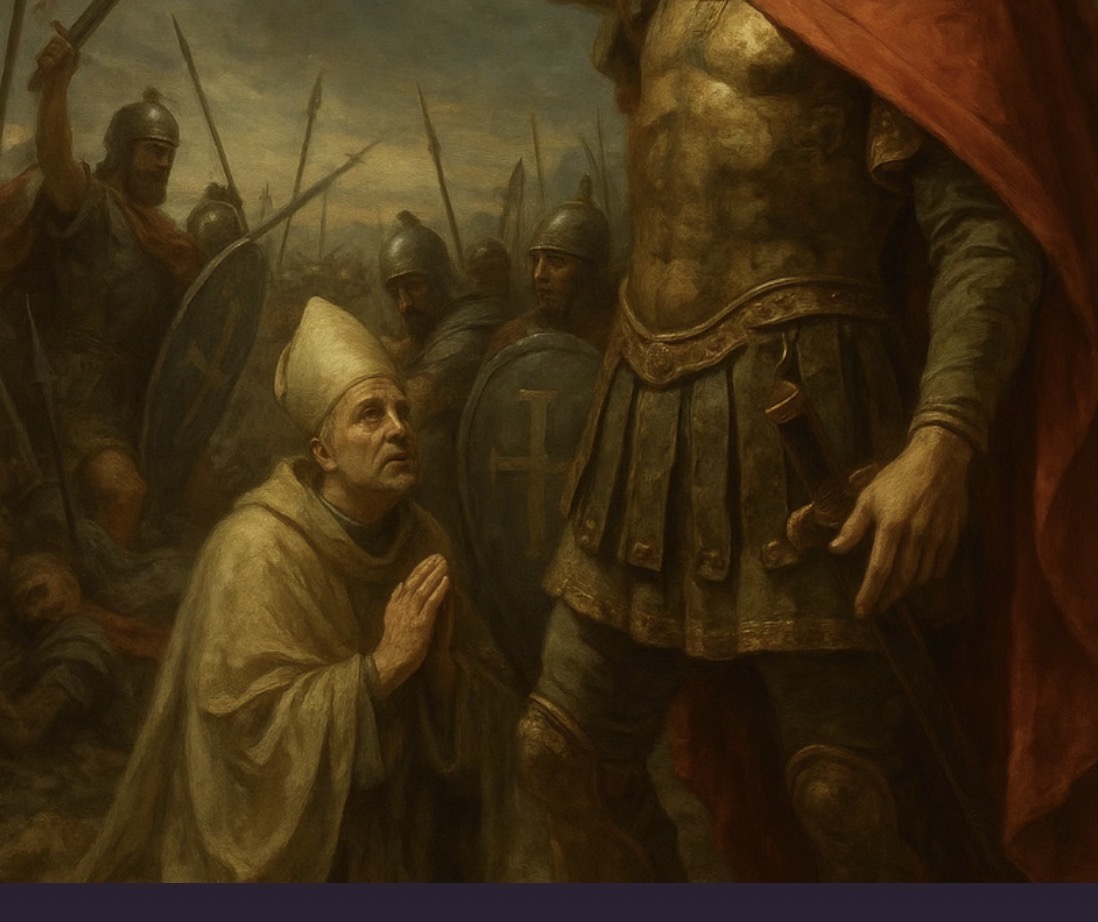
After three centuries of bloodshed, the Roman emperor Constantine decided to make peace with the Church. He claimed that he had seen a cross in the sky with the words: “In this sign you will conquer.” He won the war, and the Church accepted him as a messenger of God. But this was the beginning of the great deception. The cross, once a symbol of self-denial, became a symbol of victory and political power. The faith for which people were willing to die became a state religion.
The emperor did not repent; he took control. He did not enter the Kingdom of God; he secularised it. And the Church allowed it because she was tired of blood. What the sword could not achieve, the crown did.
The simple truth of the Gospel made way for ceremonies, rituals, and human authority. The Spirit of God left the centre, and political structures took its place. Where Jesus said, “My kingdom is not of this world,” the new Church began to say, “We rule on His behalf.” This was the first great corruption — replacing the voice of God with the command of men.
And then something even more treacherous happened. The Church began to change the Word itself. What God had spoken literally, the Church began to explain away as symbolic. Prophecies meant as warnings were turned into figurative language. Where Daniel, Ezekiel, and John spoke of real kingdoms and future judgements, priests began to teach that these were merely “spiritual truths”. What God intended as preparation for the end, people turned into pleasant metaphors for self-improvement. The prophetic fire was smothered under the ashes of allegory.
By softening prophecy, the Church gained control over people. If judgement is only a story, there is nothing to fear. If the devil is just a symbol, no one needs to resist him. If hell is only metaphor, no one needs to live holy lives. In this way the Church fell asleep, while the enemy established his throne within her walls.
Scripture says: “For we wrestle not against flesh and blood, but against principalities, against powers, against the rulers of the darkness of this world, against spiritual wickedness in high places.” (Ephesians 6:12)
This is not symbolic. Paul is speaking about real beings — the princes of the air, the spirits of deception, the powers that rule in the unseen realm over people, cities, and nations.
When the Church ignored the spiritual war, these powers found a place within her walls. They influenced priests and leaders, guided decisions, and twisted the Word to keep people trapped in fear and blindness. This is why, over time, the Church so easily exchanged the voice of God for the voice of men. The spirits that once fell from heaven received a new throne — not in the world outside, but at the altar itself.
The “princes of the air” that Paul speaks about are the same ones Jesus cast out of people during His ministry. They did not disappear. They simply changed tactics. Where they once openly possessed people, they now work through systems, doctrines, and institutions. They keep people busy with religion without truth, liturgy without the Spirit, and ritual without holiness.
Today they rule over millions who think they serve God, but in reality live under the control of these powers. They use false teachings to keep the Church powerless, false prophecies to deceive believers, and false peace to keep the war hidden. This is why most modern churches no longer speak about sin, judgement, or holiness — the spirit at work in them hates these words, because they remind it of the truth that exposes it.
In this way the Church lost the spiritual war long before the end times began. She decorated the battlefield beautifully, but laid down her weapon. She sings about victory, but she is already occupied.
The truth is that this system was deliberately created. When church leaders gathered at Nicaea, Hippo, and later at Trent, they decided which books would survive and which would be silenced. Books such as Enoch, Jubilees, and Baruch, which clearly describe the spiritual war, were excluded because they shed too much light on the reality of the devil and judgement. They wanted a faith that would keep people calm, not awake. What they did not understand was that Light cannot be stopped by censorship — it burns even under prohibition.
Is it not ironic that Stephen, the first martyr, was murdered precisely because he proclaimed this truth? He understood the history of these writings and used them to show how everything — from Enoch to Moses — points to the Messiah. And yet it was that very truth that caused his death. The spirits that worked through the religious leaders of his time still hate the same books and the same message today. The world calls them “uncanonical” or “dangerous”, but that is precisely because they tear away the veil of the unseen war.
So the Church began to look like an institution rather than a body. She organised herself like a government, with hierarchy and wealth. She chained the Scriptures and said that only priests were allowed to read them. Ordinary people had to believe what they were told, not what was written. Where the first believers carried the Word themselves, the people of the new Church had to hear it through a human filter.
Prophecy was silenced, the Holy Spirit was replaced by ceremony, and faith became tradition. And tradition quickly became an instrument of control. Those who questioned the rituals were declared heretics. Those who wanted to read the Bible for themselves were killed. The fire of Pentecost was turned into the smoke of candles. The voice of God was silenced by the voice of authority.
What was once the Light of the world became a spotlight. The false Church bore the name of Christ, but no longer followed Him. She used Him to maintain power. She taught people that salvation came through her, not through faith. She said forgiveness could be bought, that sin could be removed through money or ritual. She turned the cross into a business.
This is where the great apostasy began. Not through atheists or pagans, but through people with titles and robes. They replaced the truth of God with philosophy and the voice of the Spirit with political agendas. They created a Christ who no longer judges, a God who no longer speaks, and a faith that no longer challenges anyone.
And so man built a religion that suited himself. A Church that protects itself, rules itself, and exalts itself. What was meant to be the Body of Christ became a monument to men.
But God was never without witnesses. In every century there stood a remnant — people who knew the truth and were willing to die for it. They were persecuted, burned, and mocked, but they continued to carry the Golden Thread. From the Waldensians to Wycliffe, from Huss to Luther, the voice of the Spirit never fell completely silent. The Bible was translated again, read again, and understood again as the living Word of God.
It is important to realise that the great apostasy never stops. It only changes form. In our time it calls itself “modern”. It preaches love without truth, peace without holiness. It holds concerts instead of prayer and proclaims grace without obedience. It is the same spirit that corrupted the early Church, just with new sound and light.
The true Church is not the one approved by the world, but the one hated by the world. She is not large, but pure. She has no status, but authority. And though she is small, she still carries the same fire as the first believers.
The Golden Thread still runs — through the hands of those who do not bow, who do not remain silent, and who still believe that God’s Word is literal, not symbolic.
In the next part, Part 32, we will see how this apostasy reaches its fullness — how the Church that has merged with the world ultimately prepares the throne of the Antichrist, and how the remnant is prepared by the Spirit for the great separation that is coming.